Educational Resources
Top Instrumentation Software for Engineers: Your Essential Toolkit
For engineers and consultants w...
TAMFIS NIG LTDRC 8067447CAC ACTIVEFinima, Bonny Island, Rivers State

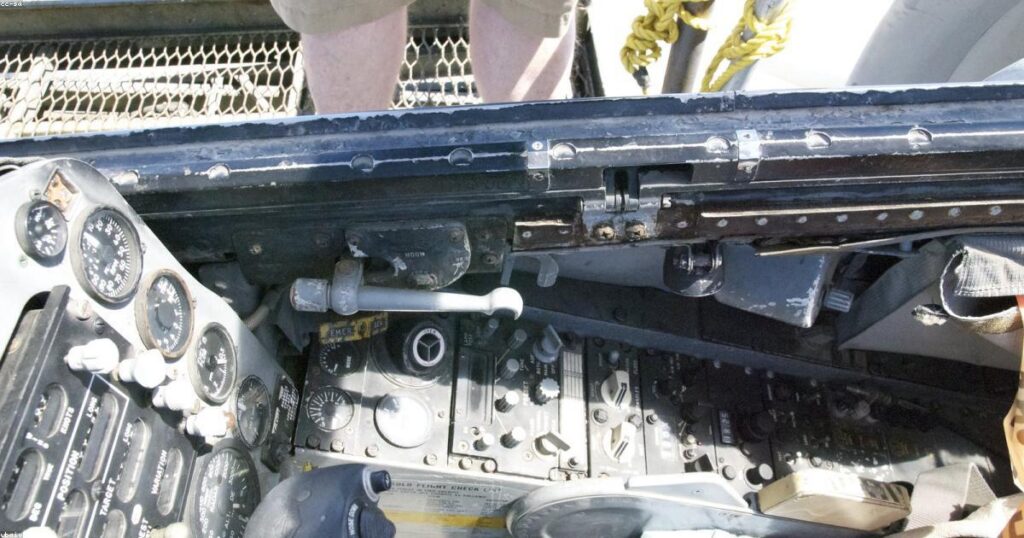
Flying a plane solely by referencing cockpit instruments is a critical skill for any pilot, especially when visual cues outside the aircraft are limited or unavailable. The concept of 'flying by instruments' involves relying on a set of standardized flight instruments to maintain control, altitude, and navigation. Among these, the Basic 6 instruments form the foundation for understanding aircraft attitude, speed, altitude, and direction. This article breaks down these essential instruments in simple terms, explaining their purpose, operation, and how pilots use them to safely fly an airplane.
Flight instruments are the pilot’s primary source of information about the aircraft’s status and environment, particularly when outside visibility is poor. They provide critical data on speed, altitude, orientation, and heading, enabling pilots to maintain control and situational awareness. Without reliable instrumentation, flying in clouds, fog, or at night would be extremely dangerous.
The Basic 6 instruments are standardized across most general aviation aircraft, making them a universal language for pilots. These instruments work together to give a comprehensive picture of the plane’s performance and position in three-dimensional space. Learning to interpret these instruments accurately is fundamental for safe and effective flying.
By mastering the Basic 6, student pilots develop the skills needed to transition smoothly to more advanced avionics and complex flight environments. These instruments also form the basis for instrument flight rules (IFR) training, which allows pilots to fly safely in adverse weather conditions.
The airspeed indicator (ASI) is one of the most vital instruments, displaying the aircraft’s speed relative to the surrounding air. It works by measuring the difference between static air pressure and dynamic pressure from the pitot tube. This speed is crucial for maintaining safe flight parameters such as stall speed and maneuvering speed.
Pilots use the ASI to avoid flying too slowly, which risks a stall, or too fast, which could damage the aircraft. The instrument typically features color-coded arcs and markings to indicate safe operating ranges, including the white arc for flap operating speeds and the green arc for normal operating speeds.
Understanding the airspeed indicator helps pilots make informed decisions during takeoff, climb, cruise, and landing phases. It also plays a key role in executing maneuvers and adhering to air traffic control instructions.
The attitude indicator, or artificial horizon, shows the aircraft’s orientation relative to the earth’s horizon. It displays pitch (nose up or down) and bank (left or right tilt), giving pilots an immediate visual of the plane’s attitude, which is essential when flying without outside visual references.
Inside the instrument, a symbolic airplane remains fixed while the horizon bar moves to reflect the actual aircraft attitude. This instrument is critical for maintaining proper aircraft control during turns, climbs, and descents, especially in instrument meteorological conditions (IMC).
Without the attitude indicator, pilots would have to rely on less intuitive instruments or outside visual cues, increasing workload and risk. It is often considered the most important instrument during instrument flight, helping prevent spatial disorientation.
The altimeter indicates the aircraft’s altitude above mean sea level by measuring atmospheric pressure changes. As the plane climbs or descends, air pressure decreases or increases, and the altimeter needles move accordingly to display altitude in feet or meters.
Pilots must regularly check the altimeter to maintain assigned flight levels and ensure terrain clearance. Properly setting the altimeter’s barometric pressure (known as the Kollsman window) is essential for accurate altitude readings, especially when transitioning between different airspaces or weather conditions.
Altitude awareness prevents controlled flight into terrain (CFIT) accidents and helps maintain safe separation from other aircraft. The altimeter is indispensable during all phases of flight, from climb-out after takeoff to final approach for landing.
The heading indicator, or directional gyro, displays the aircraft’s current heading relative to magnetic north. Unlike a magnetic compass, the heading indicator provides a stable and precise heading reading with less susceptibility to erratic movement caused by turbulence or turns.
Because it relies on a gyroscopic mechanism, the heading indicator must be periodically realigned with the magnetic compass to correct for drift. Pilots use this instrument to maintain desired courses and execute accurate turns during navigation.
The heading indicator is particularly useful during instrument flight and cross-country navigation, where precise directional control is paramount. It complements other instruments by providing reference for autopilot systems and navigation radios.
The turn coordinator indicates the rate of turn and helps pilots maintain coordinated, balanced turns. It shows whether the aircraft is turning left or right and how quickly, using a miniature airplane symbol and an inclinometer (slip-skid indicator).
A balanced turn is achieved when the aircraft’s lift and centrifugal forces are aligned, preventing slipping or skidding. The inclinometer’s ball moves to the center when the turn is coordinated, and pilots use rudder input to keep it centered.
This instrument is essential for smooth, safe maneuvering, especially during instrument flight. It also assists pilots in executing standard rate turns, which are used for navigation and holding patterns.
The vertical speed indicator (VSI) shows the rate at which the aircraft is climbing or descending, usually in feet per minute. It measures changes in static air pressure over time to indicate vertical velocity.
Pilots use the VSI to maintain desired climb or descent profiles, ensuring smooth altitude changes and compliance with air traffic control instructions. It helps avoid abrupt altitude changes that could discomfort passengers or stress the aircraft.
While the VSI is not as immediately responsive as other instruments, it provides valuable trend information. Combined with the altimeter and attitude indicator, it helps pilots achieve precise altitude control during all flight phases.
Successfully flying an aircraft by instruments requires integrating data from all six instruments simultaneously. Pilots develop scan techniques to monitor and interpret instrument readings quickly and accurately, prioritizing information based on flight conditions.
For example, during a climb, the pilot focuses on the attitude indicator for pitch, the airspeed indicator to avoid overspeed, and the altimeter and VSI to maintain the correct altitude and climb rate. The heading indicator and turn coordinator ensure proper directional control and coordinated turns.
Regular practice and simulation help pilots build confidence and proficiency in instrument flying. Understanding how each instrument complements the others enhances situational awareness and decision-making, ultimately leading to safer and more efficient flights.
Understanding and effectively using the Basic 6 airplane instruments is a foundational skill for all pilots. These instruments provide continuous, reliable feedback about the aircraft’s performance and orientation, enabling safe and confident flying even when visual references are unavailable. By mastering each instrument’s function and learning to integrate their information seamlessly, pilots can navigate complex flight environments with greater precision and safety. Whether you are a student pilot or an experienced aviator, revisiting the fundamentals of the Basic 6 instruments will enhance your flying proficiency and contribute to safer skies.
Keep reading
Educational Resources
For engineers and consultants w...
Educational Resources
Modern industrial landscapes, from vast petrochemical complexes and power generation plants to intricate manufacturing facilities, are ...
Educational Resources
Instrumentation engineering has moved far beyond basic gauges and dials. Today’s systems combine sensors...
TAMFIS NIG LTD
Electrical and instrumentation engineering, bid preparation and consulting, IT and software.