
Educational Resources
The Impact of Digital Twins in Oil & Gas Plant Maintenance
The Impact of Digital Twins in Oil & Gas Plant Maintenance is a topic that deserves thorough explora...
TAMFIS NIG LTDRC 8067447CAC ACTIVEFinima, Bonny Island, Rivers State

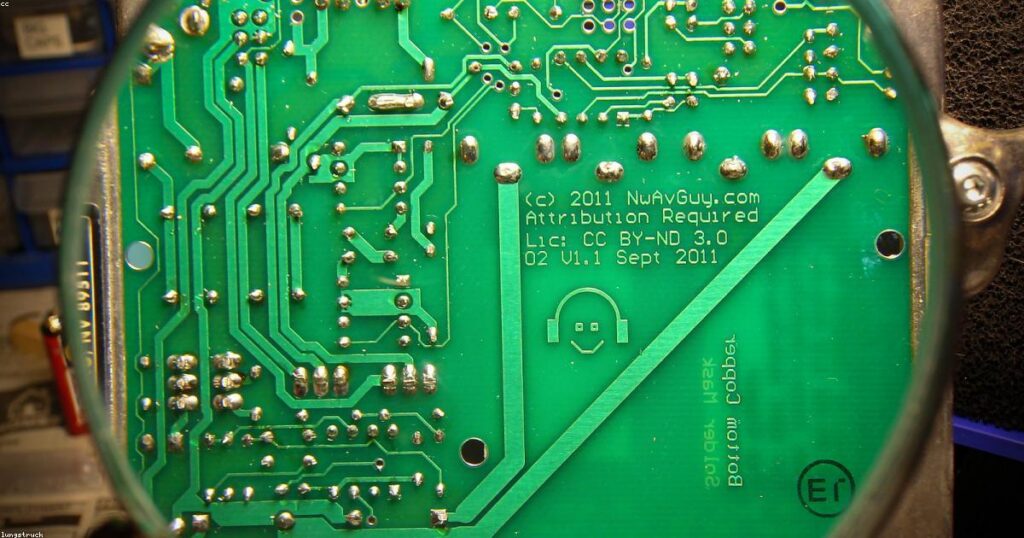
Amplifiers form the backbone of modern electronics, enabling the enhancement of weak electrical signals for various applications. Understanding amplifier analysis is crucial for electronics engineering students and professionals alike. Raj Kumar Thenua, a respected educator in the field, delivers an insightful tutorial titled "Analyzing an Amplifier – Electronics Engineering" in Hindi and Urdu. This lecture simplifies complex concepts, making amplifier analysis accessible to a wider audience. This article delves into the key components of amplifier analysis as explained by Raj Kumar Thenua, covering fundamental principles, types, characteristics, and practical considerations.
An amplifier is an electronic device designed to increase the amplitude of an input signal without altering its other characteristics. Raj Kumar Thenua begins his lecture by explaining the fundamental purpose of amplifiers in electronic circuits, emphasizing their role in boosting weak signals for better processing and transmission.
He further elaborates on the basic structure of an amplifier, highlighting key components such as the input stage, gain stage, and output stage. Each stage plays a critical role in ensuring the signal is amplified accurately and efficiently.
The lecture also covers the basic parameters used to evaluate amplifiers, like gain, bandwidth, input and output impedance. Understanding these parameters is essential for analyzing amplifier performance and selecting the right amplifier for specific applications.
Raj Kumar Thenua categorizes amplifiers based on their configuration and functionality. The main types discussed include voltage amplifiers, current amplifiers, power amplifiers, and operational amplifiers.
Voltage amplifiers focus on increasing the voltage level of the input signal, while current amplifiers boost the current. Power amplifiers, on the other hand, are designed to deliver significant power to the load, making them ideal for driving speakers and motors.
Operational amplifiers, a versatile category, are widely used in signal conditioning, filtering, and mathematical operations in circuits. The lecture explains the practical applications of each amplifier type, helping learners understand their real-world relevance.
A significant portion of Raj Kumar Thenua’s lecture is dedicated to explaining common amplifier configurations: common emitter, common base, and common collector. Each configuration has distinct input/output characteristics and gain properties.
The common emitter amplifier is popular for its high voltage gain and moderate input/output impedance, making it suitable for a variety of signal amplification tasks. The lecturer details its working principle and typical circuit design.
Common base configuration offers low input impedance but high output impedance, commonly used in high-frequency applications. Meanwhile, the common collector configuration, also known as an emitter follower, provides high input impedance and low output impedance, ideal for impedance matching.
Raj Kumar Thenua emphasizes the importance of key performance parameters such as voltage gain, current gain, power gain, bandwidth, efficiency, and linearity. Each parameter influences how effectively an amplifier performs its function.
Voltage gain defines how much the input voltage is amplified, while current gain measures the increase in current. Power gain combines both voltage and current gain, indicating the overall amplification of power.
Bandwidth determines the range of frequencies the amplifier can handle without significant signal loss, and efficiency relates to the amplifier’s power consumption versus output power. Linearity ensures the output signal is a faithful reproduction of the input, avoiding distortion.
In his tutorial, Raj Kumar Thenua addresses practical considerations in amplifier design, such as biasing techniques, thermal stability, and noise reduction. Proper biasing ensures the amplifier operates within the desired region for optimal performance.
Thermal stability is crucial to prevent performance degradation due to temperature changes. The lecturer explains methods like negative feedback and heat sinks to stabilize amplifier operation.
Noise, an unwanted disturbance that can degrade signal quality, is discussed in detail. Strategies to minimize noise include careful component selection, shielding, and circuit layout optimization.
Feedback is a pivotal concept in amplifier design, and Raj Kumar Thenua dedicates time to explain its types and effects. Feedback involves feeding a portion of the output signal back to the input to control gain and improve stability.
Negative feedback reduces gain but enhances linearity, bandwidth, and stability, making the amplifier more reliable and less prone to distortion. Positive feedback, less common, can lead to oscillations but is useful in oscillator circuits.
The lecture discusses how feedback impacts amplifier parameters and provides examples of practical feedback circuits used in electronics engineering.
Analyzing amplifiers involves overcoming challenges such as non-linear distortion, frequency response limitations, and impedance mismatches. Raj Kumar Thenua highlights these issues and their impact on amplifier performance.
Non-linear distortion occurs when the amplifier output deviates from a linear relationship with the input, causing signal degradation. The lecturer explains how to identify and mitigate distortion through design choices and feedback.
Frequency response limitations can restrict the effective operating range of an amplifier. Proper component selection and circuit design can extend bandwidth and improve overall performance.
Raj Kumar Thenua concludes his lecture by exploring the diverse applications of amplifiers in communication systems, audio electronics, instrumentation, and signal processing. Amplifiers are integral to devices like radios, televisions, and medical equipment.
He also touches upon emerging trends such as the use of integrated circuits, digital amplification techniques, and advancements in semiconductor materials that are shaping the future of amplifier technology.
Understanding these trends is vital for electronics engineers who aim to innovate and adapt to evolving technological landscapes, ensuring amplifiers remain efficient and effective components in modern electronics.
Raj Kumar Thenua’s lecture "Analyzing an Amplifier – Electronics Engineering" in Hindi and Urdu offers a comprehensive foundation for understanding amplifier concepts in electronics. By exploring the fundamentals, types, configurations, and practical aspects of amplifier design and analysis, learners gain valuable insights essential for both academic and professional success. Amplifiers remain a vital component in the electronics industry, and mastering their analysis ensures engineers can design efficient, reliable, and innovative electronic systems. This detailed guide complements the lecture by providing a structured, in-depth exploration suitable for students and enthusiasts eager to deepen their knowledge.
Keep reading
Educational Resources
The Impact of Digital Twins in Oil & Gas Plant Maintenance is a topic that deserves thorough explora...
Educational Resources
Smart homes have transitioned from futuristic concepts to tangible realities that enhance everyday livin...
Educational Resources
As a small or medium-sized business owner in Nigeria, you are a master of spinning plates. You are the CEO, the head of sales,…
TAMFIS NIG LTD
Electrical and instrumentation engineering, bid preparation and consulting, IT and software.