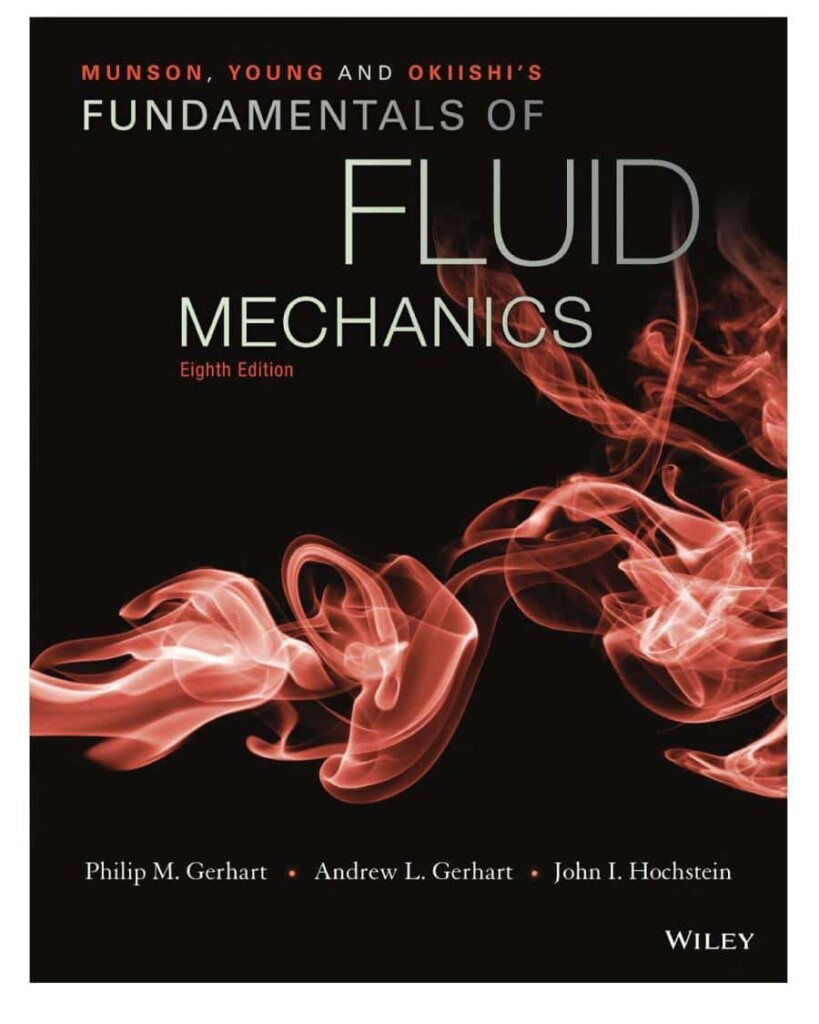
fluid mechanics lectures for civil engineering | Fundamentals of Fluid Mechanics
Fluid mechanics is a cornerstone subject for civil engineering students, providing the foundation to analyze and design systems involving fluid flow and pressure. From water supply systems to hydraulic structures, understanding fluid behavior is crucial for effective engineering solutions. This article delves into the fundamentals of fluid mechanics, offering a structured overview designed for civil engineering lectures. It covers key principles, fluid properties, flow dynamics, and practical applications, enabling students to build a robust conceptual framework.
Understanding the Basics of Fluid Mechanics
Fluid mechanics is the branch of physics concerned with the behavior of fluids—liquids and gases—and the forces acting on them. It is essential in civil engineering for analyzing natural water bodies, designing pipelines, and constructing hydraulic structures. The study encompasses fluid statics, fluid dynamics, and fluid kinematics, each focusing on different aspects of fluid behavior.
Fluid statics deals with fluids at rest, exploring pressure distribution and buoyancy forces. Fluid dynamics examines fluids in motion, emphasizing velocity, acceleration, and forces causing the flow. Fluid kinematics describes fluid motion without considering forces, focusing on flow patterns and velocity fields. A solid grasp of these subfields is vital for civil engineers to predict and control fluid behavior effectively.
The relevance of fluid mechanics in civil engineering cannot be overstated. It informs the design of dams, canals, sewage systems, and stormwater management. Additionally, it aids in environmental engineering, such as groundwater flow analysis and pollutant dispersion. Understanding fluid mechanics principles equips students to tackle complex engineering challenges related to water resources and infrastructure.
Properties of Fluids: Essential Concepts
To comprehend fluid mechanics, one must first understand the intrinsic properties of fluids. These include density, viscosity, surface tension, and compressibility, which influence fluid behavior under various conditions. Density refers to the mass per unit volume and affects buoyancy and pressure calculations in fluid systems.
Viscosity is a measure of a fluid's resistance to deformation or flow, playing a critical role in determining flow regimes—laminar or turbulent. High viscosity fluids flow slowly and resist motion, while low viscosity fluids flow more freely. Surface tension arises from molecular forces at the fluid interface, impacting phenomena such as capillary action and droplet formation.
Compressibility relates to the fluid’s ability to change volume under pressure. Liquids are generally considered incompressible, while gases exhibit significant compressibility. Recognizing these properties allows civil engineers to select appropriate models and assumptions when analyzing fluid systems, ensuring accurate predictions and efficient designs.
Fundamental Fluid Statics Principles
Fluid statics, or hydrostatics, studies fluids at rest and the forces exerted on submerged surfaces. One of the fundamental principles is Pascal’s law, which states that pressure applied to a confined fluid is transmitted undiminished in all directions. This principle is foundational in designing hydraulic systems like lifts and presses.
Another key concept is hydrostatic pressure, which increases linearly with depth due to the weight of the overlying fluid. This pressure distribution is vital for assessing loads on dam walls, retaining structures, and underwater tunnels. Engineers calculate the resultant forces to ensure structural stability and safety.
Buoyancy, governed by Archimedes’ principle, describes the upward force exerted by a fluid on a submerged object. This principle is critical in civil engineering for designing floating structures, determining sediment transport, and assessing stability of marine constructions. Mastery of fluid statics enables accurate evaluation of forces in static fluid environments.
Fluid Dynamics: Flow and Motion
Fluid dynamics focuses on fluids in motion, exploring velocity, pressure, and forces within the flow. The continuity equation, derived from the conservation of mass, asserts that the mass flow rate remains constant along a streamline. This equation is fundamental for analyzing pipe networks and open channel flows in civil engineering.
Bernoulli’s equation, a statement of energy conservation for flowing fluids, relates pressure, velocity, and elevation. It is extensively used to design hydraulic structures, pumps, and ventilation systems. Understanding its assumptions and limitations is crucial for applying it correctly in real-world scenarios.
Flow regimes—laminar and turbulent—describe the nature of fluid motion. Laminar flow is smooth and orderly, while turbulent flow is chaotic and mixed. Civil engineers must predict these regimes to optimize system efficiency, reduce energy losses, and prevent structural damage caused by flow-induced vibrations or erosion.
Flow Measurement Techniques in Civil Engineering
Accurate measurement of fluid flow is essential for the design and operation of water supply systems, wastewater treatment, and irrigation networks. Common techniques include the use of Pitot tubes, Venturi meters, and orifice plates, each based on fluid mechanics principles to determine velocity and flow rate.
Pitot tubes measure fluid velocity by converting kinetic energy into pressure differences, ideal for open channel and pipe flow assessments. Venturi meters utilize a converging-diverging nozzle to create pressure variations, enabling precise flow measurement with minimal energy loss. Orifice plates provide a cost-effective method by introducing a constriction in the pipe, causing a pressure drop proportional to flow velocity.
Selecting the appropriate flow measurement device depends on factors such as fluid type, flow regime, accuracy requirements, and installation constraints. Mastery of these techniques allows civil engineers to monitor system performance, detect leaks, and ensure compliance with environmental standards.
Hydraulic Machines and Their Applications
Hydraulic machines convert fluid energy into mechanical work or vice versa, playing a pivotal role in civil engineering projects. Pumps, turbines, and hydraulic presses are common examples utilized in water distribution, hydroelectric power generation, and construction machinery.
Centrifugal pumps, widely used in civil engineering, impart kinetic energy to fluids through rotational motion, facilitating water supply and sewage disposal. Understanding pump characteristics such as head, efficiency, and power consumption is vital for system optimization and energy conservation.
Hydraulic turbines harness the energy of flowing water to generate electricity, integral to renewable energy initiatives. Civil engineers must comprehend fluid flow dynamics and machine performance to design efficient hydroelectric plants. Knowledge of hydraulic machines enhances the capability to integrate fluid mechanics principles into practical engineering solutions.
Applications of Fluid Mechanics in Civil Engineering
Fluid mechanics principles underpin numerous civil engineering applications, from designing stormwater drainage systems to constructing dams and levees. Accurate fluid flow analysis ensures infrastructure resilience against natural disasters such as floods and tsunamis.
In groundwater engineering, fluid mechanics helps model subsurface flow, critical for water resource management and contamination control. Techniques like Darcy’s law enable prediction of seepage rates and design of effective remediation systems.
Environmental engineering also benefits from fluid mechanics by understanding pollutant dispersion in air and water. This knowledge guides the development of sustainable urban drainage systems and treatment processes, promoting public health and ecological balance.
Tips for Effective Fluid Mechanics Learning in Civil Engineering
To master fluid mechanics, civil engineering students should focus on building strong conceptual understanding alongside practical problem-solving skills. Regularly reviewing fundamental equations and practicing real-world scenarios helps internalize complex principles.
Utilizing visual aids such as flow diagrams, simulations, and laboratory experiments enhances comprehension of fluid behavior. Engaging with interactive tools and software like Computational Fluid Dynamics (CFD) can bridge the gap between theory and practice.
Collaborative learning through study groups and discussions encourages knowledge sharing and clarifies difficult topics. Additionally, consulting diverse resources including textbooks, online lectures, and research papers broadens perspective and deepens understanding.
Conclusion
Fluid mechanics forms a fundamental part of civil engineering education, underpinning the design and analysis of water-related infrastructure and environmental systems. By grasping the core concepts of fluid properties, statics, dynamics, and measurement techniques, students can confidently approach complex engineering challenges. The integration of theoretical knowledge with practical applications prepares future civil engineers to innovate and maintain resilient, efficient fluid systems. Continuous learning and application of fluid mechanics principles will remain vital as civil engineering evolves to meet growing societal and environmental needs.
Explore how precast cement concrete blocks are transforming masonry construction with their strength, uniformity, and versatility. Learn about production processes, construction techniques, and key…