Business
Precast Cement Concrete Blocks: Enhancing Masonry Construction Efficiency and Durability
Precast cement concrete blocks have become a staple in modern masonry construction, offering a blend of ...
TAMFIS NIG LTDRC 8067447CAC ACTIVEFinima, Bonny Island, Rivers State

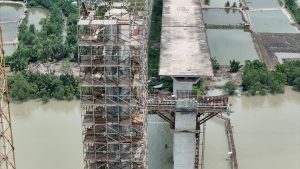
The civil engineering business in the United States plays a crucial role in the nation's economic growth and infrastructure development. It encompasses a wide range of activities, including design, construction, and maintenance of roads, bridges, buildings, and other critical structures. This sector not only supports urbanization but also drives technological innovation and sustainability efforts. In this article, we explore the landscape of the civil engineering industry in the U.S., highlighting the top 10 construction companies that lead the market in terms of revenue, expertise, and project portfolio. These companies exemplify excellence, innovation, and resilience in a competitive environment.
Civil engineering in the United States is a multifaceted industry that integrates design, construction, and maintenance of infrastructure projects. It includes highways, bridges, airports, water supply systems, and commercial buildings. The sector is essential for supporting the nation’s economy, facilitating transportation, and enhancing quality of life. With increasing urbanization and technological advancements, civil engineering firms are adapting to evolving demands and sustainability standards.
The industry is characterized by a combination of large multinational corporations and numerous small and medium enterprises. These companies handle projects ranging from small-scale renovations to massive infrastructure developments. Government spending on infrastructure, private sector investment, and public-private partnerships significantly influence the industry's growth trajectory.
Technological innovation, such as Building Information Modeling (BIM), green construction techniques, and automation, is transforming how projects are designed and executed. These advancements improve efficiency, reduce costs, and contribute to environmental sustainability. Consequently, civil engineering businesses in the U.S. are increasingly focusing on integrating these technologies to maintain competitiveness.
The U.S. civil engineering market is driven by several factors including infrastructure renewal needs, urban expansion, and government initiatives. Federal and state investments in infrastructure modernization, such as the Infrastructure Investment and Jobs Act, have injected substantial capital into the industry, creating numerous opportunities for construction companies.
Sustainability and environmental regulations are also shaping the business landscape. Companies are prioritizing green building materials, energy-efficient designs, and waste reduction practices. This shift not only meets regulatory requirements but also appeals to environmentally conscious clients, positioning firms for long-term success.
Labor shortages and skill gaps remain challenges, prompting firms to invest in workforce development and technology adoption. Automation, robotics, and artificial intelligence are being integrated to optimize project management and on-site operations, enabling companies to deliver projects on time and within budget despite labor constraints.
The United States hosts some of the most prominent construction companies globally, recognized for their scale, expertise, and innovation. These firms undertake diverse projects, from commercial skyscrapers to critical infrastructure like highways and dams. Their influence extends across various civil engineering disciplines including structural, transportation, and environmental engineering.
This list features companies ranked by revenue, project portfolio, and industry reputation. Many of these firms have a rich history spanning decades, reflecting their ability to adapt to changing market conditions and technological advancements. Their leadership in the industry sets benchmarks for quality, safety, and sustainability.
By examining these top 10 companies, we gain insights into the competitive landscape, strategic priorities, and emerging trends within the civil engineering sector. These organizations represent the forefront of construction innovation and are pivotal to shaping the nation’s infrastructure future.
Bechtel Corporation is a privately held engineering, procurement, and construction company headquartered in Reston, Virginia. Founded in 1898, it has grown into one of the largest and most respected construction firms in the world. Bechtel specializes in infrastructure, energy, and government services projects.
The company’s portfolio includes major projects such as the Hoover Dam Bypass, the Crossrail project in London, and various energy infrastructure developments. Bechtel’s emphasis on safety, innovation, and sustainability positions it as a leader in the civil engineering business.
With a global presence and a workforce exceeding 50,000 employees, Bechtel continues to drive advancements in construction technology and project management, maintaining its competitive edge in the U.S. market.
Fluor Corporation, headquartered in Irving, Texas, is a multinational engineering and construction firm with a diverse portfolio spanning infrastructure, energy, and mining sectors. Established in 1912, Fluor has a strong reputation for delivering complex projects worldwide.
The company leverages digital engineering tools and sustainable construction practices to optimize project outcomes. Fluor’s expertise in large-scale infrastructure projects, such as highways, airports, and industrial facilities, underscores its vital role in the civil engineering business.
Fluor’s commitment to corporate social responsibility and innovation fosters long-term client relationships and positions the company as a trusted partner in infrastructure development.
Turner Construction Company, founded in 1902 and based in New York City, is a leading general contractor in the United States. Renowned for its commercial construction projects, Turner has completed some of the nation’s most iconic buildings and infrastructure.
Turner emphasizes sustainable building practices and has achieved numerous LEED certifications across its projects. The company’s integrated approach combines design, engineering, and construction services to deliver efficient and high-quality results.
With a focus on safety, innovation, and client collaboration, Turner Construction remains a dominant force in the civil engineering and construction sectors, contributing significantly to urban development.
Kiewit Corporation, headquartered in Omaha, Nebraska, is one of the largest construction and engineering organizations in North America. Founded in 1884, it specializes in transportation, water resources, power, and building construction projects.
Kiewit’s success is driven by its employee ownership model, fostering a culture of accountability and innovation. The company is known for its expertise in large-scale infrastructure projects, including bridges, tunnels, and highways.
Kiewit’s investment in technology and workforce development enables it to tackle complex engineering challenges while maintaining high standards of safety and quality.
Jacobs Engineering Group, headquartered in Dallas, Texas, is a global leader in engineering, architecture, and construction services. With a strong focus on infrastructure and environmental projects, Jacobs serves clients across multiple sectors, including transportation, water, and energy.
Jacobs integrates advanced digital tools and sustainability principles into its project delivery approach. The company’s multidisciplinary expertise allows it to manage complex, large-scale projects efficiently.
Jacobs’ commitment to innovation and client satisfaction has earned it a reputation as a trusted partner in the civil engineering business, contributing to critical infrastructure improvements nationwide.
AECOM is a multinational engineering firm headquartered in Los Angeles, California, offering design, consulting, construction, and management services. Established in 1990, AECOM has rapidly expanded to become a key player in civil engineering and infrastructure development.
The company is recognized for its expertise in transportation, water, and environmental projects, and it actively promotes sustainable development practices. AECOM’s integrated service model enables comprehensive project lifecycle management.
With a global workforce and innovative technologies, AECOM continues to influence infrastructure modernization efforts across the United States, driving efficiency and resilience in civil engineering projects.
Founded in 1909 and based in Baltimore, Maryland, Whiting-Turner Contracting Company is a prominent construction management and general contracting firm in the U.S. The company serves a wide range of sectors including healthcare, education, and commercial buildings.
Whiting-Turner is known for its client-centric approach, emphasizing collaboration, transparency, and quality. The firm invests heavily in technology and safety programs to enhance project delivery.
Its diverse project portfolio and commitment to innovation have made Whiting-Turner a preferred choice for complex civil engineering and construction projects nationwide.
Gilbane Building Company, headquartered in Providence, Rhode Island, is a family-owned construction and real estate development firm with over 150 years of experience. The company specializes in commercial, institutional, and infrastructure projects.
Gilbane focuses on sustainable construction practices and leverages technology to improve project efficiency and outcomes. Its comprehensive services include preconstruction, construction management, and design-build solutions.
The company’s strong reputation for quality, safety, and client service has positioned it as a leading player in the U.S. civil engineering and construction industry.
Clark Construction Group, based in Bethesda, Maryland, is one of the largest general contractors in the United States. Founded in 1906, Clark has extensive experience in civil infrastructure, commercial buildings, and transportation projects.
Clark Construction emphasizes innovation, safety, and sustainability, integrating cutting-edge technologies and green building practices into its projects. The company maintains strong relationships with public and private sector clients.
Its diverse project portfolio and commitment to excellence have earned Clark a prominent position in the competitive civil engineering market.
DPR Construction, headquartered in Redwood City, California, is a national technical builder specializing in complex and sustainable projects. Founded in 1990, DPR has grown rapidly by focusing on innovation and client collaboration.
The company’s expertise spans healthcare, life sciences, education, and advanced technology sectors. DPR integrates lean construction methods and digital tools to enhance project efficiency and reduce waste.
DPR’s commitment to sustainability and high-performance buildings positions it as a forward-thinking leader in the U.S. civil engineering and construction landscape.
The future of civil engineering in the United States is promising, driven by ongoing infrastructure investments and technological advancements. Emerging trends like smart cities, resilient infrastructure, and sustainable construction will shape project priorities and methodologies.
Companies are expected to increasingly adopt digital twins, AI, and IoT technologies to improve design accuracy, project monitoring, and maintenance. These innovations will enhance efficiency and reduce lifecycle costs, benefiting both contractors and clients.
Furthermore, the industry will continue to address workforce challenges by investing in training and embracing automation. Environmental considerations and regulatory compliance will remain central, ensuring that civil engineering projects contribute positively to societal and ecological goals.
The civil engineering business in the United States is a dynamic and essential industry underpinning the nation’s infrastructure and economic vitality. The top 10 construction companies highlighted in this article exemplify leadership in innovation, sustainability, and project execution. As the industry evolves, these firms will continue to play a pivotal role in shaping America’s built environment through advanced technologies and sustainable practices. With robust government support and a focus on workforce development, the sector is well-positioned to meet future challenges and deliver infrastructure that supports the country’s growth and resilience.
Keep reading
Business
Precast cement concrete blocks have become a staple in modern masonry construction, offering a blend of ...
Civil
Road construction is a pivotal infrastructure activity that directly influences economic development, ac...
Civil
Road construction is a complex process that demands meticulous planning, precise engineering, and skille...
TAMFIS NIG LTD
Electrical and instrumentation engineering, bid preparation and consulting, IT and software.