Business
Precast Cement Concrete Blocks: Enhancing Masonry Construction Efficiency and Durability
Precast cement concrete blocks have become a staple in modern masonry construction, offering a blend of ...
TAMFIS NIG LTDRC 8067447CAC ACTIVEFinima, Bonny Island, Rivers State


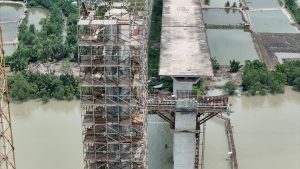
China has emerged as a global powerhouse in civil engineering, renowned for its ability to construct mega infrastructure projects at speeds that seem almost unbelievable. From sprawling bridges and towering skyscrapers to extensive high-speed rail networks and massive dams, China's construction feats have set numerous world records. This article delves into the core factors behind China’s rapid development, exploring the innovative techniques, government policies, and engineering marvels that make these projects possible. Understanding how China builds so fast offers valuable insights into modern civil engineering and urban development.
China’s civil engineering landscape is marked by projects of unprecedented scale and ambition. The country has undertaken some of the largest infrastructure developments in history, including the Three Gorges Dam, the world’s largest hydropower project, and the expansive high-speed rail network spanning over 40,000 kilometers. These mega projects not only showcase China’s engineering capabilities but also its strategic focus on infrastructure as a driver of economic growth.
Urbanization and population growth have fueled the demand for massive construction projects, pushing China to develop entire cities and transportation systems from scratch. The rapid expansion of metropolitan areas like Shanghai and Shenzhen exemplifies how large-scale planning and execution can transform regions within a short timeframe. Such projects require meticulous coordination among various engineering disciplines, from civil and structural to environmental engineering.
Moreover, China’s approach to mega engineering often involves integrating multiple infrastructure components—such as roads, rail, utilities, and housing—into comprehensive urban ecosystems. This holistic vision enables the country to optimize resources and accelerate construction timelines, making it a global leader in rapid infrastructure development.
One of the key reasons behind China’s fast construction speed is its adoption of innovative building techniques. Prefabrication and modular construction have revolutionized the industry by allowing large sections of buildings and infrastructure to be manufactured off-site and assembled quickly on-site. This method reduces construction time and improves quality control, contributing significantly to rapid project delivery.
Advanced machinery and automation also play a critical role. China has invested heavily in robotic construction technologies, 3D printing for concrete structures, and automated equipment that can work continuously with minimal human intervention. These technologies not only enhance speed but also safety and precision on construction sites.
Additionally, China employs sophisticated project management software and Building Information Modeling (BIM) systems. BIM allows engineers and architects to collaborate in real-time, detect design conflicts early, and streamline construction sequencing. This digital integration minimizes delays and ensures projects progress smoothly from planning to completion.
Government support is a cornerstone of China’s rapid construction achievements. The Chinese government prioritizes infrastructure development as a national strategy, providing funding, policy frameworks, and streamlined approval processes to facilitate swift project initiation and execution. This centralized planning enables efficient allocation of resources and reduces bureaucratic bottlenecks.
Major initiatives such as the Belt and Road Initiative (BRI) illustrate how China leverages large-scale infrastructure projects to enhance connectivity and economic development both domestically and internationally. These projects often receive expedited permits and regulatory support, allowing construction to proceed at an accelerated pace.
Furthermore, local governments play an active role in ensuring projects meet deadlines through performance incentives and strict monitoring. The combination of political will, financial backing, and coordinated governance creates an environment where mega engineering can thrive without the typical delays seen in other countries.
China holds multiple world records for construction speed. For instance, the rapid completion of the Huoshenshan Hospital in Wuhan during the COVID-19 pandemic stunned the world—it was built in just 10 days. This project demonstrated China’s ability to mobilize resources and manpower quickly under emergency conditions.
Another example is the construction of the Beijing Daxing International Airport, which opened in 2019 after only five years of development. Covering 700,000 square meters, the airport is one of the largest single-terminal airports globally, showcasing China’s capacity to execute complex projects with remarkable efficiency.
The country’s high-speed rail network is also a testament to rapid construction. The Beijing-Shanghai high-speed railway, spanning over 1,300 kilometers, was completed in just four years. This achievement involved overcoming significant engineering challenges and coordinating thousands of workers and engineers across multiple provinces.
China’s vast and skilled workforce is integral to its construction speed. The country has developed specialized training programs and technical schools to supply a steady stream of qualified engineers, architects, and construction workers. This focus on human capital ensures projects have the expertise needed to maintain quality and pace.
Labor management in China emphasizes efficiency and discipline, with large teams often working in shifts around the clock. The scale of manpower available allows simultaneous work on multiple sections of a project, drastically reducing overall timelines.
Moreover, China’s construction industry encourages continuous learning and adoption of new technologies. Workers are regularly trained on the latest equipment and safety protocols, which improves productivity and reduces downtime caused by accidents or technical issues.
While speed is paramount, China increasingly integrates sustainability into its civil engineering projects. The country is investing in green building technologies, energy-efficient designs, and environmentally friendly materials to minimize the ecological footprint of rapid construction.
Innovations such as the use of recycled concrete, green roofs, and solar-powered infrastructure components are becoming standard in many projects. These measures align with China’s broader goals of reducing carbon emissions and promoting sustainable urban development.
Environmental impact assessments are conducted early in the planning stages, allowing engineers to design mitigation strategies that balance construction speed with ecological preservation. This approach helps ensure that mega projects contribute positively to long-term environmental health.
Despite its successes, China faces challenges in sustaining its rapid construction pace. Issues such as resource scarcity, rising labor costs, and the complexity of increasingly ambitious projects require continuous innovation and adaptation.
Urban congestion and the need for infrastructure maintenance also pose hurdles. As cities expand, integrating new projects with existing infrastructure without causing disruption becomes more difficult, necessitating smarter engineering solutions.
Looking ahead, China is focusing on digital transformation, including artificial intelligence and smart city technologies, to further optimize construction processes. The future of civil engineering in China promises even faster, more sustainable, and more sophisticated infrastructure development.
China’s civil engineering achievements are nothing short of extraordinary, reflecting a unique combination of innovation, strategic governance, and skilled workforce management. The country’s ability to build mega infrastructure projects at record-breaking speeds has transformed its urban landscapes and set new global standards. As China continues to embrace sustainability and digital technologies, its civil engineering sector is poised to maintain its leadership role in rapid, efficient, and environmentally conscious construction. Understanding China’s approach offers valuable lessons for engineers and policymakers worldwide seeking to accelerate infrastructure development without compromising quality or sustainability.
Keep reading
Business
Precast cement concrete blocks have become a staple in modern masonry construction, offering a blend of ...
Civil
Road construction is a pivotal infrastructure activity that directly influences economic development, ac...
Civil
Road construction is a complex process that demands meticulous planning, precise engineering, and skille...
TAMFIS NIG LTD
Electrical and instrumentation engineering, bid preparation and consulting, IT and software.