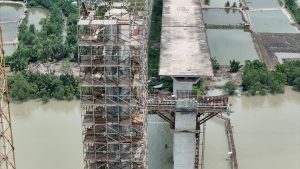
Computational Fluid Dynamics (CFD) has revolutionized the way engineers analyze fluid flow phenomena in various disciplines, including civil engineering. By leveraging numerical methods and algorithms, CFD enables the simulation of fluid behavior around structures, within pipelines, and in environmental systems, offering insights that traditional methods cannot provide. This article delves into the basics of CFD, its significance in civil engineering, and practical applications that improve infrastructure design and sustainability.
Understanding Computational Fluid Dynamics (CFD)
Computational Fluid Dynamics (CFD) is a branch of fluid mechanics that uses numerical analysis and algorithms to solve and analyze problems involving fluid flows. By discretizing fluid domains into small elements or volumes, CFD allows engineers to simulate complex fluid behavior that would be difficult or impossible to capture through experimental methods alone.
The core of CFD involves solving the Navier-Stokes equations, which describe the motion of viscous fluid substances. These equations, coupled with continuity and energy equations, provide a comprehensive framework for predicting velocity, pressure, temperature, and other fluid properties in a given domain.
CFD software packages utilize various techniques such as finite volume, finite element, or finite difference methods to approximate solutions. The choice of method, mesh quality, and boundary conditions critically impact the accuracy and reliability of simulation results.
Importance of CFD in Civil Engineering
In civil engineering, fluid flow analysis is fundamental for designing structures that interact with air, water, or other fluids. CFD offers a powerful tool to visualize and predict how fluids behave around infrastructure such as bridges, dams, tunnels, and buildings.
By simulating wind loads, water flow, sediment transport, or pollutant dispersion, CFD helps engineers optimize designs for safety, durability, and environmental impact. This predictive capability reduces the need for costly physical prototypes and extensive field testing.
Moreover, CFD supports sustainable engineering practices by enabling the assessment of natural ventilation, urban microclimates, and flood risk management. These insights foster resilient infrastructure that adapts to changing environmental conditions.
Fundamental Concepts in CFD for Civil Engineers
Before applying CFD, civil engineers must understand key concepts such as fluid properties, flow regimes, and boundary conditions. Fluid properties like density, viscosity, and turbulence significantly influence flow patterns and must be accurately defined in simulations.
Flow regimes—laminar, turbulent, or transitional—determine the complexity of the fluid behavior. Turbulent flows, common in natural and urban environments, require advanced turbulence models to capture chaotic eddies and vortices.
Boundary conditions specify how fluids interact with surfaces and open boundaries within the simulation domain. Correctly setting inlet velocities, outlet pressures, and wall conditions is essential to obtain realistic and meaningful results.
CFD Applications in Hydraulic Engineering
Hydraulic engineering benefits greatly from CFD by enhancing the design and analysis of water-related infrastructure such as dams, spillways, and canals. CFD simulations help predict flow velocities, pressure distributions, and potential erosion zones under various operational scenarios.
Flood modeling is another critical application where CFD assists in understanding flood wave propagation, inundation extents, and impact on urban areas. This knowledge supports effective floodplain management and emergency response planning.
Sediment transport studies using CFD enable engineers to evaluate sediment deposition and scour around foundations and riverbeds, ensuring the longevity and safety of hydraulic structures.
CFD in Wind Engineering and Urban Planning
Wind engineering utilizes CFD to analyze wind flow patterns around buildings, bridges, and other structures. These simulations inform aerodynamic design, pedestrian comfort, and wind load assessments to enhance safety and performance.
Urban planners employ CFD to study microclimates, pollutant dispersion, and ventilation within cityscapes. This helps in designing healthier and more energy-efficient urban environments by optimizing building layouts and green spaces.
CFD also aids in assessing renewable energy potential, such as wind turbines’ placement and performance, by modeling airflow and turbulence in complex terrain and urban settings.
CFD Workflow and Best Practices in Civil Engineering
A typical CFD workflow starts with defining the problem, including geometry creation, fluid properties, and boundary conditions. Accurate geometric modeling is vital to capture relevant physical features that influence fluid flow.
Meshing divides the computational domain into discrete elements. High-quality meshes with appropriate refinement in critical regions enhance solution accuracy but increase computational cost. Adaptive meshing techniques help balance this trade-off.
Post-processing interprets simulation results through visualizations like velocity vectors, pressure contours, and streamlines. Engineers validate CFD outcomes against experimental data or field measurements to ensure reliability before applying findings to design decisions.
Challenges and Limitations of CFD in Civil Engineering
Despite its advantages, CFD has limitations including high computational demands, especially for three-dimensional, transient simulations with complex physics. This can require significant hardware resources and long processing times.
Modeling turbulence and multiphase flows remains challenging due to the inherent complexity and chaotic nature of such phenomena. Selecting appropriate turbulence models and validating results are critical to avoid misleading conclusions.
Uncertainties in input data, such as boundary conditions and material properties, can affect simulation accuracy. Therefore, sensitivity analysis and robust validation protocols are necessary to build confidence in CFD predictions.
Future Trends and Innovations in CFD for Civil Engineering
Advancements in high-performance computing and cloud technologies are making CFD more accessible and faster, enabling more detailed and extensive simulations in civil engineering projects.
Integration of artificial intelligence and machine learning with CFD is emerging to optimize mesh generation, automate model calibration, and enhance predictive capabilities by learning from large datasets.
Sustainability-focused innovations include coupling CFD with environmental models to assess climate change impacts on infrastructure, promoting adaptive designs that improve resilience and reduce ecological footprints.
Conclusion
Computational Fluid Dynamics has become an indispensable tool in civil engineering, enabling detailed analysis and optimization of fluid-related phenomena that impact infrastructure performance and safety. By understanding CFD basics and its practical applications, civil engineers can harness this technology to create innovative, resilient, and sustainable designs. While challenges remain, ongoing advancements promise to further integrate CFD into everyday engineering workflows, driving smarter and more efficient civil infrastructure development in the future.
Explore how precast cement concrete blocks are transforming masonry construction with their strength, uniformity, and versatility. Learn about production processes, construction techniques, and key…