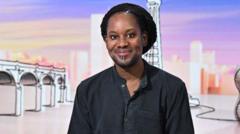
Cambridge Professor Jason Arday Resigns Amid Plagiarism Investigation: A Complex Controversy
In August 2026, Professor Jason Arday, a prominent sociologist and the youngest Black professor at the University of Cambridge, resigned abruptly amid a growing controversy over allegations of plagiarism and discrepancies in his academic qualifications. The university has launched formal investigations into these claims, while Arday has defended his integrity and suggested that the scrutiny he faces is racially motivated. This article provides a detailed overview of the events, the key players involved, and the wider context surrounding this complex academic dispute.
Cambridge Professor Jason Arday Resigns Amid Plagiarism Investigation: A Complex Controversy
Background: A Rising Star in Academia
Jason Arday made history in 2023 when he became the youngest Black professor at Cambridge, a significant milestone in an institution long criticized for its lack of diversity. His work in sociology, particularly on race and education, earned him recognition and respect among peers and students alike. Arday’s appointment was widely celebrated as a breakthrough for representation in elite academia.
Beyond his academic achievements, Arday is known for his extraordinary endurance running feats, which he claims have raised over £5 million for charity. These include running 30 marathons in 35 days and covering 600 miles on a treadmill. However, some of these claims have been questioned amid the controversy.
The Emergence of Plagiarism Allegations
The controversy began when Nathan Cofnas, a former Cambridge academic who was dismissed in 2024 following backlash over his controversial views on race and meritocracy, accused Arday of plagiarism. Cofnas used plagiarism detection software and reported finding numerous instances where Arday’s work contained passages lifted with minimal editing, sometimes including original copy-editing mistakes.
In addition to plagiarism claims, Cofnas challenged some of Arday’s stated achievements, including his academic qualifications and honorary appointments. These allegations prompted the University of Cambridge to announce an investigation into Arday’s academic credentials and ongoing complaints of academic misconduct.
University of Cambridge’s Response and Investigation
The university confirmed it had launched a thorough inquiry following new information about Arday’s qualifications and honorary titles. Cambridge emphasized that the process would adhere strictly to university policies and employment law, underscoring the importance of a fair and comprehensive investigation.
Jesus College, where Arday was a fellow, stated it would conduct a parallel investigation. Meanwhile, the university acknowledged the intense public scrutiny surrounding the case but reiterated its commitment to supporting Arday as a person during this challenging period.
Arday’s Resignation and Defense
On 5 August 2026, Arday resigned with immediate effect, citing the personal toll of the public scrutiny and attacks. In his resignation statement, he expressed gratitude for his time at Cambridge and emphasized that stepping down was necessary for his wellbeing and that of his family.
Arday admitted to errors in his work but firmly denied being a liar. He suggested that the campaign against him was coordinated and racially motivated, positioning him as a target due to his role in promoting diversity, equity, and inclusion (DEI) within academia.
He also attributed some early mistakes in his work to his autism, explaining that he relied on mimicry to process information, which may have contributed to unintentional errors. Arday expressed his intention to return to academic work after taking time to heal.
Support and Criticism from the Academic Community
Reactions to the controversy have been mixed. Jovan Owusu-Nepaul, an associate of Arday, described the situation as regrettable, particularly criticizing the intense focus on Arday’s CV and career. He called for respect for Arday’s request for privacy during this difficult time.
Conversely, Cofnas and others have maintained that the allegations warrant serious consideration to uphold academic integrity. Cofnas’s previous dismissal from Cambridge due to his contentious views adds complexity to the discourse around this case, highlighting tensions within academic debates on race and meritocracy.
Publishers have also weighed in; Simon & Schuster, set to release Arday’s memoir, publicly defended his professionalism and integrity, signaling confidence in his character despite the ongoing investigation.
The Broader Context: Academic Integrity and Diversity Debates
This case unfolds against a backdrop of heightened sensitivity around academic integrity, particularly in high-profile institutions like Cambridge. Plagiarism allegations strike at the heart of scholarly trust and can damage reputations and careers.
At the same time, Arday’s claims of racial motivation in the attacks highlight ongoing challenges faced by scholars from underrepresented backgrounds. The intersection of academic misconduct allegations and issues of race and representation complicates public and institutional responses.
The controversy also raises questions about the pressures faced by academics in the public eye, especially those who are vocal advocates for DEI policies. It underscores the need for balanced scrutiny that protects the integrity of scholarship while recognizing potential biases in criticism.
Assessing the Running Challenges and Charitable Claims
Among the disputed claims are Arday’s reported endurance running feats, which have been part of his public profile and fundraising efforts. Cofnas questioned the veracity of these achievements, including the claim of running 600 miles on a treadmill in six days.
Arday clarified that the 600-mile treadmill challenge actually took 12 days to accommodate necessary rest periods, citing the physical demands and cumulative strain of such endeavors. Regarding the £5 million raised for charity, he stated the amount was accumulated over 20 years with the help of others, though he could not disclose collaborators due to non-disclosure agreements.
These clarifications suggest some miscommunication or misunderstanding rather than intentional deception, but they contribute to the broader skepticism surrounding his public persona.
What this means
The resignation of Professor Jason Arday from the University of Cambridge amid allegations of plagiarism and disputed credentials marks a significant moment in contemporary academic discourse. While the university’s investigations continue, the case raises important questions about the balance between rigorous scrutiny of scholarly work and the potential for bias in targeting academics from underrepresented groups. Arday’s defense and the support he has received illustrate the complexities involved in navigating issues of academic integrity, personal identity, and public perception. As this chapter unfolds, it serves as a reminder of the ongoing challenges faced by institutions striving to maintain trust and fairness in an increasingly polarized environment.
Originally reported by bbc.co.uk. Adapted for our readers with AI assistance.
With nearly half of England's teachers considering leaving the profession within five years, urgent reforms are needed to tackle burnout and workload pressures. The…