Education
Addressing the Teacher Retention Crisis: Urgent Measures Proposed Amid Rising Burnout
A new survey of over 900 teachers and school leaders reveals nearly 50% plan to leave within five years. With burnout at crisis levels,…
TAMFIS NIG LTDRC 8067447CAC ACTIVEFinima, Bonny Island, Rivers State

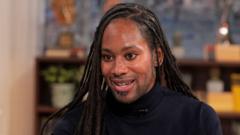
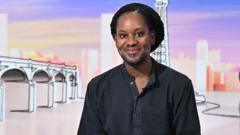
The recent resignation of Jason Arday, once Cambridge’s youngest-ever black professor, has ignited a complex controversy involving allegations of plagiarism, questions about his academic credentials, and concerns over the university’s response. While Arday has defended himself against accusations, a growing number of academics are urging Cambridge to commission an independent inquiry to examine the circumstances surrounding his appointment and the institution’s management of the allegations. This article unpacks the key developments, the range of perspectives within academia, and the broader implications for university governance and reputation.
Jason Arday was appointed as a professor of education at the University of Cambridge in 2023, becoming the institution’s youngest black professor at the time. His academic profile and public presence grew rapidly, including plans to publish a memoir titled Great and Unfortunate Things. However, his career at Cambridge abruptly ended in 2026 following allegations of plagiarism and questions about the accuracy of his curriculum vitae.
Arday has acknowledged some errors in his academic work but firmly denied accusations of plagiarism and fabrication. He cited factors such as his autism and insufficient supervision during his early academic career as contributing to these mistakes. Despite stepping down, Arday maintained that the narratives against him were racially motivated and emphasized that his resignation should not be interpreted as an admission of guilt.
The plagiarism allegations were first highlighted by Nathan Cofnas, a US-based researcher whose role at a Cambridge college ended after backlash over his controversial views on meritocracy and race. Cofnas used plagiarism detection software to identify sections of Arday’s PhD dissertation that appeared copied verbatim or lightly rephrased from other academic works. Additionally, concerns about Arday’s academic articles had previously led to correction notes issued by two journals.
Liverpool John Moores University (LJMU), which awarded Arday’s PhD, conducted an investigation last year and concluded that the issues were likely due to honest errors rather than intentional plagiarism, affirming the validity of his doctorate. The university has maintained this position despite the recent resurgence of scrutiny.
However, further examination revealed discrepancies in Arday’s CV, with several universities denying he held the academic positions he claimed. Questions have also been raised about some of his reported personal achievements, including extensive marathon running and raising millions for charity, which have proven difficult to verify.
Cambridge announced it was investigating new information about Arday’s qualifications and appointments, supplementing its earlier inquiry into plagiarism allegations. Despite this, some academics argue the university’s internal investigation lacks sufficient independence and transparency.
Priyamvada Gopal, a professor of postcolonial studies at Cambridge, stressed the reputational damage the controversy has caused across disciplines and political divides. She and a group of colleagues have called for an independent inquiry involving senior academics from both Cambridge and other institutions to ensure impartiality and restore trust.
Gopal also raised concerns about whether Cambridge attempted to discourage journalistic reporting on the matter. This followed revelations that the Metropolitan Police investigated Times Higher Education reporter Jack Grove over a harassment complaint after he contacted Arday regarding the allegations. The police later apologized, acknowledging the investigation should have been screened out earlier and not proceeded.
Additionally, reports emerged that Arday hired the law firm Carter-Ruck to send a letter to Times Higher Education implying that the 'apparent attack' on him might be racially motivated, further complicating the public discourse around the case.
The case has sparked intense debate over whether Arday was subjected to unfair scrutiny due to his race. Arday and some supporters argue that the allegations and media attention are part of broader racial biases and culture wars targeting diversity efforts in academia.
Conversely, critics emphasize the importance of academic integrity and transparency, regardless of an individual’s background. Gopal noted a false dichotomy often drawn between academic excellence and diversity, warning that such divisions undermine university culture and distract from genuine academic standards.
The controversy also raises questions about the processes by which prestigious academic appointments are made, especially when candidates are promoted rapidly early in their careers. Observers have found it unusual that Arday was appointed to a senior, prestigious position so quickly, which may have exposed him to heightened scrutiny and contributed to the unfolding crisis.
Arday’s forthcoming memoir, Great and Unfortunate Things, has come under additional scrutiny amid the controversy. He claimed in an interview to have received a £1.4 million advance for the book, a figure that publishing insiders find questionable given his profile and the ongoing disputes.
Moreover, discrepancies have been reported between an advance copy of the memoir and the original book proposal submitted in 2024. For example, the proposal described a suicide attempt occurring before the Covid pandemic, whereas the memoir places it during the pandemic. Similarly, an incident where Arday was hit by a car as a teenager and 'miraculously' reawakened was included in the proposal but omitted from the final book. These inconsistencies have fueled further debate about the accuracy of Arday’s personal narrative.
Despite the controversy, publisher Simon & Schuster has confirmed it will proceed with the book’s release. Meanwhile, questions persist about a previously claimed publication, Being Young, Black and Male: Challenging the Dominant Discourse, which the attributed publisher, Palgrave Macmillan, denied ever releasing. This adds another layer of complexity to the scrutiny of Arday’s academic and professional record.
The Jason Arday case highlights the complexities universities face when balancing rigorous academic standards with commitments to diversity and inclusion. While allegations of plagiarism and misrepresentation must be taken seriously, the calls for an independent inquiry underscore the need for transparent and impartial processes in handling such sensitive matters. Cambridge’s response will be closely watched as it navigates reputational risks and the broader cultural debates surrounding race and merit in higher education. Ultimately, this episode serves as a reminder of the importance of accountability, fairness, and open dialogue within academic institutions.
Originally reported by bbc.co.uk. Adapted for our readers with AI assistance.
Keep reading
Education
A new survey of over 900 teachers and school leaders reveals nearly 50% plan to leave within five years. With burnout at crisis levels,…
Education
The 2026 A-level, BTEC, and T-level results day marked a significant milestone for hundreds of thousands...
Education
The resignation of Jason Arday, a prominent sociologist and Cambridge's youngest-ever black profess...
TAMFIS NIG LTD
Electrical and instrumentation engineering, bid preparation and consulting, IT and software.