New York’s Office-to-Residential Conversions: A Strategic Response to the Housing Crisis
New York City is confronting an acute housing crisis marked by soaring rents, limited affordable options, and a growing population. In response, the city has accelerated efforts to convert underutilized office buildings into residential units. This strategy, exemplified by the recent transformation of the former Pfizer building, signals a significant shift in urban planning and real estate development. However, the rapid pace of these conversions presents both opportunities and challenges that require careful consideration and strategic planning.
New York’s Office-to-Residential Conversions: A Strategic Response to the Housing Crisis
The Surge in Office-to-Residential Conversions
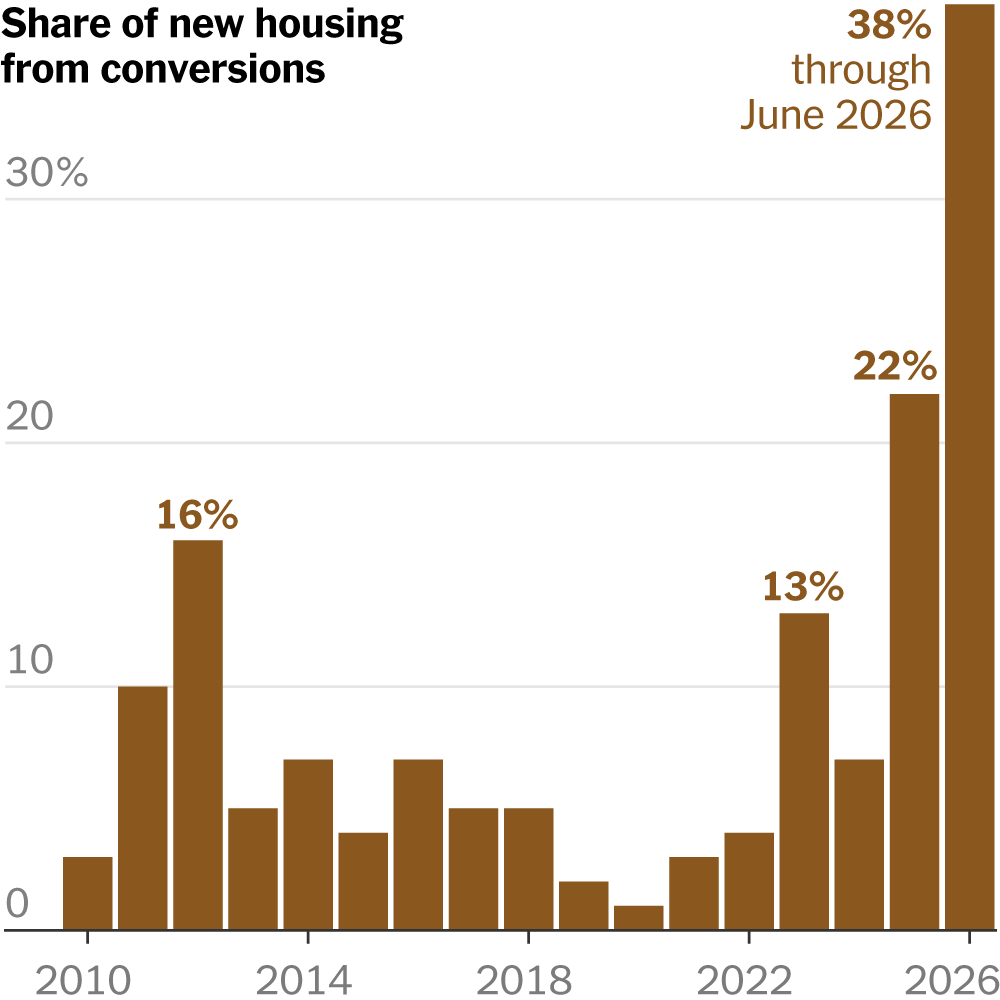
A recent New York Times analysis reveals a sharp increase in the pace of office-to-residential conversions across New York City. This trend has accelerated notably in recent years, driven largely by rising vacancy rates in commercial office spaces, a direct consequence of evolving work patterns accelerated by the COVID-19 pandemic. As companies increasingly adopt remote and hybrid work models, demand for traditional office space has declined, leaving numerous buildings underutilized or vacant.
The former Pfizer building stands as a prominent example of this adaptive reuse strategy. Once a bustling corporate headquarters, it has been repurposed to accommodate residential units, reflecting the city’s efforts to meet housing demand through innovative means. However, the building also experienced structural challenges, including the buckling of two steel columns in July, underscoring the engineering complexities and risks involved in converting older office structures into safe, livable homes. This incident highlights the importance of rigorous structural assessments and the need for specialized expertise in such conversions.
Addressing New York’s Housing Shortage
New York City’s housing shortage is characterized by skyrocketing rents, a limited supply of affordable housing, and a steadily increasing population. Traditional methods of expanding housing stock, such as new construction, often face significant obstacles including stringent zoning restrictions, high development costs, and prolonged approval processes that can delay project completion for years.
Office-to-residential conversions provide a pragmatic alternative by repurposing existing infrastructure, enabling the city to increase housing availability more rapidly and efficiently. Beyond simply adding units, this approach revitalizes neighborhoods that have experienced commercial decline, fostering mixed-use communities that support local economies and reduce commuting times for residents. By transforming dormant office buildings into vibrant residential spaces, the city aims to create more sustainable and livable urban environments that better align with current demographic and economic realities.
Engineering and Safety Challenges
Despite their potential, office-to-residential conversions pose significant engineering and safety challenges. Office buildings are originally designed with different structural, mechanical, and spatial requirements compared to residential buildings. For example, floor layouts, plumbing, ventilation, and load-bearing capacities must be carefully adapted to meet residential standards, which often require more complex configurations such as kitchens and bathrooms in each unit.
The incident at the former Pfizer building, where two steel columns buckled, highlights the risks inherent in retrofitting older structures. Ensuring structural integrity during and after conversion demands rigorous inspections, specialized engineering expertise, and strict adherence to updated building codes. These requirements can increase project costs and extend timelines, potentially offsetting some advantages of adaptive reuse. Moreover, older buildings may require extensive upgrades to meet modern safety and accessibility standards, including fire safety systems, seismic reinforcements, and accessibility features mandated by law, further complicating conversions.
Economic and Social Implications
Economically, converting office spaces into residential units can stimulate local markets by attracting new residents and increasing demand for services, retail, and amenities. Property owners benefit by repurposing assets that might otherwise remain vacant or depreciate in value, helping to stabilize real estate markets and reduce urban blight.
Socially, these conversions can contribute to more diverse and vibrant neighborhoods by introducing new residents and fostering mixed-use communities. However, concerns remain regarding affordability and displacement. Without deliberate policy interventions, new residential units may primarily serve higher-income residents, limiting their impact on alleviating the housing crisis for lower-income populations.
Additionally, the shift from commercial to residential use affects the city’s tax base and employment landscape. While office jobs may decline, residential services and local businesses may expand, requiring coordinated planning to balance economic and social outcomes. Engaging community stakeholders and aligning development with neighborhood needs are essential to ensuring equitable growth and minimizing potential negative impacts such as gentrification or strain on local infrastructure.
Looking Ahead: Policy and Planning Considerations
To maximize the benefits of office-to-residential conversions, New York City must refine its regulatory framework. Streamlining approval processes while maintaining rigorous safety and quality standards can encourage more conversions without compromising building integrity or resident well-being.
Incentives such as tax breaks, zoning variances, or subsidies may be necessary to attract developers, particularly for projects that include affordable housing units. Integrating community input and proactively addressing infrastructure needs—such as transportation, schools, and public services—will be critical to supporting sustainable neighborhood growth.
Ultimately, office-to-residential conversions represent one component of a multifaceted strategy to address New York’s housing crisis. Combining this approach with new construction, preservation of existing affordable housing, and innovative housing models will be essential to meeting the city’s long-term housing needs while fostering inclusive and resilient communities.
What this means
New York City’s strategy of converting office buildings into residential spaces is a pragmatic and timely response to a pressing housing crisis. By leveraging existing infrastructure, the city can expand housing availability more rapidly than through traditional construction methods alone. However, the complexities involved—from ensuring structural safety to addressing social equity—require careful management and robust policy support. As the city continues to evolve, balancing these factors will be key to creating livable, affordable, and vibrant communities that meet the diverse needs of its residents.
Originally reported by nytimes.com. Adapted for our readers with AI assistance.
Global investment banking giant J.P. Morgan is preparing to establish its first merchant banking operation in Nigeria, targeting a pre-year-end 2026 commencement pending regulatory…
Federal Government unveils comprehensive Nutrition 774 Initiative, leveraging schools as primary platforms for tackling child malnutrition through expanded feeding programs, health services, and nutrition…
Analysis shows Nigeria’s federal education allocation lags regional peers, affecting workforce development and creating opportunities for private sector involvement in training, technology and infrastructure.