
Arts & Culture
Kennedy Center Board Votes to Inscribe Donald Trump’s Name Amid Controversy
The Kennedy Center board's vote to inscribe Donald Trump's name on the building defies a court order and ignites debate over political influence in…
TAMFIS NIG LTDRC 8067447CAC ACTIVEFinima, Bonny Island, Rivers State

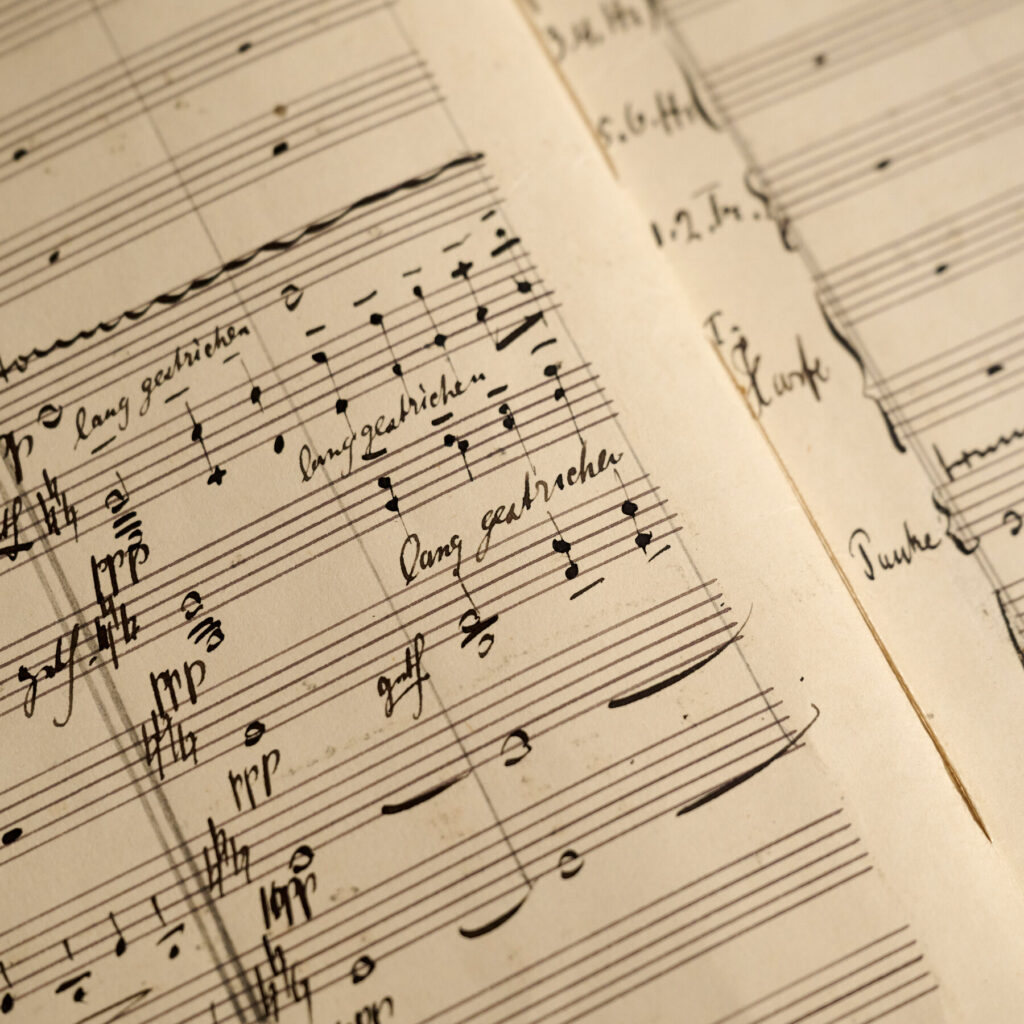
Musical manuscripts transcend their role as mere performance guides; they are intimate artifacts that connect us directly to the composer’s creative journey. These handwritten scores reveal the emotional and intellectual labor behind some of the world’s most beloved compositions, offering a tangible link across time. Franz Welser-Möst, the esteemed music director of the Cleveland Orchestra, recently provided a rare and detailed exploration of the original manuscript of Gustav Mahler’s monumental 'Resurrection' Symphony. Through his insights, we gain a richer understanding of how these manuscripts function as both historical documents and living, breathing works of art that continue to inspire musicians and audiences alike.
Unlike printed scores that present a polished, final version of a composition, handwritten manuscripts expose the composer’s evolving thoughts and creative decisions. Marginal notes, corrections, and crossed-out passages reveal a process of experimentation and refinement that is otherwise invisible. In Mahler’s 'Resurrection' Symphony manuscript, one can observe the meticulous attention he devoted to dynamics, phrasing, and orchestration. These intricate details highlight Mahler’s intense emotional engagement and his profound quest to express themes of life, death, and transcendence.
Franz Welser-Möst emphasizes that engaging directly with the manuscript allows musicians and audiences to experience the work on a more personal and immediate level. The physical presence of the composer’s handwriting—with its unique flourishes, idiosyncrasies, and even imperfections—bridges the gap of time, making the music feel alive. This tangible connection fosters a deeper appreciation for the composer’s artistic intentions and the human effort behind the masterpiece.
Completed in 1895, Mahler’s Symphony No. 2, known as the 'Resurrection' Symphony, stands as a towering achievement in the orchestral repertoire. Spanning five movements, the symphony explores profound themes of mortality, resurrection, and the afterlife, moving from somber reflection to triumphant affirmation. Its vast scale and emotional range demand both technical mastery and deep interpretive insight from performers.
The manuscript itself reflects this complexity through intricate markings that guide musicians through the symphony’s shifting moods and textures. Welser-Möst notes that Mahler’s detailed instructions—precise articulation marks, dynamic nuances, and tempo changes—are not mere suggestions but essential elements shaping the narrative arc of the work. Studying the manuscript enables conductors and musicians to honor Mahler’s vision faithfully while also bringing their own interpretive insights to each performance, ensuring the symphony’s emotional power resonates anew with every audience.
A conductor’s engagement with a manuscript is both scholarly and artistic, involving a dialogue between historical fidelity and contemporary expression. Franz Welser-Möst describes his approach as a careful balancing act—respecting Mahler’s detailed instructions while navigating the practical realities of modern orchestral performance. Manuscripts often contain ambiguities, revisions, or notational idiosyncrasies that require thoughtful interpretation and informed decision-making.
Welser-Möst’s extensive experience with the Cleveland Orchestra demonstrates how deep familiarity with the manuscript informs rehearsal strategies and performance choices. By understanding Mahler’s intentions as revealed through subtle score nuances, the conductor can guide the orchestra to deliver a performance that is both authentic and emotionally compelling. This interpretive process transforms the manuscript from a static document into a living blueprint for artistic expression.
In an era dominated by digital scores and recordings, the physical manuscript retains a unique and irreplaceable significance. It offers a tactile connection to the composer’s creative act that digital reproductions cannot fully replicate. Manuscripts serve as primary sources for musicologists and performers who seek to verify or restore original intentions, especially when printed editions contain errors, editorial changes, or interpretive compromises.
Welser-Möst highlights that the Cleveland Orchestra’s access to Mahler’s original manuscript enriches their artistic process and deepens audience engagement. Exhibiting or studying these documents invites the public to appreciate the human effort and historical context behind great music, fostering a more profound cultural connection. This enduring relevance underscores the importance of preserving and engaging with handwritten scores despite technological advancements.
Beyond their technical and historical value, musical manuscripts evoke a powerful emotional response. Seeing Mahler’s handwritten notes—with visible corrections, expressive markings, and personal annotations—reminds us of the composer’s humanity, vulnerability, and dedication. This intimacy can transform the way listeners experience the music, adding layers of meaning, empathy, and connection.
Welser-Möst shares that such encounters inspire musicians to approach the music with renewed dedication and sensitivity. The manuscript becomes more than a set of instructions; it becomes a source of inspiration that encourages performers to convey not just the notes but the spirit and emotional essence behind them. This deepened engagement enriches both the performance and the audience’s listening experience.
Musical manuscripts are invaluable artifacts that connect us directly to the creative minds behind great compositions. Franz Welser-Möst’s exploration of Mahler’s 'Resurrection' Symphony manuscript underscores the profound intimacy and artistic insight these documents offer. They enrich our understanding of the music’s emotional and intellectual depths, guiding performers toward authentic interpretations and inviting audiences into a more meaningful listening experience. As technology evolves, preserving and engaging with these handwritten scores remains crucial for sustaining the living legacy of classical music and ensuring that the human stories behind these masterpieces continue to resonate.
Originally reported by nytimes.com. Adapted for our readers with AI assistance.
Keep reading
Arts & Culture
The Kennedy Center board's vote to inscribe Donald Trump's name on the building defies a court order and ignites debate over political influence in…
Arts & Culture
The opioid crisis remains one of the most devastating public health challenges in the United States, cla...
Arts & Culture
Balancing Preservation and Presentation: How the New York Historical Society Manages Fragile Exhibits is...
TAMFIS NIG LTD
Electrical and instrumentation engineering, bid preparation and consulting, IT and software.