AI Trends & News
Surface Laptop Ultra Pre-orders Open: Price, Release Date and AI Features
Microsoft opens Surface Laptop Ultra pre-orders from US$2,599.99. Explore its launch date, NVIDIA RTX Spark features and implications for Nigerian businesses.
TAMFIS NIG LTDRC 8067447CAC ACTIVEFinima, Bonny Island, Rivers State


On July 19, 2024, millions of computers around the world experienced a major outage caused by a faulty software update from American cyber-security firm CrowdStrike. The incident triggered widespread disruptions across essential services such as airlines, banks, supermarkets, and media companies. Users encountered the notorious "blue screen of death," signaling system crashes that required manual intervention to resolve. This event highlights the fragility of interconnected digital systems and raises important questions about dependency on technology providers and the challenges of managing large-scale IT failures.
The root of the global outage was traced to a defective software update released by CrowdStrike, a prominent cyber-security company specializing in protecting government and critical infrastructure clients. The update targeted Microsoft Windows computers and was first reported to cause issues in Australia before rapidly spreading worldwide.
Affected users encountered the "blue screen of death," a critical system error that forces computers to crash and restart. Unlike typical software glitches that can be resolved remotely, these crashes required manual fixes, significantly complicating recovery efforts.
CrowdStrike's CEO George Kurtz clarified that the problem stemmed from a single content update for Windows hosts, explicitly stating that Mac and Linux systems were not impacted. He emphasized that this was not a cyber attack or security breach but a technical fault that had been identified and isolated, with a fix already deployed.
The outage's effects were felt worldwide, disrupting a wide range of essential services. At airports such as Singapore's Changi Airport, check-in processes for over ten carriers, including budget airlines Scoot, Jetstar, AirAsia, and Cebu Pacific, were forced to revert to manual operations. This led to flight delays, long queues, and operational chaos.
Retail operations were also affected, with supermarkets temporarily closing due to payment systems being offline. Carparks experienced issues with barrier arms, which had to remain open to allow vehicle movement without automated control.
Financial institutions reported varying degrees of impact. While some internal systems used by staff faced disruptions, critical banking operations and customer-facing services remained largely unaffected. The Singapore Exchange experienced limited issues with its post-trade system, though key trading and clearing services continued to function normally.
Media organizations, including The Straits Times newsroom, faced brief operational interruptions, highlighting how widespread the outage was across different industries.
Singapore was among the countries affected, with users reporting blue screen errors around midday on July 19. The disruptions at Changi Airport and other critical services underscored the vulnerability of even highly developed digital infrastructures.
The Monetary Authority of Singapore (MAS) reassured the public that essential financial systems remained operational despite some internal disruptions. Similarly, the Ministry of Digital Development and Information emphasized that this was a technical issue rather than a cyber-security incident.
Minister Josephine Teo communicated that while essential government services, banks, telecommunications, and hospitals continued to operate, some organizations experienced inconveniences. The Singapore Cyber Emergency Response Team promptly issued advisories to assist system administrators and users in mitigating the impact and facilitating recovery.
The government pledged close monitoring and support to affected entities, reflecting the high priority placed on maintaining digital resilience.
The nature of the system crashes meant that affected computers could not be updated or fixed remotely, necessitating manual intervention by IT teams. This has extended the recovery timeline, with experts warning that it could take several days before all systems return to normal functionality.
Former CrowdStrike regional director Scott Jarkoff explained that the blue screen indicates a system crash severe enough to prevent remote patching, leading to a surge in workload for technical teams tasked with restoring operations.
CrowdStrike has committed to working closely with impacted customers to ensure full recovery. CEO George Kurtz expressed regret for the disruptions caused and assured that many systems were rebooting successfully, though some might require additional time to become fully operational again.
Cyber-security specialists like Jake Moore from ESET highlighted how this incident serves as a stark reminder of society's heavy reliance on major technology providers such as Microsoft and CrowdStrike for everyday business and life functions.
This incident is part of a broader pattern of significant technology disruptions in recent years. For example, in February 2023, a failure at Microsoft Azure caused an 18-hour outage affecting multiple services across Asia.
In April 2023, a fire at a Global Switch data center in Paris disrupted Google Cloud services for weeks, impacting government websites and airport operations.
June 2023 saw an Amazon Web Services outage that rendered websites for major organizations like The Boston Globe and Southwest Airlines inaccessible for hours.
These events collectively highlight the vulnerabilities inherent in centralized cloud and IT infrastructure, emphasizing the need for robust contingency planning and diversified technology strategies.
The CrowdStrike software update incident on July 19, 2024, serves as a critical case study in the vulnerabilities of modern digital infrastructure. While no security breach occurred, the widespread disruptions across multiple essential sectors reveal how a single technical fault can cascade into global operational challenges. The event highlights the importance of rigorous testing, rapid response mechanisms, and diversified technological ecosystems to mitigate risks. Governments, businesses, and technology providers must collaborate closely to enhance system resilience, ensuring that essential services remain robust in the face of inevitable future disruptions.
Originally reported by asiaone.com. Adapted for our readers with AI assistance.
Keep reading
AI Trends & News
Microsoft opens Surface Laptop Ultra pre-orders from US$2,599.99. Explore its launch date, NVIDIA RTX Spark features and implications for Nigerian businesses.
Science & Technology
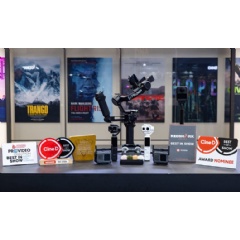
DJI’s IBC recognition puts pocket gimbal and panoramic capture in the spotlight. Here is how creators can assess framing, editing effort and recording workflows.
Business News
App store steering is about more than permission to add a link. Explore fees, renewal terms, customer experience and the UK consultation.
TAMFIS NIG LTD
Electrical and instrumentation engineering, bid preparation and consulting, IT and software.