
AI Trends & News
Surface Laptop Ultra Pre-orders Open: Price, Release Date and AI Features
Microsoft opens Surface Laptop Ultra pre-orders from US$2,599.99. Explore its launch date, NVIDIA RTX Spark features and implications for Nigerian businesses.
TAMFIS NIG LTDRC 8067447CAC ACTIVEFinima, Bonny Island, Rivers State

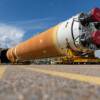
NASA’s Artemis program represents a bold new chapter in human space exploration, aiming to land astronauts on the Moon and pave the way for future missions to Mars and beyond. Central to this ambitious endeavor is the Space Launch System (SLS), NASA’s most powerful rocket ever built. Recently, NASA engineers completed the rollout of the SLS core stage for Artemis II, the first crewed mission in the Artemis series. This article delves into the details of this milestone event, exploring the transportation, assembly, and significance of the SLS core stage as NASA prepares for humanity’s return to the lunar surface.
The Artemis program is NASA’s initiative to return humans to the Moon for the first time since the Apollo missions. It aims to land the first woman and the first person of color on the lunar surface, fostering inclusivity and inspiring a new generation of explorers. Beyond these historic milestones, Artemis seeks to establish a sustainable human presence on the Moon, serving as a stepping stone for future missions to Mars.
This program integrates advanced technologies such as the Orion spacecraft, new spacesuits, and the Gateway lunar orbiting station. The Artemis missions will also enable scientific research to better understand the Moon’s resources and environment, potentially unlocking the secrets necessary for long-duration space exploration.
At the heart of Artemis is the Space Launch System, designed to launch astronauts beyond Earth’s orbit. The successful deployment and operation of the SLS rocket are crucial for meeting NASA’s long-term goals, making each milestone, such as the shipment of the core stage, a pivotal moment in space exploration history.
The SLS core stage is the largest rocket stage NASA has ever produced, standing an impressive 212 feet tall. It comprises five major components, including two massive propellant tanks that hold over 733,000 gallons of super-chilled liquid hydrogen and liquid oxygen. These propellants feed four RS-25 engines, which generate more than 2 million pounds of thrust during launch.
This core stage is engineered to operate for just over eight minutes during ascent, propelling astronauts aboard the Orion spacecraft toward lunar orbit. The design incorporates advanced materials and manufacturing techniques to withstand the extreme conditions of launch and space travel.
Manufactured at NASA’s Michoud Assembly Facility in New Orleans, the core stage represents a culmination of years of design, engineering, and testing. Its successful completion and rollout signify NASA’s readiness to proceed with the next phases of Artemis II’s launch preparations.
On July 16, 2024, coinciding with the 55th anniversary of Apollo 11’s historic launch, NASA engineers carefully moved the SLS core stage out of the Michoud Assembly Facility. Using specialized transporters, the team maneuvered the enormous rocket stage to the Pegasus barge docked nearby.
The Pegasus barge is specially designed to transport large rocket components via waterways. It will carry the core stage over 900 miles along the Gulf Coast and up the Atlantic Ocean to NASA’s Kennedy Space Center in Florida. This journey requires meticulous planning to ensure the rocket stage remains secure and undamaged.
This transportation step marks a significant milestone, transitioning the core stage from assembly to launch readiness. Once at Kennedy, the stage will be moved into the Vehicle Assembly Building (VAB) for final integration with other rocket segments and the Orion spacecraft.
Upon arrival at Kennedy Space Center, NASA engineers will undertake critical outfitting and integration tasks within the Vehicle Assembly Building. The core stage will be joined with the twin solid rocket boosters, which provide additional thrust during liftoff.
Adapters that connect the core stage to the Orion spacecraft are scheduled to arrive later this year. Additionally, the interim cryogenic propulsion stage, already at Kennedy, will be integrated to complete the rocket’s upper-stage configuration necessary for lunar missions.
Simultaneously, the Orion spacecraft is undergoing final preparations at Kennedy. Ground support systems and mission control teams are also refining launch and flight protocols to ensure safety and mission success for Artemis II’s crewed flight.
The development and assembly of the SLS core stage are the results of a vast collaboration among NASA centers, contractors, and suppliers across the United States. Boeing serves as the prime contractor for the core stage, managing production and assembly at Michoud.
Aerojet Rocketdyne, an L3Harris Technologies company, leads the manufacture of the RS-25 engines that power the core stage. In total, more than 1,100 companies contribute to the SLS program, underscoring the extensive industrial base supporting NASA’s lunar ambitions.
All ten NASA centers play essential roles, from design and testing to mission planning and operations. This national effort reflects the complexity and scale of Artemis, positioning the United States to reclaim leadership in human space exploration.
The SLS core stage incorporates cutting-edge technology to maximize performance and safety. Its propellant tanks utilize friction stir welding, a technique that creates strong, lightweight joints critical for withstanding launch stresses.
Advanced avionics and control systems ensure precise engine operation and vehicle stability during ascent. The RS-25 engines themselves have been upgraded with modern components to enhance reliability and efficiency compared to their Space Shuttle predecessors.
Thermal protection systems guard the core stage against extreme heat during launch and ascent. These innovations collectively enable the SLS to deliver unprecedented thrust and payload capacity, essential for Artemis missions carrying astronauts and cargo beyond Earth orbit.
Following Artemis II, NASA plans subsequent missions including Artemis III, which aims to land astronauts on the lunar South Pole. To support these missions, the SLS will evolve into the Block 1B configuration featuring an exploration upper stage for enhanced payload capacity.
Manufacturing for future core stages and upper stages is already underway at Michoud, with Boeing expanding assembly operations to Kennedy Space Center to optimize workflow and space constraints. These advancements will facilitate more frequent Artemis launches.
As Artemis progresses, NASA will continue refining rocket components, spacecraft systems, and ground operations. This iterative process ensures mission safety, efficiency, and the fulfillment of NASA’s vision for sustainable lunar exploration and eventual crewed Mars missions.
The rollout and shipment of the SLS core stage for Artemis II mark a historic milestone in NASA’s journey back to the Moon. This achievement reflects years of collaboration, innovation, and dedication from engineers, scientists, and industry partners nationwide. As the Artemis program advances, the successful integration and launch of this rocket stage will enable humanity’s next giant leap—returning astronauts to the lunar surface and setting the stage for future exploration of Mars and beyond. NASA’s commitment to pushing the boundaries of space travel continues to inspire and drive progress in science and technology worldwide.
Originally reported by nasa.gov. Adapted for our readers.
Keep reading
AI Trends & News
Microsoft opens Surface Laptop Ultra pre-orders from US$2,599.99. Explore its launch date, NVIDIA RTX Spark features and implications for Nigerian businesses.
Science & Technology
DJI’s IBC recognition puts pocket gimbal and panoramic capture in the spotlight. Here is how creators can assess framing, editing effort and recording workflows.
Business News
App store steering is about more than permission to add a link. Explore fees, renewal terms, customer experience and the UK consultation.
TAMFIS NIG LTD
Electrical and instrumentation engineering, bid preparation and consulting, IT and software.

