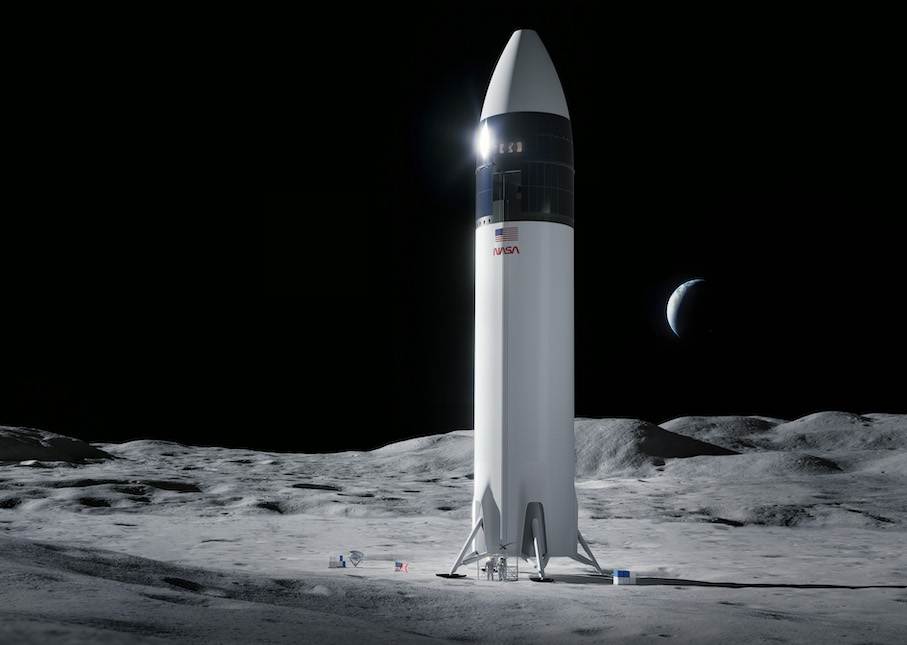
NASA assessment suggests potential additional delays for Artemis 3 lunar lander
NASA’s Artemis program is a landmark initiative aiming to return astronauts to the lunar surface, with Artemis 3 slated as the first crewed mission to land on the Moon since Apollo. Central to this mission is the Human Landing System (HLS), with SpaceX’s Starship selected as the lunar lander. However, a recent NASA confirmation review has revealed a nearly one-in-three chance that the Starship lander may not be ready until well after the scheduled September 2026 landing. This article delves into NASA’s assessment, the technical and programmatic challenges faced, and what these potential delays could mean for the Artemis 3 timeline and broader lunar exploration efforts.
Understanding NASA’s Confirmation Review and Schedule Confidence Levels
In December 2023, NASA conducted a critical confirmation review, termed Key Decision Point C (KDP-C), for the Human Landing System Initial Capability project. This review establishes firm cost and schedule baselines and is pivotal in determining the feasibility of meeting program milestones. The KDP-C is a formal checkpoint NASA uses to quantify risk and uncertainty in project timelines and budgets.
The review set a schedule baseline for the Starship lunar lander’s readiness at February 2028, reflecting a 70% joint confidence level (JCL). This confidence level means NASA estimates there is a 70% chance that the lander will be ready for the lunar orbit checkout review by this date, which is a critical milestone before the actual lunar landing.
However, this baseline contrasts with the Artemis 3 mission’s target date of September 2026, implying a substantial risk of delay. The 70% JCL also infers a 30% probability that the lander could be ready even later than February 2028, underscoring the uncertainties inherent in developing pioneering space technology.
Technical Challenges Impacting Starship’s Development for Artemis 3
SpaceX’s Starship, the designated lunar lander for Artemis 3, is a highly ambitious spacecraft designed for multiple roles, including lunar landing and crew transport. Despite promising progress, the project faces numerous technical hurdles that could affect the schedule. These challenges include developing reliable in-space cryogenic propellant transfer capabilities, a critical technology for refueling Starship in orbit.
NASA’s associate administrator for exploration systems development, Cathy Koerner, has acknowledged these technical obstacles, emphasizing that while SpaceX is making significant strides, the complexity of the mission demands rigorous testing and validation. One of the next major tests is scheduled for early 2025 and involves demonstrating the in-space propellant transfer system, which is essential for the lander’s operational success.
Additional challenges include integrating the elevator system astronauts will use to descend from the Starship cabin to the lunar surface and ensuring the spacecraft meets stringent safety and performance standards. These technical demands contribute to the schedule risk highlighted in the recent NASA assessment.
Cost Implications and Budgetary Considerations for the HLS Program
Alongside schedule risks, NASA’s KDP-C review established a cost baseline of approximately $4.9 billion for the HLS Initial Capability project at the 70% confidence level. This figure encompasses the fixed-price contract awarded to SpaceX, earlier awards to competitors Blue Origin and Dynetics, and NASA’s internal project office costs.
Managing costs effectively is critical, as any schedule delays often translate into increased program expenditures. The fixed-price contract with SpaceX provides some cost certainty; however, unforeseen technical challenges or additional testing requirements could necessitate further funding or schedule adjustments.
The Government Accountability Office (GAO) has emphasized that NASA’s use of a 70% confidence level is a conservative approach to budgeting and scheduling, which assumes the realization of broad risks. This conservative stance aims to mitigate the potential financial impact of delays but also highlights the inherent uncertainties in such a pioneering endeavor.
NASA’s Contingency Planning and Risk Mitigation Strategies
NASA is actively preparing for various contingencies to ensure the Artemis 3 mission can proceed despite potential delays in the lunar lander’s readiness. The agency has conducted extensive “next-worse failure” analyses to understand the implications if one or more mission elements experience setbacks.
One contingency under consideration involves testing Starship and the Orion spacecraft in low Earth orbit, analogous to the Apollo 9 mission, to validate critical systems before attempting a lunar landing. While NASA has downplayed the likelihood of this approach becoming necessary, it remains part of the agency’s comprehensive risk mitigation framework.
These contingency plans highlight NASA’s commitment to mission success and the recognition that delays in one component should not imperil the overall Artemis program. By maintaining flexible mission architectures, NASA aims to adapt to technical challenges while pursuing its lunar exploration goals.
The Role of In-Space Cryogenic Propellant Transfer Testing
A pivotal milestone for the Artemis 3 lunar lander is the in-space cryogenic propellant transfer test, planned for early 2025. This test will demonstrate the capability to transfer liquid oxygen and methane between spacecraft in orbit, enabling Starship to refuel before descending to the Moon.
Successful propellant transfer is vital because it allows the lander to launch with less fuel and refuel in lunar orbit, optimizing mass and efficiency. Failure or delay in this technology demonstration could significantly impact the Starship lander’s readiness and Artemis 3’s overall schedule.
NASA’s standing review board has underscored the importance of using the results from this test to inform the program’s critical design review scheduled for 2025. This review will assess whether Starship’s design is mature and reliable enough to proceed toward final qualification and operational use.
Stakeholder Perspectives and NASA’s Confidence in SpaceX
Despite the highlighted risks and potential delays, NASA leadership continues to express confidence in SpaceX as the provider for the Artemis 3 lunar lander. Agency officials have praised SpaceX’s progress, including recent integrated test flights of Starship and its Super Heavy booster, as well as ongoing development work on critical subsystems.
At a June 2024 meeting of the National Academies’ Space Studies Board, NASA’s Cathy Koerner reaffirmed the agency’s commitment to the 2026 Artemis 3 timeline, emphasizing that technical challenges are being actively addressed. This optimism reflects NASA’s strategic partnership approach, leveraging commercial innovation to meet ambitious exploration objectives.
Nonetheless, NASA remains transparent about the uncertainties and maintains a realistic outlook, as embodied in the 70% confidence level schedule assessment. This balance between confidence and caution is essential in managing expectations and preparing for the complexities of deep space missions.
Implications for Artemis 3 and the Future of Lunar Exploration
Potential delays in the Starship lunar lander development could have broader implications for the Artemis 3 mission and NASA’s lunar exploration roadmap. If the lander is not ready by the planned 2026 launch, the crewed lunar landing may be postponed, affecting scientific objectives and international partnership commitments.
Delays could also influence the timeline for establishing a sustainable human presence on the Moon, a key goal of the Artemis program. The lander’s readiness is critical for subsequent missions, which aim to build lunar infrastructure and test technologies for eventual Mars exploration.
However, NASA’s systematic risk assessment, contingency planning, and collaboration with commercial partners position the agency to adapt to challenges. The Artemis program remains a landmark effort in human space exploration, with lessons learned from development hurdles strengthening future mission success.
Conclusion
NASA’s recent assessment of the Artemis 3 lunar lander development underscores the complexities and uncertainties inherent in pioneering human space exploration. While there is a tangible risk that SpaceX’s Starship may not be ready by the planned 2026 mission date, NASA’s comprehensive risk management, technical milestones, and contingency strategies aim to keep the Artemis program on track. The potential delays highlight the challenges of developing new space technologies but also reinforce NASA’s commitment to returning humans safely to the Moon and laying the groundwork for future deep space exploration.
Originally reported by spacenews.com. Adapted for our readers.
Recent advances in machine perfusion technology are not only preserving donated livers but also making them biologically younger at a molecular level. This breakthrough…
What happens when human imagination, artificial intelligence, art and technology come together? From September 1 to 6, Samsung Electronics presented a special exhibition themed…