Top Stories
Discovery beneath soccer field reveals massive medieval convent lost for centuries
NEWYou can now listen to Fox News articles! Researchers recently uncovered a long-lost medieval convent in an unusual location in Denmark: a soccer field…
TAMFIS NIG LTDRC 8067447CAC ACTIVEFinima, Bonny Island, Rivers State

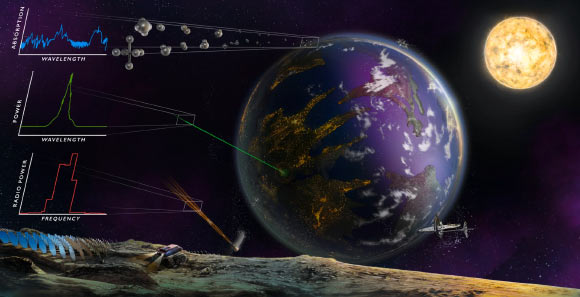
The search for extraterrestrial life has traditionally focused on biosignatures—natural signs of life such as oxygen or methane in exoplanet atmospheres. However, recent research by astrobiologists at the University of California, Riverside, led by Dr. Edward Schwieterman, proposes an innovative approach: identifying technosignatures in the form of artificial greenhouse gases. These gases, unlikely to occur naturally, could indicate the presence of advanced civilizations actively terraforming their planets. Detectable from tens of light-years away, these potent and persistent gases open a promising path toward discovering intelligent life beyond Earth.
Technosignatures refer to detectable signs of technology or industrial activity from extraterrestrial civilizations. Unlike biosignatures, which indicate natural biological processes, technosignatures point to intentional manipulation of a planet’s environment. Terraforming—the process of modifying a planet to make it habitable—would likely involve altering its atmosphere to regulate temperature and support life.
Dr. Schwieterman and his colleagues emphasize that artificial greenhouse gases could serve as clear technosignatures. Since these gases do not occur naturally in significant amounts, their detection would strongly suggest the presence of technology-using life. Terraforming an exoplanet to maintain a stable climate could involve introducing such gases to trap heat and prevent freezing conditions.
This approach expands the toolkit for astrobiologists, complementing traditional biosignature searches. By focusing on technosignatures like artificial greenhouse gases, scientists can explore new possibilities for identifying advanced civilizations, particularly those capable of planetary engineering.
The study highlights five specific fluorinated gases that are strong greenhouse agents and used in Earth’s industrial applications, including semiconductor manufacturing. These gases include fluorinated versions of methane, ethane, and propane, as well as compounds containing nitrogen-fluorine and sulfur-fluorine bonds.
Among these, sulfur hexafluoride (SF6) is notable for its extraordinary warming potential—approximately 23,500 times greater than carbon dioxide. Even small quantities can significantly increase a planet’s temperature, potentially enabling liquid water to exist on otherwise freezing worlds.
These gases are chemically inert and exceptionally stable, with atmospheric lifetimes up to 50,000 years. Their longevity means they would not require frequent replenishment to sustain a terraformed environment, making them efficient climate regulators for an advanced civilization.
Previous proposals for technosignature gases have included chlorofluorocarbons (CFCs), which are almost entirely artificial on Earth. However, CFCs have significant drawbacks: they degrade the ozone layer and are relatively short-lived due to photochemical breakdown in oxygen-rich atmospheres.
In contrast, the fully fluorinated gases studied by Schwieterman’s team are chemically inert and do not damage the ozone layer. This makes them more suitable for civilizations seeking to maintain a protective atmospheric shield while modifying climate.
Additionally, the long atmospheric lifetimes of these fluorinated gases increase their detectability. While CFCs might break down too quickly to accumulate to detectable levels, the persistence of fluorinated greenhouse gases enhances the chances of observation from distant telescopes.
These fluorinated gases absorb infrared radiation, producing distinct spectral signatures that can be detected remotely. Instruments like the James Webb Space Telescope (JWST), a collaboration between NASA, ESA, and CSA, are capable of identifying such spectral fingerprints even at low concentrations.
The research team simulated atmospheric conditions on planets orbiting the TRAPPIST-1 system, located about 40 light-years from Earth. This system, with seven rocky planets, is one of the best-studied exoplanetary systems and a prime candidate for atmospheric characterization.
Simulations suggest that gas concentrations as low as one molecule per million could be detectable and sufficient to influence the planet’s climate. This implies that even minimal terraforming efforts using these gases might be observable with current or planned space missions.
The identification of artificial greenhouse gases as technosignatures represents a paradigm shift in SETI (Search for Extraterrestrial Intelligence). It broadens the scope from passive detection of natural life processes to active signs of technological manipulation.
Detecting these gases could provide compelling evidence of intelligent life engaged in planetary engineering, potentially answering profound questions about the existence and nature of extraterrestrial civilizations.
Moreover, this method leverages existing and upcoming telescope capabilities, ensuring that searches for technosignatures can be integrated into broader exoplanet atmospheric studies without requiring specialized missions solely focused on technosignature detection.
While promising, the detection of artificial greenhouse gases faces challenges, including the need for high-resolution spectroscopy and the difficulty of distinguishing artificial gases from natural atmospheric constituents or instrumental noise.
Future telescopes with enhanced sensitivity and spectral range will improve detection capabilities. Missions planned beyond JWST, such as the Extremely Large Telescope (ELT) and space-based observatories, will further expand the search radius and precision.
Continued refinement of atmospheric models and laboratory measurements of gas spectra are essential to accurately identify and interpret technosignatures, ensuring that discoveries are robust and scientifically credible.
This research enriches astrobiology by introducing new detectable markers of advanced life forms, encouraging interdisciplinary collaboration between astronomers, chemists, and planetary scientists.
Understanding how artificial greenhouse gases could modify planetary climates also informs models of Earth’s future, offering insights into geoengineering and climate change mitigation strategies.
Finally, the study fosters public interest and imagination about humanity’s potential role in terraforming other worlds and the ethical considerations of planetary engineering on a cosmic scale.
The identification of five artificial greenhouse gases as potential technosignatures marks a significant advancement in the quest to detect intelligent extraterrestrial life. By focusing on these potent, long-lived gases, astrobiologists open a new frontier in exoplanet research—one that seeks evidence not just of life, but of civilizations actively shaping their worlds. As telescope technology progresses and our understanding deepens, the possibility of detecting these atmospheric markers grows ever more tangible, promising transformative discoveries about our place in the universe.
Originally reported by sci.news. Adapted for our readers.
Keep reading
Top Stories
NEWYou can now listen to Fox News articles! Researchers recently uncovered a long-lost medieval convent in an unusual location in Denmark: a soccer field…
News
By Engr. Tamunofiniarisa BrownReading Time: 6 Minutes The conflict between Russia and Ukraine is often framed in the media as a simple battle between…
TAMFIS NIG LTD
Electrical and instrumentation engineering, bid preparation and consulting, IT and software.