


This letter was written by Patrick Slane, director of the Chandra X-ray Center. In it, he’s speaking about NASA’s budget proposal for the next couple of years. It’s a budget that paints Chandra’s future as a bleak one — a budget that might leave Chandra’s mission in jeopardy.
“For scientists who rely on Chandra for their research, the mood is one of outrage,” Slane told Space.com, “but the determination to push forward in this effort is strong.”
Connected: Private servicing mission could also extend the lifetime of NASA’s Chandra X-ray Observatory
Without question, the sudden end of Chandra would be heartbreaking for astronomers and for astronomy. Scientists who use the Earth-orbiting spacecraft as their north star to explain the structures of black holes will face layoffs, and there might be no other observatory capable of achieving the kind of X-ray resolution Chandra has been obtaining since it reached its orbit around our planet in 1999. It is this resolution, in fact, that has allowed those black hole scientists to see not only the voids themselves, but also many cosmic wanderers that have ventured too close.
Its nested mirrors smoothed down to the precision of just a few atoms make Chandra sensitive enough to detect spaceborne signals back to their very faint sources, a sensitivity even the highly capable James Webb Space Telescope does not have. This is because the JWST in fact does not work with X-rays in any way. Neither does the Hubble Space Telescope nor the Euclid Space Telescope. In fact, there are in fact few observatories that observe at X-rays in general.
“The Athena X-ray observatory being developed by ESA — though at present undergoing budget pressures like its counterparts — would provide many of the same capabilities, with far greater light-gathering power,” Slane said, “but with angular resolution that will fall short of Chandra’s superb imaging capabilities.”
The space observatory can detect neutron stars in distant galaxies that would likely remain hidden to our other instruments, and it can decode the intricacies of stellar explosions so well it’s easy to forget how incomprehensible a stellar explosion is to the human mind. Without Chandra, it would be difficult to accomplish all of these things, perhaps impossible, unless someone builds a Chandra 2.0.
But, there might not be a plan to build a Chandra 2.0.

“The logical NASA follow-up to Chandra,” Slane said, “is a mission known as Lynx.” Sadly, however, Lynx was identified for support in the most recent Decadal survey — in most cases an overview of an extremely important science initiative over a period of ten years — but was not selected for high-priority construction funding.
Still, even among all the things listed, the most frustrating aspect of shutting down Chandra, and one that Slane’s letter makes very clear, is furthermore arguably the most important: It still works.
“I start most of my mornings attending a brief 9 a.m. check-in meeting at which Chandra operations are reported by the team,” Slane said. “I am accustomed to hearing the calm voice of Paul Viens, our lead engineer, along with his usual description: ‘There is nothing to report from engineering; things are fine with the spacecraft. This kicks off the start of another productive day with Chandra. It is sad to imagine those same words in a different context.”
NASA’s level of peep
To get into some specifics, NASA’s 2025 budget request — which agency officials actually admitted was lower than they hoped for, and more of a “congressional compromise” — doesn’t exactly mean Chandra must shut down immediately.
Instead, in the budget’s outline of how various NASA-related initiatives will be funded over the next few years, Chandra’s budget is slated to decrease significantly.
The observatory’s budget goes from a proposed $41.1 million in 2025, to $26.6 million in 2026. That 2nd resolve sticks for 2027 and 2028, nonetheless then, in 2029, the budget allocates easiest $5.2 million for Chandra.
“We knew that budget problems had been looming,” Slane said. “Our budget process for 2024 was turbulent, with fluctuating estimates that ultimately left a shortfall that, as directed by NASA HQ, was managed through reductions to the funding that supports observers.”
However, the actual budget numbers weren’t published to the crew until the true budget request was released.
“In January,” Slane said, “we went through an earlier budget exercise for which we had been directed to assess impacts of a budget for FY25 that remained at FY24 levels. The impacts had been very significant.”
The budget announced, he added, was “much, much lower than what was assumed for that exercise, which was unexpected.”
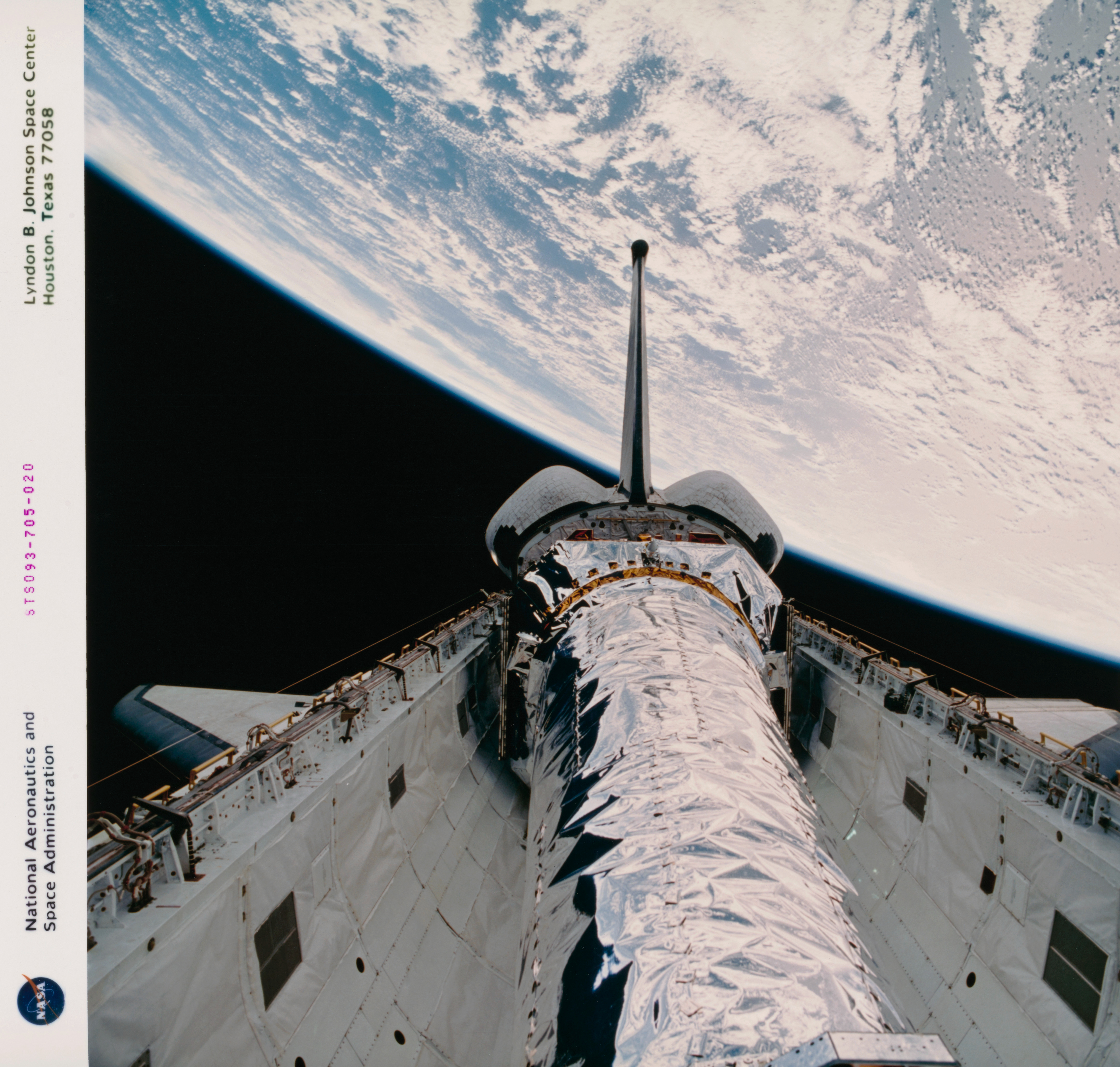
It’s also worth noting that budgets for several other initiatives are facing reductions as well; Chandra’s potential shortfall is not an isolated case.
Points have risen for the U.S. Extremely Large Telescope program, for example, thanks to NASA’s FY24 budget announcement, which was actually released not too long ago as well. It looks like only one of two large ground-based telescopes — the Giant Magellan Telescope and Thirty Meter Telescope — will likely move forward despite both being in development already. The budget for Hubble also has a proposed reduction, though it does not threaten decommission like Chandra’s does.
Next month, both initiatives will undergo a review at which presentations will be made to NASA and a panel of experts. These presentations will provide options for scenarios under which some form of the initiatives might proceed under the new budget constraints, Slane says.
“There may — at least formally — be the possibility that the panel will challenge a finding that the reductions for Chandra need to be reconsidered,” he said. “As for the next couple of years, this depends entirely on the outcome of this review, or on actions from within the science community that could prompt NASA to reconsider its priorities. It is too early to say more at this point.”
As for actions within the neighborhood, there have already been quite a few.
Even before Slane’s letter hit the Chandra website, many scientists had taken to X (formerly Twitter) to speak about the importance of those whose work relies on the beloved observatory’s capabilities.
Jonathan McDowell, an astrophysicist with the Harvard-Smithsonian Center for Astrophysics, made a post on the platform saying “A sad day at work today with many staff updating their resumes as we grapple with NASA’s plan to shut down Chandra, the world’s most powerful high-resolution X-ray space telescope, still returning remarkable science discoveries. Still hoping this can be reversed.”

“This could be a devastating blow to astrophysics in the US,” Dan Wilkins, an astrophysicist with the Kavli Institute for Particle Astrophysics and Cosmology at Stanford University, posted on X. “24 years after launch, Chandra is still doing highly impactful science, including key support for JWST programs and a vital role in the era of time-domain astronomy.”
During the Isaac Asimov debate held last week at the American Museum of Natural History in New York, Priya Natarajan, the director of the Franke Program in Science and the Humanities at Yale University, was understandably disheartened while speaking about Chandra’s potential shutdown, too.
“We would lose our X-ray eyes into the universe, which I believe would be a catastrophe,” she said, emphasizing how there is nothing available now to act as a bridge between Chandra and whatever might come next. This is a challenge for her work, which focuses on black holes. Although scientists have managed to (remarkably) detect the merger of stellar-mass black holes a few years ago, using gravitational waves in the universe observed by the Laser-Interferometer Gravitational Wave Observatory, they have yet to detect the merger of two supermassive black holes through such signals.
“We indisputably need some instruments to be taking a look at the universe with X-ray eyes repeatedly until then, attributable to supermassive black holes before they merge and that create a burst of gravitational waves comes out, there is different X-ray activity,” she explained.
As for Slane himself, he recounts how he started on the Chandra project right out of graduate school and has worked on it for his entire career. “This arguably puts me in a position to appreciate the full scope of Chandra — from the new capabilities of the observatory to the scientific opportunities it continues to offer — better than most,” he said. “It makes it hard to hear the narratives that are being put forth to suggest shutting it down or, at best, grossly underusing its capabilities.”
Chandra does not have a reentry approach
One key justification for shutting down Chandra that is included in NASA’s FY2025 budget, as Slane outlines in his letter to the community, relates to the spacecraft’s apparent “degradation.”
The disclosed language within the budget is as follows: “The Chandra spacecraft has been degrading over its mission lifetime to the extent that quite a few programs require active administration to maintain temperatures within acceptable ranges for spacecraft operations. This makes scheduling and the processing of data more complex, increasing mission administration costs beyond what NASA can afford.”
However, Slane writes in response, the temperatures of Chandra components have indeed been rising, which has ultimately made scheduling observations more difficult — but this is a known issue that has been ongoing since 2005, and thermal models and mitigation processes have been put in place to manage those effects with “astonishing success.” He also notes that “active administration” is too vague a term because Chandra is not “actively managed.” Ground control only contacts the spacecraft through one-hour communications every eight hours.
Slane also takes issue with the part of the snippet referring to “increasing mission administration costs.”

“There was only one instance in which the price has increased to keep up with temperatures,” he writes. “In our Senior Review (‘NASA’s very highest form of peer review’) in 2022, which resulted in a highly favorable appraisal of Chandra by an independent panel of prestigious scientists, we submitted a request for two additional people on our flight crew.”
This request, he explains, had been approved and corresponds to about a one percent increase in cost. But, every other budget change, he adds, had been to either reduce crew — by more than 40% over the history of the mission — or to provide occasional adjustments that covered things like cost-of-living increases.
Moreover, to put it briefly, Slane furthermore objects to a justification in the NASA budget request that says the 2022 Senior Review of Operating Missions had recommended continuing Chandra operations through FY 2025, but noted that “temperature problems” reduced the ability to “provide uninterrupted extended observing time and greatly increased complexity of mission planning.”
“For context, this document was provided by the Senior Review Committee in support of the request to add the two additional members to the flight crew,” Slane writes. “This was in the section addressing ‘Technical Capability and Cost Reasonableness’ for which their rating was ‘Excellent/Very Good.'”
“All of us realize that there might be tight budget pressure at NASA, and cuts or project delays of some kind have been anticipated,” he told Space.com. “The allocation of funding to specific initiatives is impacted by the overall size of the budget, by Congressional earmarks that protect funding for some missions but not others, by high-level guidance from the community, and by the preferences of those making decisions.”
Indeed, it appears we will know in April what the final fate of Chandra is — but, in the worst-case scenario, if the observatory is decommissioned by 2029, it would certainly be somewhat sad to imagine what its final days would look like.
Currently, Chandra is in a high elliptical orbit above the Earth’s atmosphere. If it is turned off, it must continue on its course while fading from astronomers’ toolkits.
At final, this might per chance per chance furthermore originate up falling toward our planet.
Meanwhile, the crew might per chance per chance no longer be ready to manipulate the outcomes of external forces on the spacecraft, “within the slay leaving a wonder of science and engineering to tumble aimlessly as it silently orbits the planet,” Slane said. “Reviews taking a compare 100 years into the long proceed camouflage no re-entry into the ambiance.
“An enormous gap in the availability of a high-quality, general-purpose, X-ray observing facility beyond Chandra is looming for the entire field of astrophysics.”


