
AI Trends & News
Surface Laptop Ultra Pre-orders Open: Price, Release Date and AI Features
Microsoft opens Surface Laptop Ultra pre-orders from US$2,599.99. Explore its launch date, NVIDIA RTX Spark features and implications for Nigerian businesses.
TAMFIS NIG LTDRC 8067447CAC ACTIVEFinima, Bonny Island, Rivers State

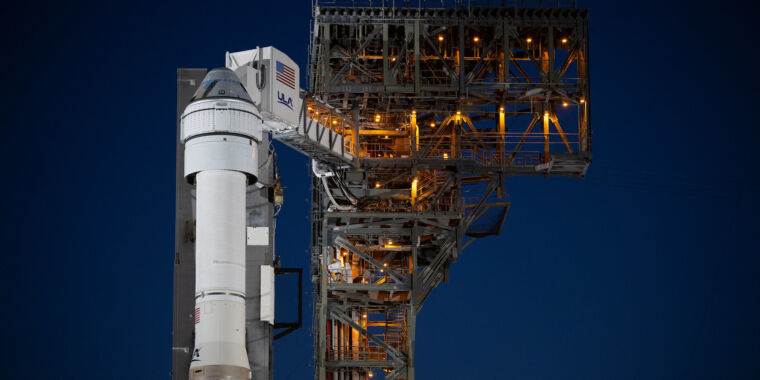
NASA and Boeing have been working diligently to bring Boeing’s Starliner spacecraft to operational status for crewed missions to the International Space Station (ISS). After overcoming a series of technical setbacks, including a persistent helium leak and a rare propulsion system vulnerability, senior officials now anticipate launching the first crewed Starliner mission as soon as June 1. This article explores the technical challenges faced, solutions implemented, and the significance of this upcoming launch within the broader context of NASA’s Commercial Crew Program.
Boeing’s Starliner spacecraft was developed under NASA’s Commercial Crew Program, aimed at restoring domestic crew launch capability to the International Space Station. Awarded a $4.2 billion contract in 2014, Boeing’s goal was to provide safe, reliable, and cost-effective crew transportation services.
The program experienced multiple delays due to technical issues with spacecraft subsystems, ranging from propulsion system anomalies to parachute malfunctions. These setbacks extended the timeline well beyond initial projections, necessitating uncrewed test flights to validate spacecraft safety and performance.
Despite these challenges, Boeing successfully completed two unpiloted demonstration missions in 2019 and 2022. These missions provided critical data, enabling engineers to refine Starliner’s systems and prepare for the crucial first crewed flight.
Following a scrubbed launch attempt in early May, ground teams identified a helium leak in Starliner’s service module. The leak was initially small but stable, with a rate of approximately 70 psi per minute at its peak during troubleshooting efforts.
Over two and a half weeks, NASA and Boeing engineers conducted intensive reviews to pinpoint the leak’s root cause. Their analysis indicated the leak was minor and unlikely to pose a significant risk to mission safety, even if it worsened during flight.
The identification of the helium leak prompted a comprehensive assessment of related propulsion system components to ensure no additional vulnerabilities existed. This meticulous approach underscores NASA’s commitment to crew safety and mission success.
While investigating the helium leak, engineers discovered a rare but critical vulnerability within Starliner’s propulsion system. This issue, representing less than 1% of possible failure modes, could potentially prevent the spacecraft from performing a deorbit burn during mission conclusion.
The deorbit burn is essential for safely returning the spacecraft to Earth by slowing its velocity to re-enter the atmosphere. Without redundancy in this maneuver, a single failure could jeopardize crew safety and mission success.
NASA’s Commercial Crew Program Manager Steve Stich described this vulnerability as an 'invent vulnerability'—a novel failure mode that required innovative workarounds before crewed flights could proceed. Addressing this issue was paramount to ensuring Starliner’s reliability.
The discovery of the helium leak and propulsion vulnerability contributed to further delays in Starliner’s flight schedule. These issues necessitated additional engineering reviews, safety assessments, and system modifications to mitigate risks.
Earlier challenges, including parachute malfunctions detected last year and the presence of flammable tape inside the cockpit, had already postponed the crewed test flight. Boeing and NASA prioritized resolving these problems to meet stringent safety standards.
Despite these hurdles, the program’s resilience and iterative testing approach have gradually restored confidence. The impending crewed launch represents a culmination of years of troubleshooting and technical refinement.
With the technical concerns addressed, NASA and Boeing are now targeting June 1 for Starliner’s inaugural crewed mission. This launch will carry astronauts Butch Wilmore, a NASA commander, and Suni Williams, the pilot, marking a historic milestone for Boeing’s spacecraft.
The countdown for the launch has been carefully managed, incorporating lessons learned from previous scrubs and valve issues experienced with the United Launch Alliance (ULA) Atlas V rocket. Teams remain vigilant to ensure all systems are nominal before liftoff.
Pre-launch activities include final spacecraft checkouts, astronaut training refreshers, and coordination with ISS mission control. These preparations aim to guarantee a seamless mission from launch through docking and eventual return.
Starliner’s first crewed mission is a critical step in NASA’s strategy to diversify and commercialize access to low Earth orbit. Alongside SpaceX’s Crew Dragon, Starliner enhances the agency’s capability to transport astronauts safely and reliably.
This diversification reduces dependency on foreign spacecraft and strengthens the United States’ leadership in human spaceflight. It also fosters healthy competition among commercial providers, driving innovation and cost efficiencies.
Moreover, successful Starliner missions support ongoing research aboard the ISS, enabling scientific advancements and technology demonstrations that benefit humanity. The spacecraft’s operational status will contribute to sustainable space exploration efforts.
While June 1 represents a hopeful target date, NASA and Boeing remain cautious given the program’s history of technical challenges. Contingency plans are in place to address any anomalies that may arise during pre-launch or flight operations.
Continued collaboration between NASA, Boeing, and ULA is essential to maintain schedule integrity and ensure mission safety. Future Starliner flights will build upon lessons learned from this initial crewed mission to improve reliability further.
Looking ahead, Boeing aims to support regular crew rotations to the ISS and potentially expand Starliner’s role in commercial and government space missions. Success in these endeavors will be critical for the spacecraft’s long-term viability.
The Boeing Starliner spacecraft’s journey toward its first crewed mission epitomizes the complexities and challenges inherent in modern spaceflight. Following years of delays caused by technical anomalies such as helium leaks and propulsion system vulnerabilities, NASA and Boeing have made significant strides in resolving these issues. With a planned launch as soon as June 1, the Starliner program is poised to join the ranks of operational crewed spacecraft, enhancing the United States’ ability to ferry astronauts to the International Space Station. This milestone not only validates Boeing’s engineering prowess but also strengthens NASA’s Commercial Crew Program, fostering a new era of reliable and diversified human space transportation. As the countdown continues, the space community watches with anticipation, hopeful that Starliner’s success will pave the way for sustainable and innovative exploration beyond low Earth orbit.
Originally reported by arstechnica.com. Adapted for our readers.
Keep reading
AI Trends & News
Microsoft opens Surface Laptop Ultra pre-orders from US$2,599.99. Explore its launch date, NVIDIA RTX Spark features and implications for Nigerian businesses.
Science & Technology
DJI’s IBC recognition puts pocket gimbal and panoramic capture in the spotlight. Here is how creators can assess framing, editing effort and recording workflows.
Business News
App store steering is about more than permission to add a link. Explore fees, renewal terms, customer experience and the UK consultation.
TAMFIS NIG LTD
Electrical and instrumentation engineering, bid preparation and consulting, IT and software.

