Universe’s oldest known stars found in Milky Manner’s ‘halo’
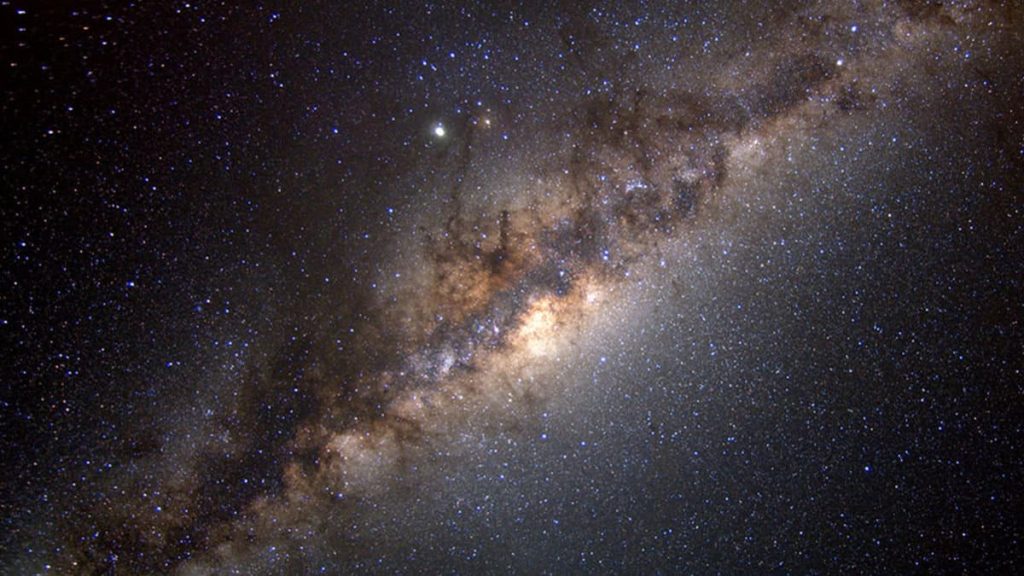
The discovery of the universe’s oldest known stars within our very own galaxy challenges previous assumptions that such ancient celestial bodies would be found only in distant galaxies. A recent study led by researchers at the Massachusetts Institute of Technology (MIT) has identified three ancient stars residing in the Milky Way’s halo, a vast spherical region surrounding the galactic disk. These stars, estimated to have formed shortly after the Big Bang, provide a unique window into the early universe’s conditions and the processes that shaped our galaxy. This article delves into the significance of this groundbreaking finding, exploring the nature of the Milky Way’s halo, the characteristics of these stars, and their implications for our understanding of cosmic history.
The Milky Way’s Halo: A Cosmic Repository of Ancient Stars
Encasing the familiar spiral disk of the Milky Way is the galactic halo — a vast, diffuse, and spherical region filled with stars, globular clusters, and dark matter. Unlike the densely packed stars of the galactic disk, the halo’s stars are generally older, fainter, and more sparsely distributed. This halo has long been theorized to harbor some of the oldest stellar populations, remnants from the galaxy’s tumultuous formation history.
The halo’s origin is tied to the hierarchical formation model of galaxies, where smaller protogalaxies merged to form larger structures. Many stars in the halo likely originated in these smaller galaxies that were gravitationally absorbed by the Milky Way over billions of years. As such, the halo acts as a fossil record, preserving the signatures of these ancient mergers and the earliest stages of galaxy assembly.
Observing and analyzing stars in the halo is challenging due to their faintness and distance from Earth. However, modern telescopes and spectroscopic techniques have enhanced astronomers’ ability to detect and study these elusive stars, enabling breakthroughs like the recent discovery of the universe’s oldest known stars within this region.
Discovery of the Oldest Known Stars: The SASS Stars
In a remarkable breakthrough, an MIT-led team identified three stars in the Milky Way’s halo estimated to be between 12 and 13 billion years old. These stars, dubbed Shrimp Accreted Stellar Stream (SASS) stars, are thought to be survivors from small, ancient galaxies that merged into the Milky Way during its formative years.
The SASS stars were initially observed by the Magellan-Clay Telescope at the Las Campanas Observatory in Chile between 2013 and 2014 but had not been thoroughly analyzed until recently. Their distinctive spectral signatures — characterized by extremely low abundances of heavy elements like strontium and barium — distinguished them from younger stars and indicated their primordial origins.
The identification of these stars was part of a novel observational stellar archaeology class at MIT, where students applied spectroscopic techniques to uncover the chemical fingerprints of ancient stars. This hands-on approach led to detailed analyses revealing the stars’ ultra-low metallicity and their critical role as relics of the early universe.
Understanding Stellar Archaeology and Its Role in the Discovery
Stellar archaeology is a field dedicated to studying ancient stars to reconstruct the history and evolution of galaxies. By examining the chemical composition of stars, astronomers can infer their ages, birth environments, and the nucleosynthetic processes that contributed to their formation.
The MIT course Observational Stellar Archaeology empowered students to analyze stellar spectra, focusing on signatures of elements that are rare in the early universe. Since the universe’s primordial matter largely consisted of hydrogen and helium, stars with minimal amounts of heavier elements (metals) are considered relics from the universe’s infancy.
This educational initiative allowed students to contribute directly to frontline research, combining theoretical knowledge with practical data analysis. Their work led to a deeper understanding of the Milky Way’s halo stars, culminating in the identification of the SASS stars and providing new methods to trace galactic formation history.
Chemical Signatures: Clues to the Universe’s Youth
One of the key indicators that the SASS stars are among the oldest in the universe is their extremely low metallicity—meaning they contain very few elements heavier than helium. Heavy elements like iron, strontium, and barium are forged in the cores of stars and distributed through supernova explosions, so their scarcity points to formation before many such enrichment events occurred.
Among the three stars, one stands out with an iron abundance less than one ten-thousandth that of our Sun, highlighting its pristine nature. This chemical fingerprint suggests these stars formed shortly after the Big Bang, during an era when the universe was still largely composed of primordial elements.
Studying these chemical abundances helps astronomers piece together the timeline of element formation and dispersal in the cosmos. It also sheds light on the processes that governed early star formation and the gradual buildup of chemical complexity in galaxies.
Implications for Galaxy Formation and Evolution
The discovery of such ancient stars within the Milky Way’s halo supports the hierarchical model of galaxy formation, where large galaxies grow by absorbing smaller ones. The SASS stars likely originated in diminutive galaxies that were eventually assimilated, leaving behind these stellar fossils as evidence of past mergers.
These findings confirm that the Milky Way’s halo harbors a diverse population of stars from various progenitor systems, each preserving unique chemical signatures. This diversity enables astronomers to reconstruct the galaxy’s assembly history with greater precision.
Furthermore, understanding the composition and distribution of ancient halo stars informs models of dark matter distribution and the gravitational dynamics that influenced galaxy growth. It also aids in refining cosmological simulations of early universe structure formation.
The Role of Advanced Telescopes in Unveiling Ancient Stars
The Magellan-Clay Telescope’s high-resolution spectrograph was instrumental in detecting the faint spectral features that identified the SASS stars. Such cutting-edge instruments enable astronomers to measure elemental abundances with great accuracy, even in distant and faint stars.
Looking forward, next-generation telescopes like the James Webb Space Telescope (JWST) and the Extremely Large Telescope (ELT) will further expand our ability to study ancient stars and galaxies. These observatories will probe deeper into cosmic history, potentially uncovering even older stellar populations beyond our galactic neighborhood.
Continued advancements in telescope technology and data analysis techniques promise to revolutionize our understanding of the universe’s earliest epochs, offering unprecedented insights into star formation, chemical enrichment, and galactic evolution.
Educational Impact and Future Research Directions
The discovery underscores the value of integrating research with education, as exemplified by MIT’s Observational Stellar Archaeology course. By involving students directly in cutting-edge research, the program cultivates a new generation of astronomers equipped to tackle complex astrophysical questions.
Future iterations of the course aim to expand the search for ancient stars, utilizing larger datasets and more sophisticated analysis tools. This will help identify additional stellar relics and refine our understanding of the Milky Way’s formation timeline.
Ongoing research will also explore the dynamics and origins of other halo star populations, the role of dark matter in shaping the halo, and the broader implications for cosmology. These efforts will deepen our comprehension of the universe’s formative years and the processes that sculpted the cosmos we observe today.
Conclusion
The identification of the universe’s oldest known stars within the Milky Way’s halo marks a significant milestone in astrophysics. These ancient stellar relics not only illuminate the conditions of the early universe but also validate key theories about galaxy formation and evolution. Through innovative educational approaches and advanced observational technology, astronomers continue to unlock the secrets of our cosmic past. As research progresses, these findings will pave the way for deeper explorations into the universe’s infancy, enriching our understanding of the grand narrative of cosmic history.
Originally reported by popsci.com. Adapted for our readers.
Recent advances in machine perfusion technology are not only preserving donated livers but also making them biologically younger at a molecular level. This breakthrough…
What happens when human imagination, artificial intelligence, art and technology come together? From September 1 to 6, Samsung Electronics presented a special exhibition themed…