AI Trends & News
Surface Laptop Ultra Pre-orders Open: Price, Release Date and AI Features
Microsoft opens Surface Laptop Ultra pre-orders from US$2,599.99. Explore its launch date, NVIDIA RTX Spark features and implications for Nigerian businesses.
TAMFIS NIG LTDRC 8067447CAC ACTIVEFinima, Bonny Island, Rivers State

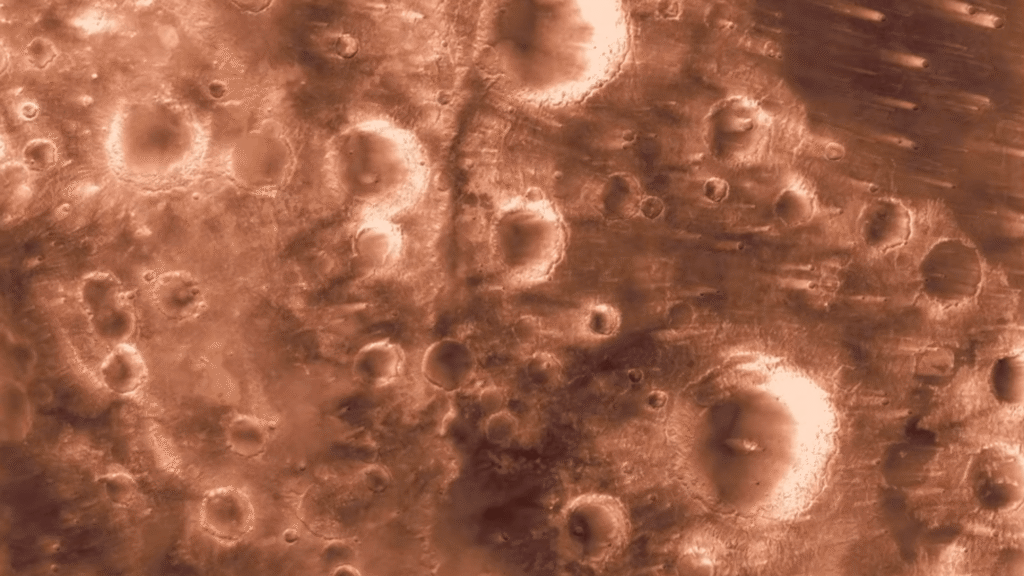
In May 2026, NASA’s Psyche spacecraft executed a planned flyby of Mars, using the planet’s gravity to adjust its trajectory toward the asteroid 16 Psyche. While the maneuver was primarily navigational, the mission team activated several onboard instruments to collect data and test systems. The resulting observations—including high-resolution images, magnetometer readings, and neutron spectrometer trials—offer more than just interplanetary scenery. They represent incremental progress in deep-space exploration, with potential spin-offs for technology sectors ranging from imaging and sensing to materials analysis and autonomous navigation. For businesses and technologists monitoring advancements in space-related innovation, the Psyche mission serves as a case study in how complex engineering endeavors can yield multifaceted returns, even during interim phases of long-duration voyages.
Gravity assists are a cornerstone of interplanetary mission design, allowing spacecraft to alter speed and direction using planetary motion without expending propellant. Psyche’s encounter with Mars followed this well-established principle, leveraging the Red Planet’s orbital momentum to conserve fuel for the latter stages of its 2.2-billion-mile journey to asteroid 16 Psyche. Such techniques reduce launch mass and mission cost, factors closely monitored by aerospace contractors and commercial space ventures seeking efficient pathways beyond Earth orbit.
The flyby occurred at an altitude of approximately 2,864 miles above Mars’ surface—a distance chosen to balance scientific opportunity with trajectory precision. While close enough for meaningful instrument testing, the altitude prevented detailed gamma-ray detection, underscoring the trade-offs inherent in mission planning. These calculations reflect the kind of systems-level optimisation that parallels engineering challenges in industries such as logistics, energy distribution, and network routing, where resource allocation under constraints drives innovation.
Psyche’s dual identical cameras captured a time-lapse sequence revealing windswept plains, impact craters, and the planet’s polar ice cap—features rendered in greater clarity than earlier crescent-phase observations. According to Jim Bell, instrument lead at Arizona State University, the imager performed ‘brilliantly,’ delivering rarely seen perspectives of Mars. The successful operation validated not only hardware resilience but also software processing pipelines under variable lighting and thermal conditions.
For developers and manufacturers of imaging systems—particularly those operating in harsh environments such as mining, aerospace, or autonomous vehicles—the mission offers a real-world stress test. Performance validation in space, where repair is impossible, pushes fault tolerance and calibration accuracy to extremes. Insights gained can inform terrestrial applications requiring long-term reliability, from satellite constellations to underwater inspection rigs.
Additionally, the team tested scattered light sensitivity and camera calibration procedures, steps analogous to quality assurance protocols in industrial imaging. Such rigour ensures data integrity, a concern shared across sectors from medical diagnostics to precision agriculture, where sensor output directly influences decision-making.
As Psyche approached Mars, its magnetometer recorded a significant increase in magnetic field strength corresponding to the bow shock region—the area where solar wind particles first interact with the planet’s magnetosphere. This measurement, while expected, provided valuable cross-verification of existing Mars models and demonstrated the instrument’s responsiveness to dynamic space weather phenomena.
The neutron spectrometer, designed to detect particles emitted from planetary surfaces, registered a count-rate enhancement consistent with anticipated background levels during closest approach. Although no definitive Martian neutron signal was isolated due to altitude limitations, the trial confirmed the instrument’s operational readiness for future use at asteroid 16 Psyche, where such measurements will help determine elemental composition.
These subsystems exemplify the growing importance of passive sensing technologies in exploration. Analogous instruments are used in geological surveying, nuclear safety monitoring, and cargo screening—fields where detecting subtle emissions without physical contact offers safety and efficiency advantages. Advances in space-based sensors often trickle down to enhance sensitivity and miniaturisation in ground-based counterparts.
While Psyche’s ultimate goal is to investigate the metallic makeup of asteroid 16 Psyche—a body hypothesised to be a remnant planetary core—the Mars flyby served as an essential systems checkout. Lindy Elkins-Tanton, the mission’s principal investigator, noted that although Mars is extensively studied, Psyche’s unique trajectory allowed complementary data collection that enriched existing knowledge bases.
This approach mirrors practices in industries where prototype testing in adjacent environments de-risks final deployment. For example, autonomous vehicle makers often validate navigation systems in controlled urban settings before rural rollout. Similarly, energy firms may test grid-stabilisation technologies at micro-scale sites before national implementation. The Psyche mission underscores the value of incremental validation in complex engineering programmes.
Furthermore, the public release of imagery and instrument data contributes to open science principles, enabling researchers, educators, and even commercial analysts to access and reuse findings. Such transparency accelerates innovation cycles, particularly in fields like AI-driven image analysis, where diverse training datasets improve model generalisability.
For stakeholders in technology, engineering, and advanced manufacturing, the Psyche mission highlights several transferable themes. First, the emphasis on redundancy—seen in the dual-camera setup—reinforces reliability as a design priority, especially in safety-critical applications. Second, the multi-instrument payload reflects a systems-engineering mindset where complementary data streams build a more complete picture than any single sensor could achieve.
Third, the mission’s reliance on autonomous operations, necessitated by communication delays, points to advancements in onboard decision-making. While Psyche does not employ artificial intelligence in the frontier sense, its fault protection and sequencing routines represent sophisticated autonomy precursors relevant to robotics, drone swarms, and remote infrastructure management.
Finally, the mission’s long timeline—launched in 2023, arriving at its target in 2029—exemplifies the patience required in deep-tech development. Investors and planners in sectors such as quantum computing, fusion energy, or advanced materials often face similar horizons, where mid-point milestones (like this Mars flyby) serve as critical progress indicators and confidence builders.
The Psyche mission’s Mars encounter was more than a navigational step; it was a functional appraisal of cutting-edge spaceflight systems operating far from terrestrial support. By successfully gathering scientific data and validating instrument performance, the mission advanced both planetary science and engineering readiness. For business leaders, technologists, and policymakers attuned to the frontiers of innovation, such endeavours offer tangible insights into how complex systems behave under extreme conditions—lessons that can inform everything from sensor design to mission-critical software. As Psyche continues toward its asteroid destination, each phase of its journey reinforces the interconnectedness of exploration, technology, and practical application.
Originally reported by popsci.com. Adapted for our readers with AI assistance.
Keep reading
AI Trends & News
Microsoft opens Surface Laptop Ultra pre-orders from US$2,599.99. Explore its launch date, NVIDIA RTX Spark features and implications for Nigerian businesses.
Science & Technology
DJI’s IBC recognition puts pocket gimbal and panoramic capture in the spotlight. Here is how creators can assess framing, editing effort and recording workflows.
Business News
App store steering is about more than permission to add a link. Explore fees, renewal terms, customer experience and the UK consultation.
TAMFIS NIG LTD
Electrical and instrumentation engineering, bid preparation and consulting, IT and software.