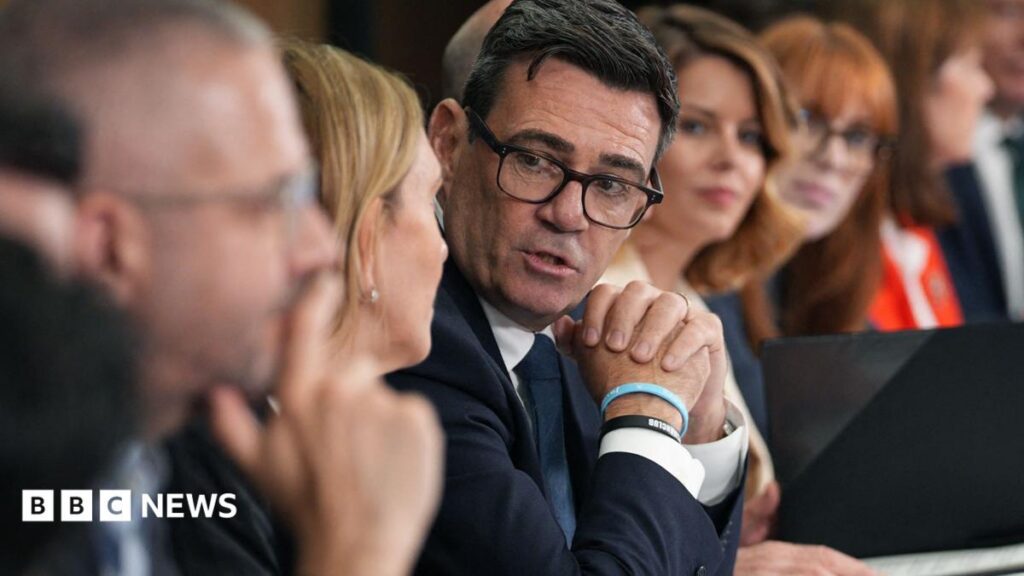
Andy Burnham Proposes Sharing Income Tax with Regional Mayors to Boost Local Power
In a landmark policy shift, Prime Minister Andy Burnham has announced plans to allocate a portion of income tax revenue to mayors of English city regions for the first time. This initiative is part of a broader government strategy to decentralize fiscal authority, granting local leaders greater control over funding streams such as business rates and income tax. The reforms seek to empower metro mayors to tailor economic and public service strategies to their communities, promoting growth and reducing reliance on central government grants. However, the proposals have drawn criticism from opposition parties concerned about funding disparities and lack of detail.
Andy Burnham Proposes Sharing Income Tax with Regional Mayors to Boost Local Power
A New Era of Fiscal Devolution in England
Andy Burnham’s government is set to transform the financial landscape for English city region mayors by allowing them to retain a share of income tax revenue collected within their jurisdictions. This marks the first time such a direct fiscal link will exist between local tax collection and local spending authority. Alongside income tax, mayors will also gain the ability to keep a portion of business rates, which are taxes levied on commercial properties.
The exact percentage of income tax to be devolved has yet to be finalized, with further details expected in Chancellor John Healey’s autumn budget. The government envisions this shift as a way to replace traditional central government grants with locally generated revenue, incentivizing economic growth and giving communities more control over their finances.
Context: The UK’s Centralized Tax System Compared Internationally
The UK currently has one of the most centralized tax systems among major economies. According to the OECD, only 5.8% of national taxes are collected and spent at the local level in the UK, the lowest share among G7 countries. By contrast, countries like France, Japan, and the United States allocate 20.4%, 36%, and 45.7% respectively to local governments.
This centralization has long been criticized for limiting local authorities’ ability to respond flexibly to economic challenges and opportunities. Burnham’s proposals aim to address this by aligning tax revenues more closely with local economic performance.
Details and Timeline of the Proposed Reforms
Under the new plan, metro mayors will begin retaining some revenue from business rates starting in April 2027, followed by a share of income tax from April 2028. Importantly, the overall rates of income tax paid by individuals will not change; rather, a portion of the revenue collected will be redirected to local authorities.
The government is also developing an equalization mechanism to ensure that regions with weaker tax bases continue to receive adequate funding. This system is designed to prevent disparities that could arise from differing local economic strengths.
The reforms are being coordinated by No 10 North in Manchester, Burnham’s newly established policy unit, with a comprehensive policy paper expected to accompany the autumn budget.
Political Reactions and Criticisms
The announcement has elicited mixed responses. Labour metro mayors, such as Tracy Brabin of West Yorkshire, have welcomed the move, highlighting the potential for visible benefits in public services like transport and skills training. Brabin emphasized that local control over income tax revenue would enable more ambitious and tailored regional development plans.
Conversely, Conservative critics, including shadow chancellor Sir Mel Stride, have expressed concerns about the lack of detail and the risk that economically weaker areas might lose funding. Stride argued that without additional government spending or borrowing, redistributing tax revenue could disadvantage some regions, contradicting Burnham’s stated goal of equitable growth.
Reform UK’s Zia Yusuf also weighed in, urging Burnham to devolve powers related to immigration enforcement, reflecting broader debates about local versus central government responsibilities.
Ben Houchen, Conservative mayor of Tees Valley, preferred tax cuts but acknowledged that if given a share of income tax, he would use it to create rebate schemes to benefit residents.
Implications for Local Governance and Economic Growth
Burnham’s plan represents a significant step toward a 'local first' principle, where decisions and resources are managed closer to the communities they affect. By linking funding to local tax revenues, the government aims to incentivize economic development and innovation at the regional level.
This approach could reduce metro mayors’ reliance on Whitehall grants, which often come with strict conditions and limited flexibility. Greater fiscal autonomy may enable more responsive and efficient public service delivery, tailored to local needs.
However, the success of the reforms will depend on the design of the equalization system and the capacity of local authorities to manage new responsibilities effectively. There is also the challenge of balancing regional disparities to avoid widening inequalities.
What this means
Andy Burnham’s proposal to share income tax revenues with regional mayors marks a bold move toward decentralizing fiscal power in England. By empowering local leaders to retain and manage a portion of the taxes collected in their areas, the government hopes to foster economic growth, improve public services, and reduce dependence on central grants. While the plan aligns with international trends toward fiscal devolution, its success will hinge on careful design to ensure equitable funding and effective local governance. As further details emerge in the upcoming budget, the reforms could redefine the relationship between Westminster and city regions, potentially reshaping the economic landscape of England for years to come.
Originally reported by bbc.co.uk. Adapted for our readers with AI assistance.
Thousands of young protesters in Delhi continue to demand education reforms and the resignation of Education Minister Dharmendra Pradhan after a police crackdown. The…
Facing a looming financial collapse, Thames Water’s main lenders have offered the UK government a ‘golden share’ and increased local authority involvement to avoid…
Facing record-breaking temperatures and severe drought, Thames Water has introduced a hosepipe ban impacting over 10 million customers across parts of southern England to…