
News
RUSSIA versus NATO and BRICS vs. NATO Military SWOT
Recall that Poland’s Minister Sikorski’s core claim is partially supported by the numbers, but the framing “quite quickly” and “without the U.S.” does not…
TAMFIS NIG LTDRC 8067447CAC ACTIVEFinima, Bonny Island, Rivers State

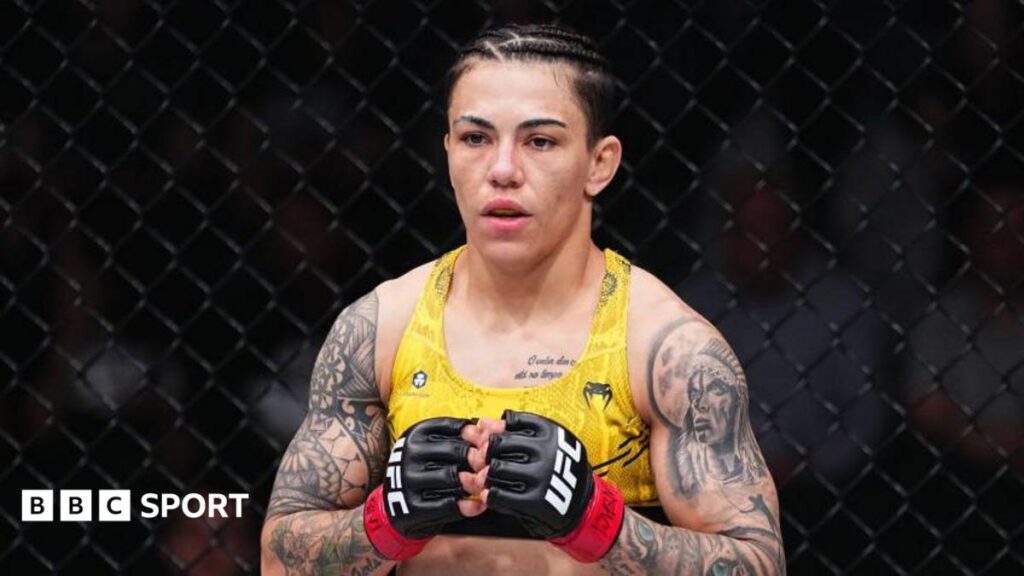
Jessica Andrade, a renowned figure in mixed martial arts and a former UFC strawweight champion, has recently opened up about working as a delivery driver to supplement her income during a period of injury recovery. Despite a successful career with 30 UFC fights since her 2013 debut, Andrade’s experience sheds light on the financial realities and struggles professional fighters may encounter outside the octagon. This article explores Andrade’s current circumstances, the broader context of fighter pay in MMA, and what her story reveals about the sport’s economic landscape.
Jessica Andrade, a Brazilian mixed martial artist, has been a formidable presence in the UFC strawweight division since her debut in 2013. Over the course of 30 fights, she secured 17 victories, including six finishes—the most in UFC strawweight history. Her aggressive style and resilience earned her the UFC strawweight championship, cementing her status as one of the sport’s top competitors.
However, Andrade has not competed since August last year, when she suffered a shoulder injury during a bout against Loopy Godinez. This injury has sidelined her, forcing a hiatus from professional fighting and prompting her to seek alternative means of income while she focuses on recovery.
In a candid interview on the Brazilian MMA podcast Direto de Vegas, Andrade revealed that she has been working as a delivery driver to earn extra money. She explained that she picks up meal orders through an app and makes deliveries, emphasizing her willingness to undertake any kind of hard work necessary.
Beyond delivery driving, Andrade has also started a landscaping project at a friend’s house, which involves tasks like removing rocks, laying down grass, and painting fences. She expressed that if she excels at this work, it could become another source of income to rely on during financially tight periods.
Her openness about these jobs underscores a pragmatic approach to financial stability, especially during times when her primary career is on hold due to injury.
Despite her success in the UFC, Andrade’s financial journey has not been without hardship. In 2018, she disclosed selling her UFC gear, including clothes, backpack, and gloves, due to difficulties securing sponsorships. While she noted that her compensation from the UFC was 'really well' at times, sponsorship challenges remain a significant hurdle for many fighters.
In 2023, Andrade revealed that she fought five times within the year to cover the costs associated with her divorce, highlighting the financial pressures fighters can face outside the cage. The following year, she accused her former coach, Gilliard Parana, of withholding money, an allegation Parana denied.
These experiences point to the often complex and precarious financial landscape that professional MMA fighters navigate, where income can be inconsistent and external factors can impact earnings.
The issue of fighter pay in the UFC and MMA generally has been a topic of debate among athletes, media, and fans. Critics often compare MMA fighter compensation unfavorably with that of professional boxers. For example, boxer Conor Benn reportedly signed a one-fight deal worth approximately £11 million with Zuffa Boxing, a company owned by UFC president Dana White.
In contrast, the UFC reportedly allocates about 20% of its revenue to fighter pay, whereas boxing events typically distribute around 60% of revenue to the athletes involved. This disparity has fueled calls for greater transparency and improved compensation structures within MMA.
Dana White has responded to criticism by highlighting that UFC fighter pay has increased since 2001, though many fighters and observers argue that the growth has not kept pace with the promotion’s revenue and the sport’s rising popularity.
Jessica Andrade’s situation illustrates the financial uncertainty that even high-profile fighters can face, especially when sidelined by injury or personal circumstances. Her willingness to take on delivery and landscaping work demonstrates the practical realities behind the glamour of professional fighting.
This case also raises broader questions about the sustainability of fighter careers and the support systems available to athletes during periods of inactivity. With many fighters lacking long-term contracts or guaranteed income, the need for diversified income sources becomes critical.
For the MMA industry, Andrade’s experience may serve as a call to action to reassess fighter pay models and explore ways to provide more stable financial security for athletes, including during injury recoveries and career transitions.
Jessica Andrade’s journey from UFC champion to delivery driver during injury recovery offers a revealing glimpse into the financial challenges faced by professional mixed martial artists. While her determination and adaptability are commendable, her experience underscores broader issues within the MMA industry related to fighter compensation and financial security. As the sport continues to grow in popularity and revenue, addressing these concerns will be vital to ensuring that fighters can sustain their careers and livelihoods both inside and outside the octagon.
Editor’s note: The following is AI-generated commentary and context on this topic, not original reporting.
Despite the global visibility of major mixed martial arts organisations, compensation for fighters outside the very top tier of champions and headline draws is often far less lucrative than fans might assume, particularly once injuries interrupt a competitive schedule built around per-fight rather than salaried pay structures. Extended recovery periods can leave even accomplished former champions without a steady income, prompting some to take on work outside the sport to bridge financial gaps between bouts.
Athlete advocacy groups and some fighters themselves have used stories like this to renew calls for structural changes within combat sports promotions, including higher minimum purses, injury insurance, and revenue-sharing arrangements more comparable to major team sports leagues. How promotions respond to this kind of public attention often shapes broader industry conversations about fighter welfare and the sustainability of a career built on a sport that carries a high physical toll.
Originally reported by bbc.co.uk. Adapted for our readers with AI assistance.
Keep reading
News
Recall that Poland’s Minister Sikorski’s core claim is partially supported by the numbers, but the framing “quite quickly” and “without the U.S.” does not…
News
Thousands of young protesters in Delhi continue to demand education reforms and the resignation of Education Minister Dharmendra Pradhan after a police crackdown. The…
News
Facing a looming financial collapse, Thames Water’s main lenders have offered the UK government a ‘golden share’ and increased local authority involvement to avoid…
TAMFIS NIG LTD
Electrical and instrumentation engineering, bid preparation and consulting, IT and software.