
Business
Nigeria’s Economic Performance: Domestic Debt Rise and Agriculture Trade Shift in Q2 2026
Nigeria's economic landscape in the second quarter of 2026 presents a mixed picture of fiscal press...
TAMFIS NIG LTDRC 8067447CAC ACTIVEFinima, Bonny Island, Rivers State

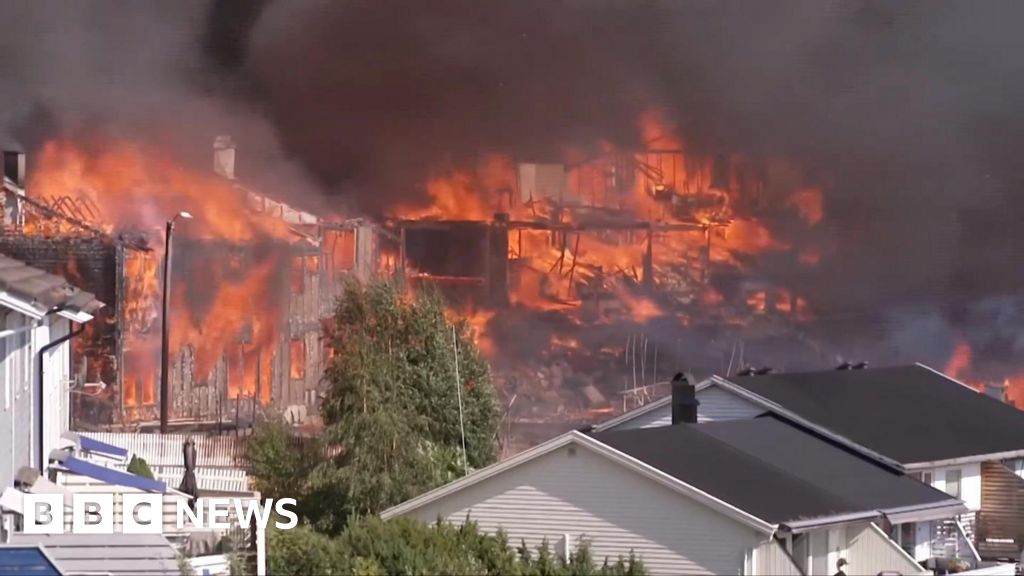
A significant wildfire in Drammen, Norway, has devastated a residential area approximately 30 miles west of Oslo, destroying more than 100 homes and prompting the evacuation of hundreds of residents. The blaze, which remains uncontrolled despite extensive ground and aerial firefighting efforts, has spread to nearby forested areas amid unusually dry and hot weather conditions. While no casualties have been reported, the incident serves as a stark reminder of how climate change is altering risk profiles in regions historically considered low-risk for wildfires. For businesses, insurers and property owners across northern Europe, the event highlights the urgent need to reassess risk models, emergency preparedness and adaptation strategies in the face of increasingly frequent extreme weather events.
The wildfire in Drammen has destroyed over 100 homes in a residential zone, forcing hundreds to evacuate. Despite the scale, authorities confirm no casualties or missing persons, reflecting effective evacuation procedures. Local authorities have deployed dozens of firefighters on the ground and water-dropping helicopters from the air. Police confirm the fire remains uncontrolled, highlighting challenges from rapid spread driven by dry, hot weather. The proximity to Oslo raises concerns about further spread and strain on emergency resources. Firefighting efforts focus on containment, protecting structures and preventing spread to additional residential or natural areas.
Officials identify recent dry and hot weather in southern Norway as a key factor in the fire’s rapid expansion. Thomas Evjen of the Drammen Red Cross noted prolonged heat and lack of moisture created ideal conditions for quick escalation. This aligns with meteorological data showing unusually warm, dry periods that dried vegetation and increased fuel availability. The situation exemplifies how heatwaves and drought exacerbate wildfire risks, even in regions like Norway where such events were historically infrequent. Shifting weather patterns are altering baseline risk levels. For businesses and insurers, the event highlights limitations of risk models based on historical climate data, necessitating review of underwriting practices, property resilience and business continuity planning.
The cause of the Drammen wildfire remains under investigation, with authorities assessing natural or human origins. Determining the origin is critical for accountability and prevention, though priority remains controlling the blaze and ensuring safety. While wildfires are more common in southern Europe, northern regions like Norway are experiencing increased events linked to hotter, drier summers. The Drammen incident fits a broader European pattern of unusual wildfire activity, where climate change contributes to more frequent and intense fire seasons even in historically low-risk areas. This trend prompts concern among climate researchers and emergency planners about adequacy of existing resources and response capabilities. Enhanced preparedness is needed, including improved early warning systems, community evacuation planning and cross-border cooperation between emergency services. Nordic countries are expanding mutual aid agreements and sharing firefighting resources, recognising single-nation capacities may be insufficient during large-scale events.
The wildfire has significant implications for insurers in Scandinavia, who traditionally modelled risk on lower historical fire activity. As such events become more frequent, insurers may reassess risk models, leading to revised premiums, coverage terms or exclusions for properties in newly exposed areas. Property owners may face increased costs or difficulties obtaining coverage. For businesses, the event highlights the importance of integrating climate risk assessments into operational and strategic planning. Companies with physical assets, supply chains or operations in northern Europe should consider scenario planning for extreme weather events, including wildfires, floods and heatwaves. Business continuity plans may need updating for scenarios where access is restricted or infrastructure is damaged. Proactive adaptation measures—such as defensible spaces, fire-resistant materials and early detection systems—benefit communities and businesses participating in local resilience initiatives and emergency preparedness programmes.
Addressing growing wildfire risk requires coordinated efforts spanning immediate response and long-term climate adaptation. Emergency services are reviewing evacuation routes, alert systems and resource allocation plans. Investment in firefighting capacity, including aerial resources and specialised training, is likely to increase. At a policy level, the incident adds evidence supporting climate mitigation and adaptation investments. Reducing greenhouse gas emissions remains critical to limiting long-term intensification of weather extremes, while adaptation measures like land-use planning, forest management and infrastructure resilience help communities cope with near-term risks. Cross-border collaboration on research, resource sharing and emergency protocols is increasingly valuable as climate impacts transcend boundaries. For stakeholders, the Drammen wildfire reminds that climate risk is no longer confined to traditional hotspots. Proactive engagement with climate science, regular review of risk assumptions and investment in resilience are essential for navigating increasing environmental volatility.
The wildfire in Drammen represents more than an isolated emergency; it is a clear signal of how climate change is reshaping risk landscapes across northern Europe. For homeowners, businesses and insurers, the event underscores the urgency of moving beyond historical risk assumptions to embrace dynamic, evidence-based planning that accounts for increasing weather extremes. While the immediate focus remains on bringing the blaze under control and supporting affected residents, the longer-term imperative is clear: building resilience requires coordinated action across sectors, informed by climate science and aimed at reducing both vulnerability and exposure. As southern Europe has long adapted to wildfire risks, northern regions must now accelerate their own preparedness efforts to protect communities, economies and natural environments in an era of unprecedented environmental change. The lessons from Drammen will likely inform policy, insurance practices and business strategy for years to come, serving as a catalyst for proactive adaptation in the face of a warming planet.
Originally reported by bbc.co.uk. Adapted for our readers with AI assistance.
Keep reading
Business
Nigeria's economic landscape in the second quarter of 2026 presents a mixed picture of fiscal press...
Business
Liverpool manager Andoni Iraola is confronting a significant selection headache as two key forwards, Cod...
News
Health News tamfitronics [Editor’snote:[Editor’snote: This transcript was generated using both transcription ...
TAMFIS NIG LTD
Electrical and instrumentation engineering, bid preparation and consulting, IT and software.