
AI Trends & News
Surface Laptop Ultra Pre-orders Open: Price, Release Date and AI Features
Microsoft opens Surface Laptop Ultra pre-orders from US$2,599.99. Explore its launch date, NVIDIA RTX Spark features and implications for Nigerian businesses.
TAMFIS NIG LTDRC 8067447CAC ACTIVEFinima, Bonny Island, Rivers State

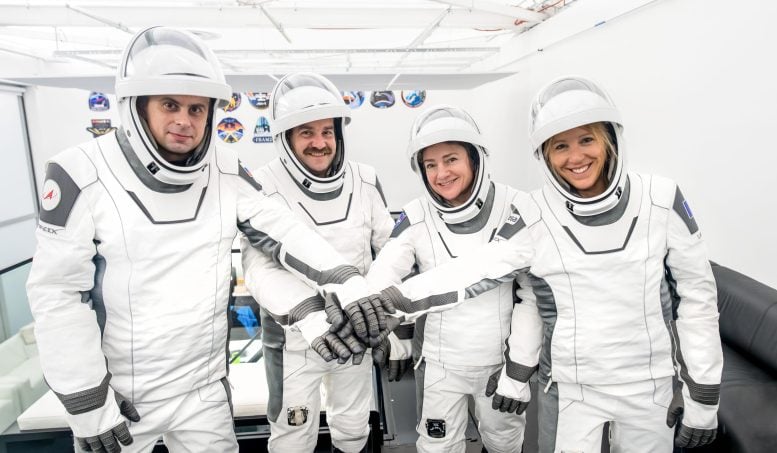
As space exploration advances, the meticulous preparation of astronauts before launch remains paramount to mission success. NASA’s SpaceX Crew-12 team recently entered a two-week isolation period, commonly referred to as quarantine, at the Johnson Space Center in Houston. This precautionary step is designed to minimize health risks and ensure the crew is in optimal condition for their scheduled launch to the International Space Station (ISS). Featuring a diverse international team, Crew-12 represents a blend of experience and fresh talent, embarking on a mission that underscores international collaboration and scientific progress in low Earth orbit.
The two-week quarantine, officially called 'health stabilization,' is a critical phase in astronaut pre-launch protocols. Initiated on January 28 at NASA’s Johnson Space Center, this period restricts the crew's contact with the outside world to prevent exposure to contagious illnesses that could jeopardize the mission. By isolating the astronauts, NASA ensures that any potential infections are identified and managed well before launch day.
During quarantine, Crew-12 members live under controlled conditions with limited physical interaction, primarily communicating through remote means. Family visits and interactions with ground personnel are strictly regulated, requiring medical clearances and adherence to safety protocols. This approach maintains the crew's health integrity while allowing them to continue essential mission preparations.
The isolation process is not new; it has roots dating back to the Apollo era when NASA first recognized the risks of launching astronauts with undetected illnesses. Today’s quarantine is more sophisticated, incorporating modern medical screenings and psychological support to prepare astronauts mentally and physically for the rigors of spaceflight.
The SpaceX Crew-12 mission boasts a diverse, international team comprising NASA astronauts Jessica Meir and Jack Hathaway, ESA astronaut Sophie Adenot, and Roscosmos cosmonaut Andrey Fedyaev. Each member brings unique skills and backgrounds, contributing to the mission’s success and fostering international partnership aboard the ISS.
Jessica Meir, serving as the mission commander, is embarking on her second spaceflight and her first aboard a SpaceX Dragon spacecraft. Her leadership experience and scientific expertise are invaluable assets for the long-duration mission. Jack Hathaway, the pilot, is making his inaugural spaceflight, bringing a strong background as a test pilot to the operation of the Dragon spacecraft.
Mission specialists Sophie Adenot and Andrey Fedyaev add further depth to the crew. Adenot, representing the European Space Agency, is on her first spaceflight and brings extensive test pilot experience, while Fedyaev, a seasoned Roscosmos cosmonaut, makes history as the first cosmonaut to undertake two flights aboard a SpaceX Dragon.
NASA has scheduled the Crew-12 launch no earlier than 6 a.m. EST on Wednesday, February 11, from Space Launch Complex 40 at Cape Canaveral Space Force Station in Florida. Contingency launch windows are available on February 12 and 13, providing flexibility to accommodate weather and technical considerations.
Following the quarantine at Johnson Space Center, the crew will travel to NASA’s Kennedy Space Center in Florida, where they will remain in isolation while completing final prelaunch procedures. This includes suit checks, spacecraft ingress rehearsals, and coordination with SpaceX and NASA teams to ensure all systems are mission-ready.
Once launched aboard the SpaceX Dragon spacecraft, propelled by a Falcon 9 rocket, Crew-12 will dock with the ISS to join Expeditions 74 and 75. The mission is expected to last approximately nine months, during which the crew will conduct scientific research, station maintenance, and international collaboration efforts.
Before entering quarantine, the Crew-12 astronauts completed a comprehensive crew equipment interface test on January 12. This full-day event involved donning their pressure suits, boarding the Dragon spacecraft, and performing critical leak checks to verify the integrity of their suits and the spacecraft environment.
The astronauts also familiarized themselves with the Dragon’s interior layout, tested onboard communications systems, and acclimated to the ambient sounds generated by the spacecraft’s fans and pumps. These tests ensure the crew can operate effectively and respond to any anomalies during the mission.
Such rigorous testing is vital for astronaut safety and mission success. It allows astronauts to build confidence in their equipment and provides engineers with essential feedback to address any potential issues before launch.
Crew-12 exemplifies international collaboration in space exploration, bringing together astronauts from NASA, ESA, and Roscosmos. This partnership strengthens diplomatic ties and promotes shared scientific objectives aboard the ISS, fostering a global approach to space research.
During their nine-month mission, Crew-12 members will conduct a wide range of experiments spanning biology, physics, and technology development. These investigations aim to deepen our understanding of human health in microgravity, advance materials science, and test new technologies that could support future deep space missions.
The crew’s work contributes to the broader goals of space exploration, including preparations for Artemis missions to the Moon and eventual human missions to Mars. Their research and operations aboard the ISS provide invaluable data and experience that will inform future endeavors beyond low Earth orbit.
Quarantine protocols are essential in safeguarding the health of astronauts and the integrity of the space station environment. Illness aboard the ISS could compromise not only the affected crew member but the entire mission, highlighting the need for stringent pre-flight health measures.
By limiting exposure to pathogens during the quarantine, NASA reduces the risk of pre-launch infections that might manifest during the mission. This approach also prevents the potential spread of illnesses to the international crew aboard the ISS, where medical resources are limited.
The psychological impact of quarantine is addressed through virtual communication with family and support teams, ensuring astronauts remain mentally prepared for the demanding mission ahead. This holistic approach to health stabilization underscores NASA’s commitment to crew wellbeing.
The Crew-12 mission continues the successful partnership between NASA and SpaceX in providing reliable, commercial crew transportation to the ISS. This collaboration has transformed access to space, increasing launch frequency and enabling extended human presence in orbit.
SpaceX’s Dragon spacecraft, paired with the Falcon 9 rocket, has demonstrated consistent performance, safety, and adaptability, making it a cornerstone of NASA’s low Earth orbit operations. The success of Crew-12 will further validate this model and pave the way for future commercial and exploration missions.
As NASA prepares for the Artemis program and missions to the lunar surface, the experience gained from Crew-12 and similar missions will be instrumental. The integration of commercial providers and international partners is shaping a new era of space exploration characterized by innovation, cooperation, and sustainability.
The NASA SpaceX Crew-12 mission represents a significant milestone in human spaceflight, combining rigorous preparation, international cooperation, and cutting-edge technology. The crew’s entry into quarantine marks the final health safeguard before their journey to the International Space Station, underscoring the importance of astronaut wellbeing in mission success. As the launch date approaches, the world watches with anticipation, recognizing that missions like Crew-12 not only advance scientific knowledge but also strengthen the foundations for humanity’s future in space exploration.
Originally reported by scitechdaily.com. Adapted for our readers.
Keep reading
AI Trends & News
Microsoft opens Surface Laptop Ultra pre-orders from US$2,599.99. Explore its launch date, NVIDIA RTX Spark features and implications for Nigerian businesses.
Science & Technology
DJI’s IBC recognition puts pocket gimbal and panoramic capture in the spotlight. Here is how creators can assess framing, editing effort and recording workflows.
Business News
App store steering is about more than permission to add a link. Explore fees, renewal terms, customer experience and the UK consultation.
TAMFIS NIG LTD
Electrical and instrumentation engineering, bid preparation and consulting, IT and software.

