
AI Trends & News
Surface Laptop Ultra Pre-orders Open: Price, Release Date and AI Features
Microsoft opens Surface Laptop Ultra pre-orders from US$2,599.99. Explore its launch date, NVIDIA RTX Spark features and implications for Nigerian businesses.
TAMFIS NIG LTDRC 8067447CAC ACTIVEFinima, Bonny Island, Rivers State

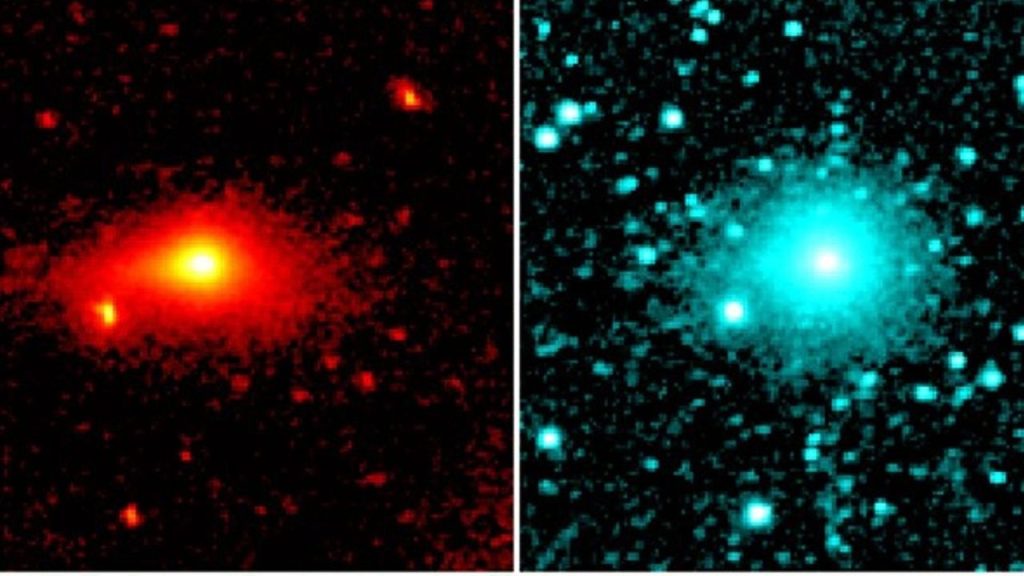
In December 2025, NASA's SPHEREx (Spectro-Photometer for the History of the Universe, Epoch of Reionization and Ices Explorer) space telescope recorded a dramatic flare-up of comet 3I/ATLAS, a rare visitor from beyond our solar system. As the comet was making its exit after a close approach to the Sun, it unexpectedly brightened, releasing a surge of gas, dust, and complex molecules. This event marks one of the most detailed chemical observations of an interstellar object to date, offering scientists a unique opportunity to study materials formed around other stars. The discovery deepens our understanding of cometary behavior, interstellar chemistry, and the potential universality of planetary building blocks.
Comet 3I/ATLAS was first detected in July 2025 by the Asteroid Terrestrial-impact Last Alert System (ATLAS) survey, marking it as only the third confirmed interstellar object observed passing through our solar system. Its predecessors, 1I/'Oumuamua in 2017 and 2I/Borisov in 2019, set high expectations for the scientific community eager to study material from beyond our cosmic neighborhood.
Unlike its predecessors, 3I/ATLAS displayed an extended period of activity, providing an exceptional opportunity to analyze its composition in detail. Its journey through the solar system and subsequent exit offered a rare glimpse into the makeup of materials that originated around a different star system, making it a subject of intense interest for astronomers and planetary scientists alike.
This comet’s interstellar origin means that its chemical signature could reveal whether the raw materials essential for planet formation and potentially life are common throughout the Milky Way, or unique to specific stellar environments.
The SPHEREx space telescope specializes in infrared light observations, making it uniquely suited to study the dust, gas, and complex molecules emitted by comets like 3I/ATLAS. Infrared wavelengths allow scientists to detect substances invisible to optical telescopes, such as water ice, carbon dioxide, methane, methanol, and cyanide — key ingredients in planetary formation.
During a December 2025 observation campaign, SPHEREx captured a sudden brightening of 3I/ATLAS, revealing a surge of material being ejected from the comet’s coma. This flare-up occurred two months after the comet’s closest approach to the Sun, a surprising delay that challenged existing models of cometary activity.
The data collected by SPHEREx provided an unprecedented chemical fingerprint of the comet’s coma, allowing researchers to identify the specific molecules streaming off the surface and beneath, shedding light on the comet’s internal composition and structure.
Typically, comets become most active near perihelion — the closest point to the Sun — as solar heat causes surface ices to vaporize rapidly. However, 3I/ATLAS exhibited a delayed outburst, intensifying well after perihelion, which intrigued scientists.
This phenomenon suggests that sunlight penetrated beneath the comet’s surface layers, gradually warming ancient buried ices until they sublimated, releasing gases and dust in a sudden eruption. Such delayed activity points to complex thermal processes within the comet’s nucleus.
The outburst also indicates that the comet’s surface may have formed a crust, possibly hardened and altered by cosmic radiation during its long interstellar voyage, insulating the pristine ices beneath until the Sun’s energy finally triggered their release.
SPHEREx’s infrared observations identified a rich mixture of molecules in the coma of 3I/ATLAS, including water ice, carbon dioxide, methane, methanol, and cyanide. These substances are critical components in planetary formation and serve as organic precursors potentially relevant to the emergence of life.
The presence of soot and rock dust alongside volatile ices paints a picture of a complex and chemically diverse body. This composition closely resembles that of comets formed within our own solar system, suggesting some universality in the materials that make up cometary bodies across the galaxy.
Studying these molecules enables scientists to compare the chemistry of interstellar objects with local comets, providing insights into the similarities and differences in comet formation processes around different stars.
The chemical makeup of 3I/ATLAS offers vital clues about the raw materials available in the protoplanetary disks of other star systems. By analyzing these materials, researchers can better understand the building blocks that contribute to the formation of planets and potentially habitable environments.
If organic molecules and water ice are common ingredients in comets across the Milky Way, it increases the likelihood that the essential components for life are widespread, supporting the notion that life-friendly conditions may not be unique to Earth’s neighborhood.
These findings contribute to the broader field of astrobiology by providing empirical evidence about the distribution of life’s chemical precursors beyond our solar system.
Before its encounter with the Sun, comet 3I/ATLAS spent an extended period traversing interstellar space, exposed to intense cosmic radiation. This exposure likely altered its surface, creating a crust that has influenced its activity observed during its solar system passage.
The cosmic rays bombardment may have processed the comet’s outer layers, shielding the pristine ices beneath from space weathering and preserving ancient molecules that have remained unaltered for billions of years.
Understanding how interstellar environments modify such objects helps scientists interpret the chemical fingerprints they observe and provides context for the comet’s delayed outburst and composition.
The unique observations of comet 3I/ATLAS by SPHEREx have opened new avenues for studying interstellar objects and their chemistry. Future missions equipped with infrared capabilities can build on these findings to explore other visitors from beyond our solar system.
Enhanced monitoring of interstellar comets will allow scientists to refine models of cometary behavior, thermal dynamics, and chemical evolution, deepening our understanding of the diversity of small bodies in our galaxy.
Additionally, such studies can guide the design of potential missions aimed at sample-return or in-situ analysis of interstellar objects, which would revolutionize our knowledge of the cosmos and the origins of planetary systems.
The passage of interstellar objects like 3I/ATLAS captures the imagination of the scientific community and the public alike, offering tangible connections to the vastness of our galaxy. These rare events serve as natural laboratories for understanding the building blocks of planets and life.
NASA’s commitment to sharing discoveries and engaging the public through stunning images and accessible explanations fosters widespread interest in space exploration and encourages support for ongoing research.
As more interstellar visitors are detected in the coming years, public fascination will likely grow, inspiring future generations of scientists and explorers eager to uncover the secrets of the universe.
The extraordinary observations of interstellar comet 3I/ATLAS by NASA’s SPHEREx telescope have provided an unprecedented window into the chemistry and behavior of a visitor from beyond our solar system. This delayed but intense outburst unveiled a rich cocktail of molecules and dust, offering clues about the materials that form planets and possibly life throughout the Milky Way. As technology advances and more interstellar objects are discovered, continued study of these cosmic travelers promises to deepen our understanding of the universe’s origins and the potential for life beyond Earth.
Originally reported by space.com. Adapted for our readers.
Keep reading
AI Trends & News
Microsoft opens Surface Laptop Ultra pre-orders from US$2,599.99. Explore its launch date, NVIDIA RTX Spark features and implications for Nigerian businesses.
Science & Technology
DJI’s IBC recognition puts pocket gimbal and panoramic capture in the spotlight. Here is how creators can assess framing, editing effort and recording workflows.
Business News
App store steering is about more than permission to add a link. Explore fees, renewal terms, customer experience and the UK consultation.
TAMFIS NIG LTD
Electrical and instrumentation engineering, bid preparation and consulting, IT and software.

