
AI Trends & News
Surface Laptop Ultra Pre-orders Open: Price, Release Date and AI Features
Microsoft opens Surface Laptop Ultra pre-orders from US$2,599.99. Explore its launch date, NVIDIA RTX Spark features and implications for Nigerian businesses.
TAMFIS NIG LTDRC 8067447CAC ACTIVEFinima, Bonny Island, Rivers State

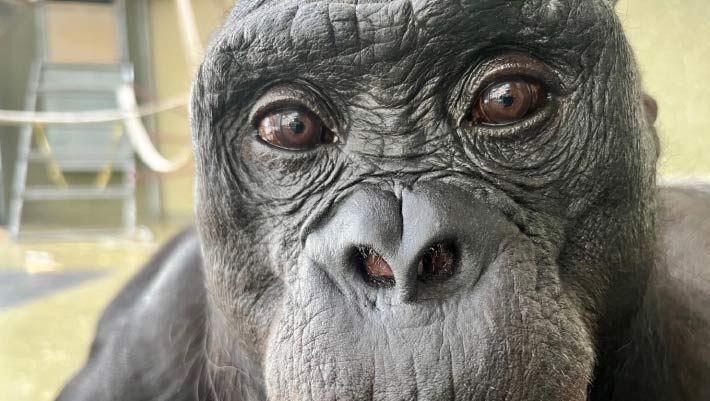
Imagination is often considered a defining trait of humanity, enabling us to envision scenarios beyond immediate reality and create rich mental landscapes. Recent research, however, suggests that this cognitive ability may not be exclusive to humans. In a series of innovative experiments, Kanzi, a 43-year-old bonobo, demonstrated the capacity to engage in pretend play and recognize imaginary objects. These findings not only challenge traditional views about animal minds but also suggest that the roots of imagination extend back millions of years. This article explores the details and implications of these remarkable experiments, shedding light on the mental lives of our closest evolutionary relatives.
Imagination allows humans to mentally simulate future events, solve problems creatively, and engage in complex social interactions. Traditionally, this ability has been viewed as a hallmark of human cognition, setting us apart from other species. The capacity to imagine nonexistent objects or scenarios contributes to cultural development, language, and abstract thinking.
The discovery that bonobos like Kanzi can perform imaginative tasks suggests that the evolutionary origins of imagination may be far older than previously thought. The mental capacity to conceive of things not currently present could trace back 6 to 9 million years, to a common ancestor shared by humans and other great apes.
This revelation invites a re-examination of cognitive evolution, emphasizing continuity rather than sharp divides between humans and other primates. Recognizing imagination in bonobos helps bridge the gap in understanding how complex mental processes evolved and highlights the sophisticated mental lives of nonhuman animals.
Kanzi is a well-known bonobo who has been studied extensively for his remarkable communication skills and cognitive abilities. Living at the Ape Initiative sanctuary, Kanzi has demonstrated the ability to understand spoken English and respond to verbal prompts by pointing or using lexigrams, a symbolic language system.
His history of engagement with researchers has provided a rare opportunity to explore complex cognitive phenomena in nonhuman primates. Kanzi’s prior exposure to language and symbolic communication made him an ideal candidate for testing imaginative abilities through controlled experiments.
Because of his age and extensive training, Kanzi can participate in tasks that mimic human children’s pretend play, offering valuable insights into the mental processes underlying imagination and symbolic thought among bonobos.
Researchers Dr. Christopher Krupenye and Dr. Amalia Bastos designed experiments inspired by the pretend play typical of young human children, such as tea parties. Their goal was to create a controlled environment where Kanzi’s ability to imagine nonexistent objects could be tested scientifically.
The experiments involved simple setups with transparent cups, pitchers, bowls, and jars arranged on a table. The experimenter pretended to pour liquid or place objects, like grapes, into the containers, sometimes pretending to empty them, while Kanzi observed.
After these actions, Kanzi was asked questions such as “Where’s the juice?” or “Where’s the grape?” His responses, based on pointing, provided a direct measure of whether he could track and imagine the presence of pretend objects despite their physical absence.
Kanzi consistently identified the correct locations of pretend objects, such as the cup that still contained ‘pretend juice’ or the jar with the ‘pretend grape.’ His accuracy was significantly above chance, indicating he maintained a mental representation of these imaginary items.
To rule out the possibility that Kanzi simply inferred the presence of real objects, a control experiment introduced actual juice alongside the pretend juice. Kanzi reliably chose the real juice when asked what he wanted, demonstrating he could distinguish between real and imagined entities.
These results show Kanzi not only understands pretend scenarios but also simultaneously recognizes the difference between real and imaginary objects. This dual awareness is a hallmark of advanced imaginative capacity, previously attributed mainly to humans.
The demonstration of imagination in bonobos challenges the long-standing assumption that nonhuman animals are limited to perceiving and reacting to the present moment. Instead, it suggests that some apes possess a richer mental life, capable of abstract thought and symbolic play.
Such findings encourage scientists to reconsider the cognitive boundaries between humans and other primates, acknowledging that mental faculties like imagination may be more widespread and evolutionarily conserved than once believed.
Moreover, these insights have ethical implications, urging greater respect and protection for species with complex cognitive abilities. Recognizing the depth of animal minds reinforces the importance of conservation and humane treatment.
Human children typically begin engaging in pretend play around age two, a critical milestone in cognitive and social development. Even infants as young as 15 months show surprise when witnessing pretend scenarios, indicating early emerging imaginative abilities.
The bonobo experiments parallel such developmental stages, with Kanzi’s performance resembling the cognitive processes observed in young children during pretend play. This comparison strengthens the argument that imagination is not a uniquely human trait but shared with our closest relatives.
Understanding these parallels also helps researchers explore how imagination develops across species and what neural mechanisms underlie this capacity, providing clues about the evolution of complex cognitive functions.
The success of these initial experiments opens new avenues for studying imagination and abstract thought in nonhuman animals. Expanding research to other primate species and diverse cognitive tasks could further illuminate the scope and limits of animal imagination.
Longitudinal studies might explore how imaginative abilities develop over the lifespan of primates, while neuroimaging techniques could investigate the brain regions involved in pretend play and symbolic thinking.
Additionally, interdisciplinary approaches combining psychology, ethology, and neuroscience will enrich our understanding of animal minds and inform efforts to protect species with advanced cognitive capacities.
Discovering that bonobos possess imaginative abilities underscores the moral imperative to treat these animals with respect and care. Their rich mental lives suggest they experience the world in complex ways, deserving of ethical consideration beyond basic welfare.
Conservation efforts are crucial to ensure the survival of bonobos, whose populations are threatened by habitat loss and human activities. Recognizing their cognitive sophistication strengthens arguments for protecting their natural environments and supporting sanctuaries like Ape Initiative.
Public awareness of such research can inspire broader support for animal rights and conservation, fostering empathy and responsibility toward species that share cognitive traits once thought to be uniquely human.
The groundbreaking experiments with Kanzi illuminate a profound truth: imagination is not the sole province of humans. By demonstrating that bonobos can engage in pretend play and mentally represent imaginary objects, researchers have unearthed cognitive abilities that blur the lines between species. This knowledge enriches our understanding of evolution, cognition, and the emotional lives of animals. It also challenges us to rethink how we value and protect these remarkable creatures, whose minds are far more intricate than previously imagined. As science continues to explore the depths of animal cognition, the story of Kanzi serves as a powerful reminder of the shared heritage and complexity of life on Earth.
Originally reported by sci.news. Adapted for our readers.
Keep reading
AI Trends & News
Microsoft opens Surface Laptop Ultra pre-orders from US$2,599.99. Explore its launch date, NVIDIA RTX Spark features and implications for Nigerian businesses.
Science & Technology
DJI’s IBC recognition puts pocket gimbal and panoramic capture in the spotlight. Here is how creators can assess framing, editing effort and recording workflows.
Business News
App store steering is about more than permission to add a link. Explore fees, renewal terms, customer experience and the UK consultation.
TAMFIS NIG LTD
Electrical and instrumentation engineering, bid preparation and consulting, IT and software.

