
AI Trends & News
Surface Laptop Ultra Pre-orders Open: Price, Release Date and AI Features
Microsoft opens Surface Laptop Ultra pre-orders from US$2,599.99. Explore its launch date, NVIDIA RTX Spark features and implications for Nigerian businesses.
TAMFIS NIG LTDRC 8067447CAC ACTIVEFinima, Bonny Island, Rivers State

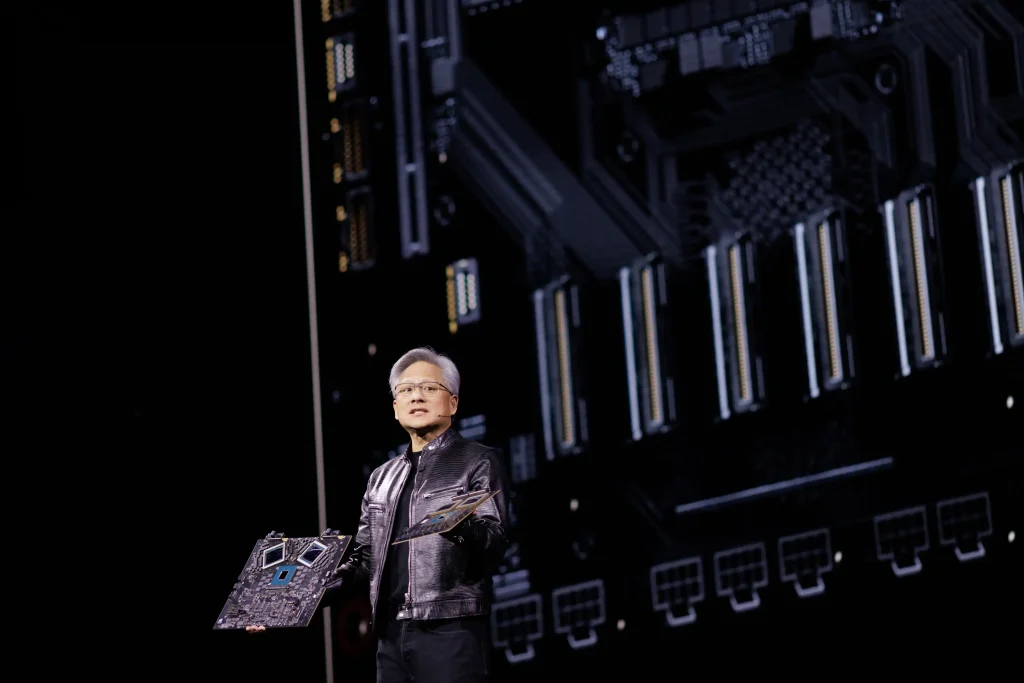
In an era where digital transformation is reshaping industrial landscapes, Nvidia and Dassault Systèmes have embarked on a groundbreaking collaboration to merge artificial intelligence with digital twin technology. This partnership aims to build comprehensive, science-based industry world models that will redefine how manufacturing, design, and engineering processes are conceived and executed. By combining Nvidia’s cutting-edge AI infrastructure and computational power with Dassault Systèmes’ expertise in 3D virtual twins and model-based systems engineering (MBSE), they are pioneering a new paradigm that enhances industrial know-how, accelerates innovation, and drives operational efficiency across sectors.
Digital twins have revolutionized how industries visualize and simulate physical assets, processes, and systems in virtual environments. These virtual replicas facilitate predictive maintenance, design optimization, and operational efficiency. However, integrating artificial intelligence, especially advanced machine learning models, into these twins amplifies their capabilities by enabling autonomous decision-making and continuous learning from real-world data.
Nvidia and Dassault Systèmes are spearheading this integration by leveraging Nvidia’s AI infrastructure, including its Omniverse platform, alongside Dassault’s 3DExperience and MBSE tools. This fusion allows for the creation of digital twins that are not only detailed representations but also intelligent entities capable of simulating complex physical phenomena with scientific accuracy.
The result is a new class of industry world models that are ‘science-validated’—meaning they adhere to the fundamental laws of physics and engineering. This approach ensures that AI-driven simulations and predictions are reliable, scalable, and directly applicable to real-world industrial challenges.
Nvidia brings to the partnership a robust AI infrastructure that includes specialized hardware like GPUs optimized for AI workloads, comprehensive AI models, and software libraries. Its Omniverse platform acts as a collaborative 3D simulation environment where developers and engineers can build and operate digital twins with real-time physics and AI-driven insights.
The company has expanded its Omniverse ecosystem by integrating it with prominent industrial software platforms such as Siemens Digital Twin Composer and tools from Accenture, Microsoft, Ansys, and Cadence. This broad integration enhances interoperability and enables a seamless flow of data and simulations across various industrial applications.
By embedding Omniverse libraries into Dassault Systèmes’ design and engineering workflows, Nvidia enables real-time simulations powered by AI, allowing virtual twins to evolve dynamically as they receive new data. This continuous feedback loop ensures models remain accurate, adaptive, and useful throughout the product lifecycle.
Dassault Systèmes has long been a leader in 3D design software and virtual twin technology through its 3DExperience platform. Their strength lies in creating detailed, high-fidelity digital replicas of physical assets, processes, and entire factories that capture both knowledge and know-how.
A critical component of their contribution is model-based systems engineering (MBSE), a methodology that enables the design, analysis, and verification of complex systems using models as the primary means of information exchange. MBSE provides a structured framework to ensure that all system requirements and physical laws are rigorously incorporated into digital twins.
The collaboration with Nvidia allows Dassault Systèmes to augment its MBSE approach with AI-driven simulations and continuous optimization. This synergy enables industries to produce virtual twins that not only mirror reality but also generate new insights, facilitate innovation, and reduce time-to-market.
The partnership’s ultimate goal is to create ‘science-validated industry world models’—virtual environments grounded in established scientific principles and engineering disciplines. Unlike conventional AI models that rely heavily on data correlations, these models incorporate physics, biology, and chemistry to ensure predictions and simulations are physically plausible and trustworthy.
This approach addresses a critical limitation of many AI systems: their inability to generalize beyond the scope of training data. By embedding scientific laws, these world models can simulate scenarios that have never been physically tested, such as new manufacturing processes or novel product designs, with high confidence.
The models are designed to be generative, meaning they can propose innovative solutions, optimize workflows, and predict outcomes autonomously. This capability empowers engineers and decision-makers to explore ‘what-if’ scenarios and accelerate discovery and development across industries.
One compelling example of this collaboration in action is Nvidia’s use of Dassault Systèmes’ MBSE to design and simulate its own data centers. Before construction begins, the entire facility, including networks and supercomputers, is modeled and optimized virtually to save time and reduce costs.
The virtual twin of the data center is continuously updated with AI models that monitor and optimize performance, enabling the facility to run at peak efficiency. This digital twin acts as a living system, adapting to changes and improving operations over time.
Beyond data centers, the partnership holds transformative potential for manufacturing, aerospace, automotive, and even biological systems. Factories can be simulated in full detail before physical deployment, reducing errors and downtime, while product designs can be iterated rapidly with AI-driven insights, enhancing quality and innovation.
Industry analysts recognize the Nvidia-Dassault Systèmes collaboration as a significant step toward defining an industrial physical AI computing stack. Bill Curtis of Moor Insights & Strategy highlights how this shared, physics-validated digital twin model running on Nvidia’s AI infrastructure enables comprehensive design, validation, and operation of complex systems in a virtual space.
Scott Bickley from Info-Tech Research Group notes the shift this partnership represents—from generative, data-driven digital twins to those firmly anchored in the laws of physical science. This fusion of scientific rigor with AI’s computational power opens new avenues for scaling validated models across industries.
Such endorsements underscore that this partnership is more than marketing—it is a functional alliance that combines Dassault’s physical world representation capabilities with Nvidia’s AI-driven infrastructure to create practical, deployable solutions.
Despite the promising advances, integrating AI with digital twins at scale presents challenges. These include managing massive data flows, ensuring model accuracy over time, and bridging gaps between diverse engineering disciplines and AI methodologies.
Moreover, building trust in AI-generated insights requires transparent validation frameworks and robust scientific grounding, which the Nvidia-Dassault partnership seeks to address through their science-validated approach.
Looking ahead, continued innovation in AI algorithms, hardware acceleration, and collaborative platforms like Omniverse will further enhance the fidelity and utility of digital twins. As industries increasingly adopt these technologies, we can expect to see accelerated digital transformation and smarter, more sustainable industrial ecosystems.
The partnership between Nvidia and Dassault Systèmes is emblematic of a broader trend toward embedding AI deeply into industrial processes. By creating shared architectures for digital twins and AI, they set a foundation for scalable, interoperable solutions that can be customized for diverse industrial needs.
This integration facilitates a shift from reactive maintenance and design to proactive optimization and innovation, enabling industries to reduce costs, improve quality, and accelerate time-to-market.
Furthermore, the collaborative model serves as a blueprint for future alliances between AI technology providers and domain-specific software companies, emphasizing the importance of combining domain expertise with AI capabilities to drive meaningful digital transformation.
The collaboration between Nvidia and Dassault Systèmes marks a pivotal advancement in the integration of artificial intelligence with digital twin technology. By grounding AI models in scientific principles and leveraging robust virtual twin platforms, the partnership is creating industry world models that are both deeply insightful and practically applicable. This fusion enables industries to simulate, innovate, and optimize with unprecedented accuracy and scale. As digital twins evolve from static representations to intelligent, generative models, the future of industrial design and manufacturing will be defined by these science-validated AI-driven ecosystems. This alliance not only accelerates digital transformation but also sets a new standard for how technology and engineering expertise converge to solve complex industrial challenges.
Originally reported by cio.com. Adapted for our readers.
Keep reading
AI Trends & News
Microsoft opens Surface Laptop Ultra pre-orders from US$2,599.99. Explore its launch date, NVIDIA RTX Spark features and implications for Nigerian businesses.
Science & Technology
DJI’s IBC recognition puts pocket gimbal and panoramic capture in the spotlight. Here is how creators can assess framing, editing effort and recording workflows.
Business News
App store steering is about more than permission to add a link. Explore fees, renewal terms, customer experience and the UK consultation.
TAMFIS NIG LTD
Electrical and instrumentation engineering, bid preparation and consulting, IT and software.

