
AI Trends & News
Surface Laptop Ultra Pre-orders Open: Price, Release Date and AI Features
Microsoft opens Surface Laptop Ultra pre-orders from US$2,599.99. Explore its launch date, NVIDIA RTX Spark features and implications for Nigerian businesses.
TAMFIS NIG LTDRC 8067447CAC ACTIVEFinima, Bonny Island, Rivers State

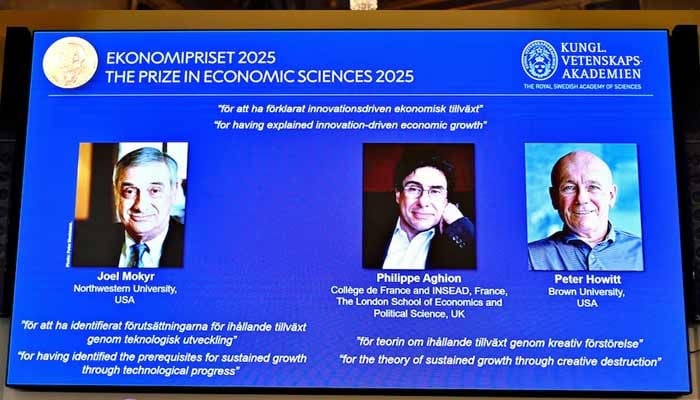
In October 2025, the Royal Swedish Academy of Sciences awarded the prestigious Nobel Prize in Economic Sciences to Joel Mokyr, Philippe Aghion, and Peter Howitt for their seminal contributions to understanding the role of innovation and creative destruction in driving economic growth. Their collective research offers a comprehensive framework that explains how technological advances lead to the continuous replacement of obsolete products and methods, fostering prosperity and better quality of life globally. This article delves into their groundbreaking work, its implications for economic policy, and the broader significance of innovation in sustaining growth.
Joel Mokyr, Philippe Aghion, and Peter Howitt have been recognized for elucidating the mechanisms through which innovation propels economic expansion. Mokyr’s historical approach highlights how technological breakthroughs have acted as catalysts for sustained growth over the past two centuries, a period unprecedented in human history. By examining historical data, Mokyr identified critical factors enabling societies to harness innovation effectively.
Aghion and Howitt, in contrast, developed a rigorous mathematical model capturing the essence of ‘creative destruction’—a concept originally coined by economist Joseph Schumpeter. Their model formalizes how new technologies and products continuously replace outdated ones, ensuring a dynamic and evolving economic landscape. This process is central to understanding why economies grow and how productivity gains translate into higher living standards.
Together, their work bridges historical insights and theoretical modeling, providing a robust explanation for long-term economic growth. The laureates’ research underscores that innovation is not a one-time event but an ongoing cycle that reshapes industries, labor markets, and consumer choices, fostering continuous economic development.
Creative destruction refers to the incessant process by which new innovations render existing products and processes obsolete. This phenomenon drives economic evolution by enabling more efficient technologies to supplant outdated methods, thereby increasing overall productivity. The term was popularized by Joseph Schumpeter, but Aghion and Howitt’s work mathematically formalized the concept and its implications for growth theory.
Their model demonstrates that creative destruction is not merely disruptive but essential for progress. While it can lead to short-term job displacement and industry shifts, the long-term benefits manifest in higher wages, better products, and improved standards of living. This dynamic process fosters competition and incentivizes firms to innovate continuously to survive in the marketplace.
Importantly, the laureates’ research highlights that creative destruction is an endless cycle, without which economic stagnation is likely. Their findings stress that policies encouraging innovation and competition are vital to maintaining this cycle, ensuring that economies do not fall into complacency or decline.
Joel Mokyr’s historical analysis reveals that sustained economic growth is a relatively recent phenomenon in human history. For most of humanity’s existence, economies experienced stagnation or slow growth. The Industrial Revolution marked a turning point, fueled by technological innovations that transformed production and consumption patterns.
Mokyr’s research identifies key historical conditions that enabled innovation to flourish, including the diffusion of knowledge, institutions supporting research and development, and societal openness to change. These factors collectively created an environment where new ideas could be tested, refined, and implemented effectively.
His work emphasizes that understanding these historical patterns is crucial for policymakers aiming to replicate growth in the modern era. By learning from past successes and failures, societies can better design institutions and incentives that nurture continuous innovation and economic advancement.
The laureates’ findings carry significant implications for contemporary economic policy. Their research suggests that fostering innovation requires a delicate balance between competition and supportive industrial policies. Philippe Aghion, during the Nobel press conference, highlighted Europe’s need to evolve its approach by integrating industrial policy with competition policy, especially in strategic sectors like defense, climate technology, artificial intelligence, and biotechnology.
Aghion pointed out that while the United States and China have successfully reconciled competition with industrial policy to promote innovation, Europe has traditionally been more cautious, often prioritizing competition rules over proactive industrial strategies. This stance, he argued, may hinder Europe’s ability to compete globally in emerging technologies.
The laureates’ work thus encourages governments to craft policies that incentivize research and development, support startups and innovative firms, and facilitate the diffusion of new technologies. Such policies are essential to sustaining the creative destruction cycle and ensuring long-term economic growth.
Innovation’s impact extends beyond economic metrics to tangible improvements in people’s daily lives. The Nobel Committee emphasized that technological advancements resulting from creative destruction have led to better health, higher living standards, and increased life expectancy worldwide. New products and production methods often reduce costs and enhance accessibility to essential goods and services.
For instance, innovations in medical technology have drastically improved disease diagnosis and treatment, while advancements in communication and transportation have connected people and markets like never before. These developments contribute to a more inclusive and prosperous society.
The laureates’ research reinforces the notion that economic growth driven by innovation is not an abstract concept but a concrete force shaping human well-being. Sustaining this growth requires continued investment in education, research, and infrastructure that support innovative activities.
While the laureates highlight the transformative power of innovation, they also caution that economic growth is not guaranteed. Historically, economic stagnation was the norm, and various factors can threaten the creative destruction process. These include regulatory barriers, insufficient investment in research, and social resistance to change.
Moreover, the disruptive nature of creative destruction can exacerbate inequality and cause short-term economic dislocations. Policymakers must address these challenges by implementing social safety nets, retraining programs, and inclusive policies that ensure the benefits of innovation are widely shared.
The Nobel Committee’s statement underscores the importance of vigilance and proactive measures to counteract threats to growth. Without sustained innovation and supportive institutions, economies risk falling into stagnation or decline, jeopardizing future prosperity.
Joel Mokyr is a professor at Northwestern University in the United States and is renowned for his work on the economic history of technological change. His interdisciplinary approach combines history, economics, and social sciences to understand the origins and impacts of innovation.
Philippe Aghion holds professorships at the Collège de France, INSEAD in Paris, and the London School of Economics and Political Science. His research focuses on growth theory, innovation, and industrial organization, making significant contributions to understanding the dynamics of creative destruction.
Peter Howitt is a professor at Brown University in Providence, USA. He has extensively studied economic growth, innovation, and market dynamics. Together, Aghion and Howitt have collaborated on influential models that formalize the process of creative destruction, shaping modern growth economics.
The 2025 Nobel Prize in Economic Sciences adds to the rich legacy of recognizing transformative contributions to understanding economic phenomena. Unlike the other Nobel prizes established in Alfred Nobel’s will, the economics prize was instituted in 1969 and has since honored scholars who have shaped policy and theory.
Past laureates such as Paul Krugman, Milton Friedman, and Ben Bernanke have influenced public discourse and economic policymaking globally. Mokyr, Aghion, and Howitt’s award continues this tradition by providing insights crucial for addressing today’s economic challenges.
Their work on innovation and creative destruction is particularly relevant in an era marked by rapid technological changes and global competition. It serves as a foundation for future research and policy aimed at fostering sustainable and inclusive economic growth worldwide.
The 2025 Nobel Prize in Economic Sciences celebrates the pioneering work of Joel Mokyr, Philippe Aghion, and Peter Howitt, whose research illuminates the vital role of innovation and creative destruction in fostering economic growth and improving human welfare. Their insights offer a powerful framework for understanding the dynamic nature of modern economies and emphasize the importance of policies that nurture continuous innovation. As the world faces rapid technological change and global challenges, their work provides invaluable guidance for sustaining prosperity and ensuring inclusive growth in the decades ahead.
Originally reported by thenews.com.pk. Adapted for our readers.
Keep reading
AI Trends & News
Microsoft opens Surface Laptop Ultra pre-orders from US$2,599.99. Explore its launch date, NVIDIA RTX Spark features and implications for Nigerian businesses.
Science & Technology
DJI’s IBC recognition puts pocket gimbal and panoramic capture in the spotlight. Here is how creators can assess framing, editing effort and recording workflows.
Business News
App store steering is about more than permission to add a link. Explore fees, renewal terms, customer experience and the UK consultation.
TAMFIS NIG LTD
Electrical and instrumentation engineering, bid preparation and consulting, IT and software.

