
AI Trends & News
Surface Laptop Ultra Pre-orders Open: Price, Release Date and AI Features
Microsoft opens Surface Laptop Ultra pre-orders from US$2,599.99. Explore its launch date, NVIDIA RTX Spark features and implications for Nigerian businesses.
TAMFIS NIG LTDRC 8067447CAC ACTIVEFinima, Bonny Island, Rivers State

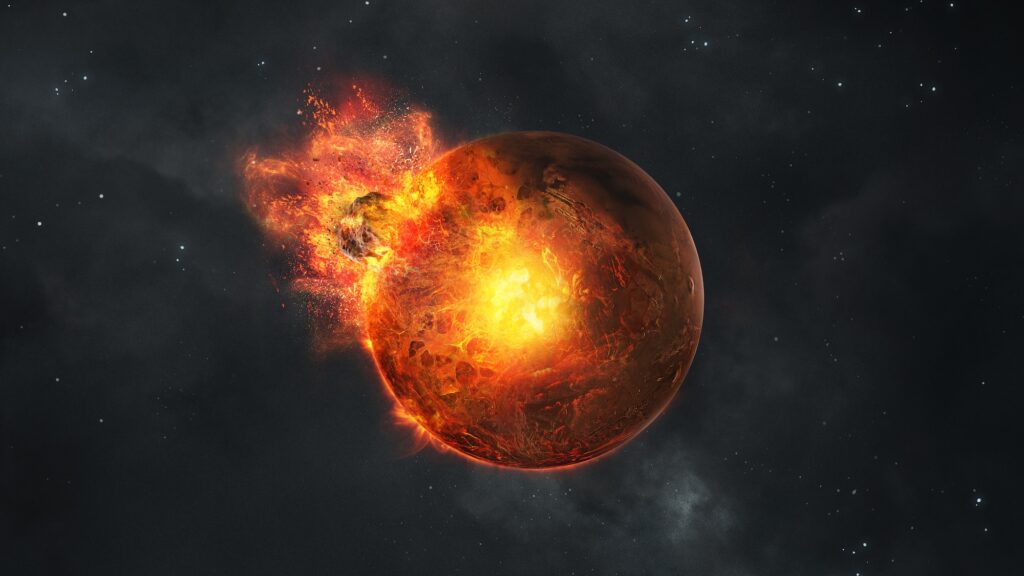
Mars, our intriguing planetary neighbor, has long captivated scientists with its enigmatic surface and potential for past habitability. Recent studies have peeled back the layers of the Red Planet’s interior, revealing that its mantle is far from uniform. Instead, it resembles a rocky road brownie—a complex mixture of solidified magma and ancient debris. This metaphorical description belies a dramatic history marked by colossal collisions and intense geological upheaval. By analyzing seismic data from NASA’s InSight mission, researchers have uncovered evidence of massive ancient fragments embedded within Mars’ mantle, painting a picture of a violent early solar system and a planet whose interior has been largely frozen in time for billions of years.
Mars formed approximately 4.5 billion years ago during the chaotic infancy of the solar system, a time when planetary bodies frequently collided and merged. Unlike Earth, which experienced ongoing geological activity driven by plate tectonics, Mars endured a series of cataclysmic impacts that fundamentally shaped its interior structure. These colossal collisions generated immense heat, melting vast portions of the young planet and creating global magma oceans.
One of the most significant consequences of these impacts was the formation of a planet-wide magma ocean that eventually cooled and crystallized. This process trapped large fragments of debris deep within the mantle, remnants of the violent collisions that occurred during Mars’ formative years. These embedded fragments are now providing scientists with vital clues about the planet’s tumultuous past.
The intensity of these early impacts is comparable to the giant collision believed to have formed Earth’s moon. Such events delivered enough energy to disrupt the planet’s interior, yet Mars’ subsequent geological evolution was markedly different, leading to a unique and relatively inert mantle structure that preserves these ancient scars.
NASA’s InSight lander, equipped with sensitive seismic instruments, has been instrumental in unveiling the mysteries beneath Mars’ surface. By detecting and analyzing marsquakes and seismic waves, InSight has provided unprecedented insight into the planet’s internal composition and dynamics. Among its key findings is the discovery of significant disruptions within the mantle, indicating a heterogeneous interior.
Researchers identified large fragments embedded within the mantle, some measuring up to 2.5 miles wide. These fragments disrupt the otherwise smoother mantle matrix, much like nuts and marshmallows embedded in a rocky road brownie. Their presence suggests that the mantle is not a uniform layer but a complex assembly of materials with distinct compositional origins.
The seismic data also revealed the signature of two meteorite impacts that created craters approximately 492 feet wide. The waves from these events interfered with seismic signals traveling through the mantle, further supporting the idea that the mantle contains diverse and ancient structures formed by early catastrophic collisions.
Unlike Earth, which experiences dynamic plate tectonics recycling its crust and mantle, Mars has a so-called stagnant lid—a rigid, unmoving outer shell that effectively traps heat and inhibits mantle convection. This stagnant lid formed as Mars’ surface cooled and solidified, sealing off the interior and preserving its ancient features.
This geological stasis means that the mantle beneath the crust has been largely static for billions of years, preventing the recycling of materials and allowing the vestiges of early impacts to remain intact. Consequently, Mars’ interior acts as a time capsule, offering a preserved record of the planet’s violent beginnings.
The stagnant lid also influences Mars’ thermal evolution, slowing the planet’s cooling and internal churning. This sluggish interior contrasts sharply with Earth’s active mantle and helps explain why Mars’ geological activity has diminished over time, leading to its current relatively quiescent state.
The term “fractal distribution” describes the pattern observed when an object is shattered by an overwhelming impact, breaking into a few large fragments surrounded by many smaller pieces. This concept, applied to Mars’ mantle, explains the presence of both sizable chunks and finer debris embedded within the mantle matrix.
Researchers liken the impact fragmentation process to a glass shattering when dropped on a tiled floor—large shards coexist with smaller fragments, distributed in a complex pattern. This fractal nature of debris distribution has been detected deep within Mars, providing direct evidence of the violent collisions that shaped the planet’s interior.
The ability to detect this fractal distribution today, billions of years after the impacts, underscores the slow geological evolution of Mars’ interior. It highlights how the planet’s stagnant mantle has preserved these chaotic features, offering a unique window into early planetary formation processes.
Mars’ preserved mantle features offer valuable insights into the early evolution of terrestrial planets, including Mercury, Venus, and Earth. While Earth’s active geology has erased much of its primordial interior structure, Mars provides a rare example of a planet whose interior composition remains largely unchanged since its formation.
Studying Mars’ mantle helps scientists understand how giant impacts influence planetary differentiation, magma ocean crystallization, and mantle composition. These processes are fundamental to planetary evolution and can inform models of other rocky worlds both within and beyond our solar system.
Moreover, the findings suggest that other terrestrial planets may also harbor similar ancient structures beneath their surfaces, especially if they have experienced stagnant lid regimes. This broadens the scope of planetary science and aids in comparative planetology, improving our understanding of planetary formation and evolution.
Global magma oceans formed on Mars as a direct consequence of the energy released by massive collisions during its infancy. These molten layers covered the planet’s surface and interior, facilitating differentiation of materials and the formation of distinct compositional layers within the mantle.
As these magma oceans cooled, they crystallized and trapped fragments of debris, resulting in a heterogeneous mantle structure. The crystallization process left behind compositional variations that are now detected as the embedded fragments disrupting the mantle’s uniformity.
Understanding the formation and solidification of magma oceans is crucial for interpreting Mars’ geological record. It helps explain the planet’s internal layering and provides context for the seismic signals that reveal the mantle’s complex composition today.
The discoveries made by InSight open new avenues for planetary exploration and research. Future missions equipped with advanced seismic instruments could further map the interior of Mars and other planets, refining our understanding of their geological histories and internal dynamics.
Comparative studies between Mars and Earth can illuminate why these neighboring planets evolved so differently, particularly regarding mantle convection, crust formation, and tectonic activity. This knowledge is essential for understanding planetary habitability and the potential for life elsewhere.
Additionally, the concept of a stagnant lid and preserved interior fragments may apply to exoplanets, expanding the implications of these findings beyond our solar system. As technology advances, scientists anticipate uncovering more about the hidden interiors of rocky worlds, transforming our understanding of planetary evolution.
The revelations from Mars’ interior seismic data underscore a violent and transformative early history marked by massive impacts and molten magma oceans. Unlike Earth’s dynamic mantle, Mars’ stagnant lid has preserved a unique geological record locked within its mantle—an ancient ‘rocky road’ of embedded fragments that testify to the cataclysmic events shaping the Red Planet. These findings not only deepen our understanding of Mars but also provide a vital comparative framework for studying terrestrial planets throughout the solar system and beyond. As exploration continues, Mars remains a planetary time capsule, offering unparalleled insights into the processes that forged rocky worlds billions of years ago.
Originally reported by popsci.com. Adapted for our readers.
Keep reading
AI Trends & News
Microsoft opens Surface Laptop Ultra pre-orders from US$2,599.99. Explore its launch date, NVIDIA RTX Spark features and implications for Nigerian businesses.
Science & Technology
DJI’s IBC recognition puts pocket gimbal and panoramic capture in the spotlight. Here is how creators can assess framing, editing effort and recording workflows.
Business News
App store steering is about more than permission to add a link. Explore fees, renewal terms, customer experience and the UK consultation.
TAMFIS NIG LTD
Electrical and instrumentation engineering, bid preparation and consulting, IT and software.

