
Science & Technology
MAX Power Engages Global Technology Leader Kyndryl to Build Commercialization Strategy for MAXX LEMI
Author of the article:
TAMFIS NIG LTDRC 8067447CAC ACTIVEFinima, Bonny Island, Rivers State

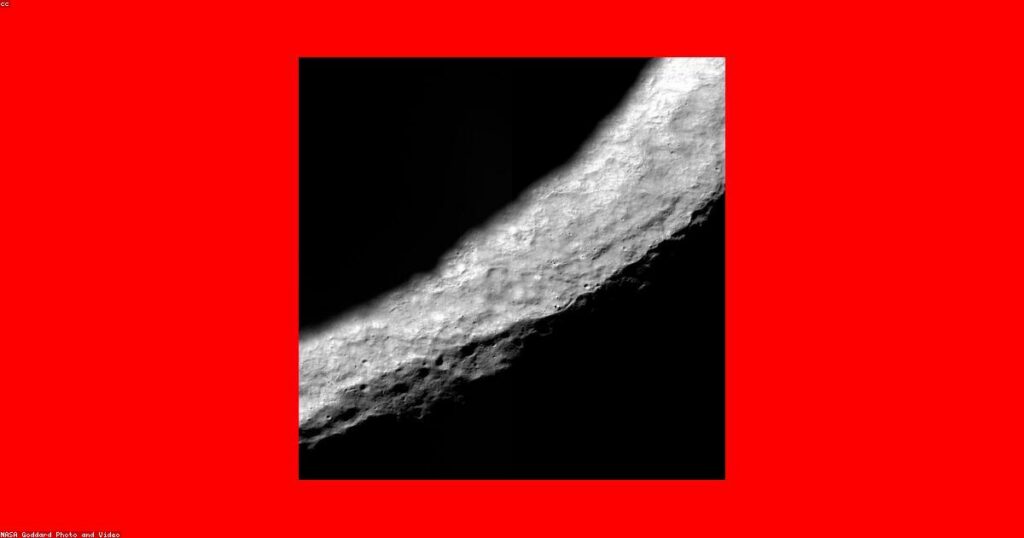
In a remarkable achievement for lunar exploration, a NASA spacecraft orbiting the Moon has captured detailed images of the crash site of a Japanese company’s lunar lander. This event marks a significant milestone in understanding the complexities of soft landings on the lunar surface and offers critical data for future missions. The images not only document the aftermath of the crash but also enhance international collaboration in space exploration, emphasizing the importance of transparency and shared knowledge in advancing humanity's reach beyond Earth.
The Japanese lunar lander was part of an ambitious private-sector mission aimed at advancing commercial space exploration. Developed by a pioneering Japanese aerospace company, the lander was designed to conduct scientific experiments and demonstrate new technologies for lunar surface operations. This mission was particularly notable as it represented one of the few private initiatives attempting a soft landing on the Moon, highlighting Japan’s growing interest in space commercialization.
The lander’s objectives included analyzing lunar soil composition, testing autonomous landing systems, and capturing high-resolution images of the Moon’s surface. These goals aligned with the broader international interest in exploring the Moon’s south pole region, which is believed to harbor water ice deposits critical for future human missions. Despite the high stakes and technological challenges, the project received significant attention for pushing the boundaries of private space exploration.
Unfortunately, during its descent phase, the lander encountered technical difficulties that prevented a controlled touchdown. The loss of communication and subsequent crash emphasized the inherent risks of lunar missions, especially for new entrants in the space industry. However, the mission’s partial failure still provided valuable lessons for engineers and scientists worldwide.
NASA’s lunar orbiter, equipped with sophisticated imaging instruments, plays a critical role in monitoring and studying the Moon’s surface with unprecedented detail. Launched with the purpose of supporting various lunar missions, this spacecraft carries high-resolution cameras capable of capturing surface features as small as a few centimeters. These capabilities enable scientists to analyze landing sites, surface changes, and geological phenomena from orbit.
The orbiter’s imaging system includes narrow-angle cameras for detailed site inspections and wide-angle cameras for broader context views. By systematically scanning the lunar surface, NASA can track the progress of ongoing missions and assess the outcomes of lander activities. This technology is crucial for both scientific discovery and mission safety, providing real-time data that inform operational decisions.
In this particular instance, NASA tasked the orbiter with photographing the suspected crash site of the Japanese lander. The resulting images offered clear visual confirmation of the lander’s fate and revealed the extent of surface disturbance caused by the crash. Such imagery is invaluable for reconstructing the sequence of events and improving future landing technologies.
The images captured by NASA’s orbiter show a distinct area of disturbed lunar regolith, marked by scattered debris consistent with a hard impact. The crash site is located near the Moon’s south pole, an area of heightened scientific interest due to its unique environmental conditions. Analysis of the images indicates that the lander impacted the surface at a steep angle, resulting in significant fragmentation of its components.
Close examination reveals the distribution pattern of debris, which helps engineers understand the dynamics of the crash. The scattered material provides clues about the lander’s velocity and orientation upon impact, enabling a detailed reconstruction of the landing attempt. Moreover, the images highlight how the lunar surface reacts to high-energy impacts, contributing to broader geological knowledge.
These visual data also assist in evaluating the lander’s structural integrity and design resilience. By studying how various parts broke apart or remained intact, designers can identify weaknesses and improve future lander models. This process is essential for advancing the reliability of lunar landings, particularly as private companies increase their presence in space exploration.
The photographic evidence of the Japanese lander’s crash site underscores the challenges inherent in soft lunar landings. Precision navigation, autonomous control systems, and real-time decision-making are crucial to ensure successful touchdowns on the Moon’s rugged terrain. Lessons learned from this incident will inform the development of more robust technologies and procedures for upcoming missions.
As more nations and private entities pursue lunar exploration, data sharing and collaborative analysis become increasingly important. NASA’s involvement in imaging the crash site demonstrates a commitment to transparency and international cooperation. This openness fosters a collective effort to overcome technical hurdles and accelerate humanity’s return to the Moon.
Furthermore, understanding failure modes through detailed imagery helps establish safety protocols and risk mitigation strategies. Future landers can incorporate enhanced sensors and backup systems to prevent similar accidents. The continuous refinement of lunar landing techniques will pave the way for sustainable exploration and eventual human settlement on the Moon.
The incident involving the Japanese lunar lander highlights the growing interconnectedness of global space exploration efforts. Although the mission was privately funded and operated, NASA’s assistance in documenting the crash site exemplifies the cooperative spirit that defines modern space endeavors. Such collaborations enable knowledge exchange and resource sharing that benefit all participants.
International partnerships also help standardize technical requirements and operational protocols, ensuring compatibility and safety across diverse missions. By working together, agencies and companies can pool expertise and reduce redundancies, making lunar exploration more efficient and cost-effective. The joint efforts witnessed in this case reflect a broader trend toward multinational cooperation in space.
Moreover, collaborative approaches contribute to peaceful use of outer space by fostering mutual understanding and trust. Transparency in mission outcomes, including setbacks like crashes, builds confidence among stakeholders and the public. This shared commitment to exploration encourages sustained investment and innovation in the space sector.
Landing on the Moon presents formidable technological challenges due to its low gravity, lack of atmosphere, and uneven terrain. Unlike Earth, where parachutes can aid descent, lunar landers rely solely on propulsion and precise maneuvering to achieve a soft touchdown. This requires advanced guidance, navigation, and control systems capable of operating autonomously under extreme conditions.
Communication delays between Earth and the Moon further complicate landing operations, necessitating onboard decision-making capabilities. Sensors must accurately detect surface features and hazards, while thrusters adjust descent velocity and orientation in real time. Any malfunction or miscalculation can lead to catastrophic failure, as seen with the Japanese lander.
Additionally, the lunar environment exposes spacecraft to harsh thermal cycles, radiation, and dust interference. Engineering solutions must address these factors to ensure mission success and longevity. Continuous testing, simulation, and incremental improvements are vital to overcoming these challenges and achieving reliable lunar landings.
The Japanese lander’s attempt, despite its crash, signals a promising future for private companies in lunar exploration. Commercial entities are increasingly contributing innovative technologies and new mission concepts that complement government programs. Their involvement drives competition, lowers costs, and accelerates technological advancement.
Future private missions are expected to focus on scientific research, resource prospecting, and infrastructure development. Successful landings and surface operations will establish a foundation for commercial activities such as lunar mining and tourism. The data obtained from crash analyses will guide companies in designing safer, more capable landers.
As regulatory frameworks evolve to accommodate private spaceflight, collaboration between governments and industry will be essential. Supportive policies and international agreements will facilitate responsible exploration while protecting lunar heritage. The lessons learned from early missions will shape a sustainable and prosperous era of lunar commerce.
NASA’s imaging of the Japanese company’s lunar lander crash site represents a key moment in the ongoing journey to explore the Moon. The detailed photographs provide invaluable insights into the complexities of lunar landings and the resilience required to succeed. This event underscores the importance of learning from failures to drive progress in space exploration.
The collaboration between NASA and the Japanese private sector exemplifies the power of international cooperation in overcoming challenges and expanding humanity’s reach beyond Earth. By sharing data and expertise, the global space community can collectively enhance mission safety, efficiency, and scientific return.
Looking ahead, continued innovation and partnership will be vital to achieving sustainable lunar exploration. Each mission, whether triumphant or troubled, contributes critical knowledge that shapes the future of space travel. Together, these efforts bring us closer to establishing a permanent human presence on the Moon and unlocking its vast potential.
The successful imaging of the Japanese lunar lander’s crash site by NASA’s spacecraft marks a significant advancement in our understanding of lunar landing challenges. This event highlights the vital role of international cooperation and data sharing in space exploration. By learning from setbacks and combining resources, both governmental agencies and private companies can push the boundaries of lunar science and technology. Ultimately, these collaborative efforts will pave the way for safe, efficient, and sustainable missions, bringing humanity closer to establishing a lasting foothold on the Moon.
Originally reported by chron.com. Adapted for our readers.
Keep reading
Science & Technology
Author of the article:
Science & Technology
The National Agency for Science and Engineering Infrastructure (NASENI) on Friday 4th September 2026, marked three year...
Science & Technology
In a significant move towards urban renewal, the Andhra Pradesh government has launched a ₹40 crore slum...
TAMFIS NIG LTD
Electrical and instrumentation engineering, bid preparation and consulting, IT and software.