
Educational Resources
Storm disrupts Portugal as presidential run‑off election approaches
Portugal finds itself grappling with a multifaceted crisis as severe storms, known as Storm Kristin and ...
TAMFIS NIG LTDRC 8067447CAC ACTIVEFinima, Bonny Island, Rivers State

Here’s the text formatted for MS Word, incorporating standard heading styles and bullet points.
Communication Protocols in Instrumentation: A Comprehensive Guide
Communication protocols play a crucial role in instrumentation by enabling devices to exchange information efficiently. This article delves into various communication protocols essential in instrumentation, including HART, Modbus, Profibus, Fieldbus systems, and wireless communication. We aim to provide a comprehensive understanding of each protocol, along with their functionalities, benefits, and typical applications within automation and instrumentation frameworks.
HART Protocol
Overview of HART Protocol
HART (Highway Addressable Remote Transducer) is a widely used communication protocol in the field of process automation. Introduced in the late 1980s, HART was designed to facilitate two-way digital communication between field instruments and control systems while maintaining compatibility with traditional 4-20 mA analogue signals.
Features of HART Protocol
Functionality
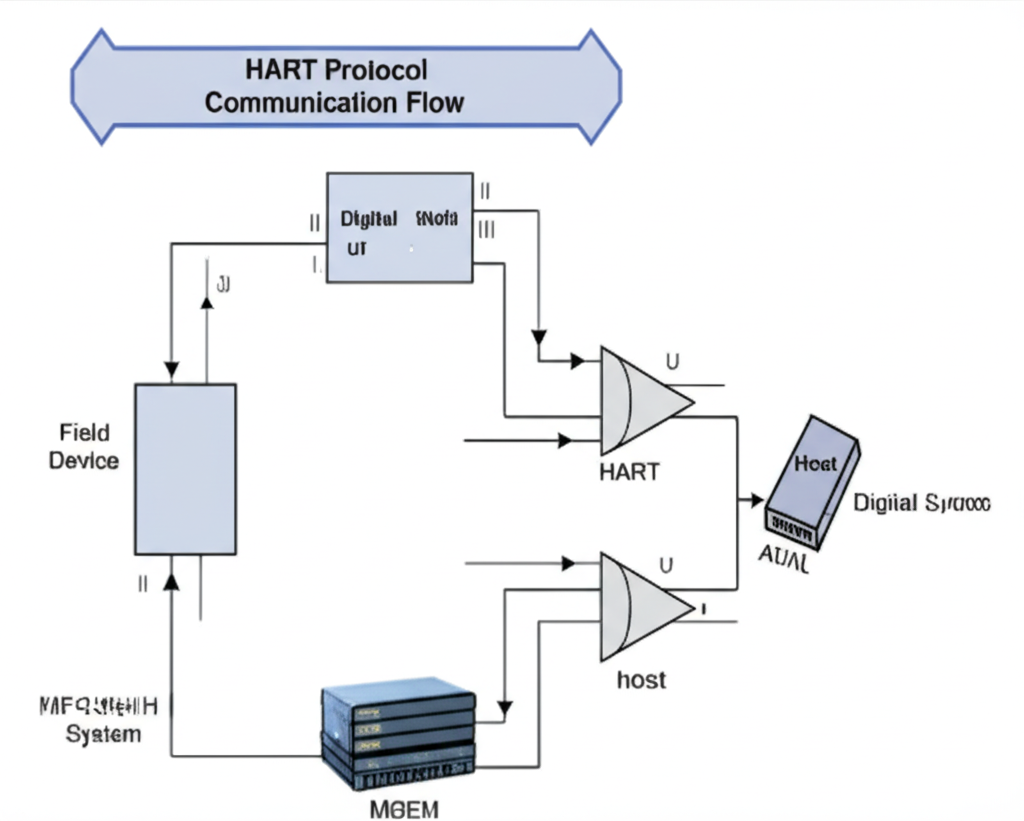
HART enables users to read sensor data, configure devices, and perform diagnostic tasks without the need for physical access to the instrument. This is depicted in the diagram below.
HART is commonly used in various applications within process industries, including:
Modbus and Profibus
Introduction to Modbus
Modbus is a serial communication protocol originally developed by Modicon (now part of Schneider Electric) for industrial applications. It provides a means for devices to communicate over a network and has become one of the most widely used protocols in industrial automation.
Features of Modbus
Introduction to Profibus
Profibus (Process Field Bus) is another important communication protocol, designed by the European Committee for Standardisation (CEN) and widely used in factory and process automation.
Features of Profibus
Comparison of Modbus and Profibus
While both Modbus and Profibus serve similar purposes, they possess distinct differences in terms of architecture, speed, and complexity. The following summarises their key differences:
| Feature | Modbus | Profibus |
|---|---|---|
| Standardisation | Open Protocol | Standardised by CEN |
| Architecture | Master-Slave | Station-Based |
| Speed | Up to 115.2 Kbps (RTU) | Up to 12 Mbps (DP) |
| Complexity | Simple to Implement | More Complex Setup |
Both Modbus and Profibus are extensively used in industrial automation systems for various applications:
Fieldbus systems are dedicated networks that allow digital communication between various field devices and control systems in industrial environments. They facilitate the integration of smart devices into a unified communication platform.
Several types of Fieldbus systems are commonly used in instrumentation:
Fieldbus systems offer numerous advantages, including:
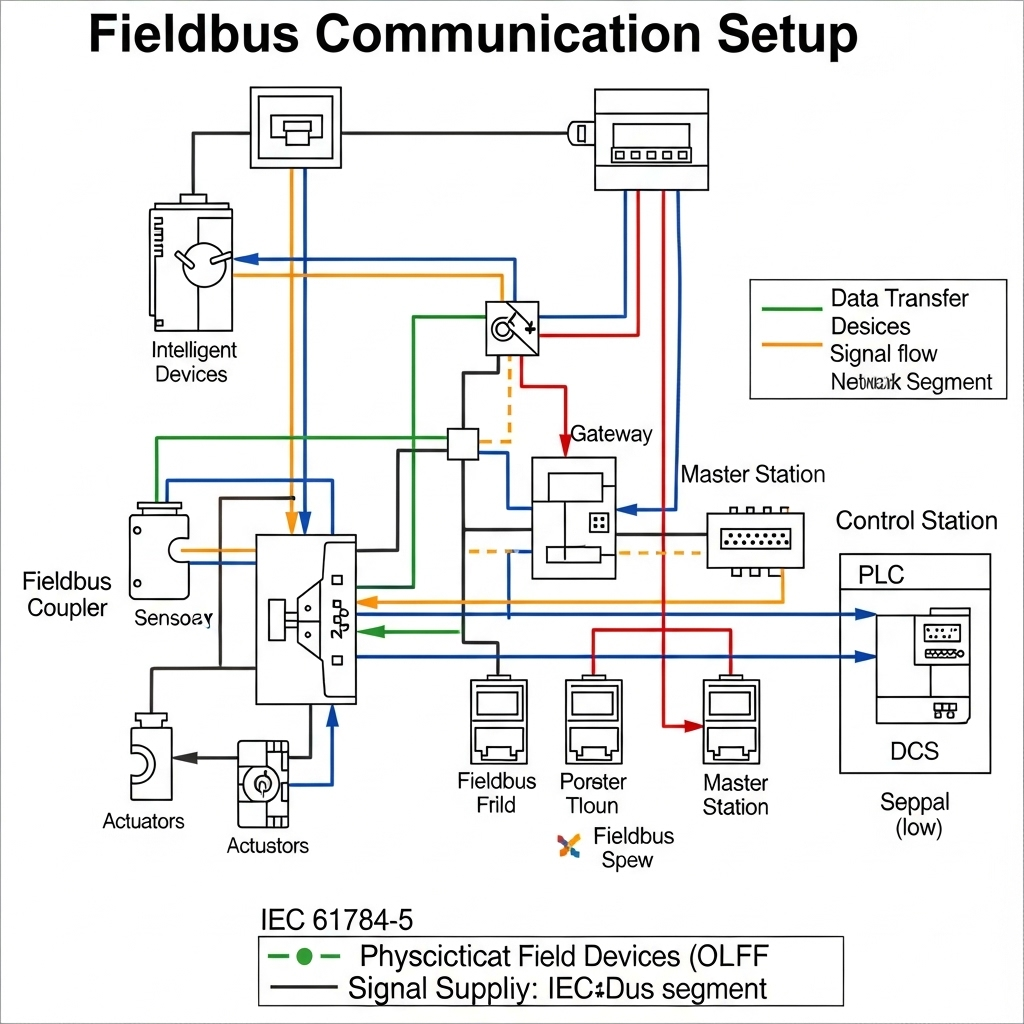
Below is a representation of a typical Fieldbus communication setup, illustrating the connectivity between field devices and the control system.
Fieldbus systems find application broadly in industrial settings:
As industries evolve, wireless communication becomes an increasingly viable option in instrumentation, offering flexibility and convenience while reducing installation and maintenance costs.
Several wireless protocols are prevalent in instrumentation, including:
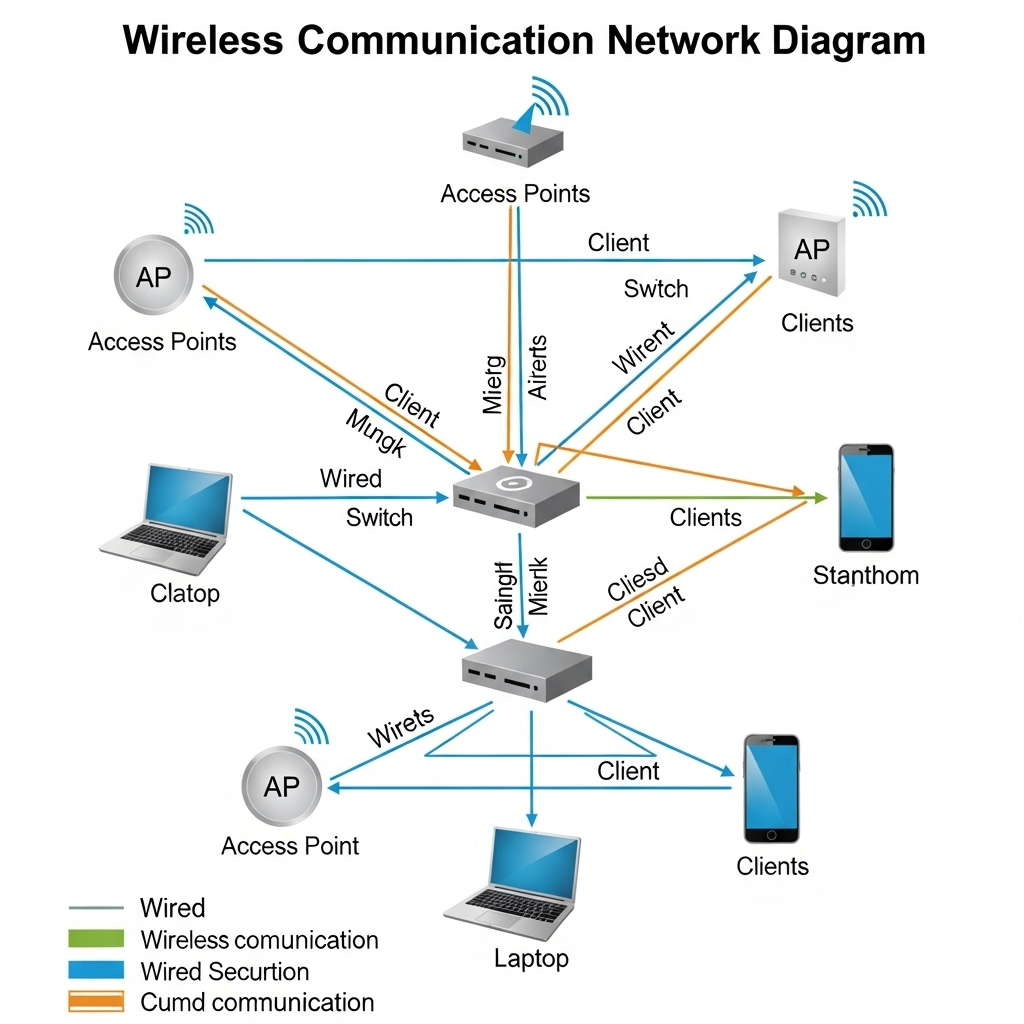
The diagram below illustrates how wireless communication components interact within an instrumentation network.
Wireless communication is transforming how industries manage instrumentation:
Understanding communication protocols in instrumentation is vital for any automation engineer or technician. Each protocol, from HART to Fieldbus systems and wireless communication, presents unique features tailored to specific operational requirements. As industries continue to innovate, the importance of these protocols in ensuring reliable and effective communication among devices will only increase. Through awareness of their functionalities, advantages, and applications, professionals can select the most appropriate communication protocols to optimise their automation systems, improve efficiency, and ensure system longevity. The information covered here is foundational for enhancing performance in any industrial context that relies on instrumentation for operations.
Keep reading
Educational Resources
Portugal finds itself grappling with a multifaceted crisis as severe storms, known as Storm Kristin and ...
Educational Resources
Twilight Fish Study Uncovers Unique Hybrid Eye Cells | Mirage News is a topic that deserves thorough exp...
TAMFIS NIG LTD
Electrical and instrumentation engineering, bid preparation and consulting, IT and software.