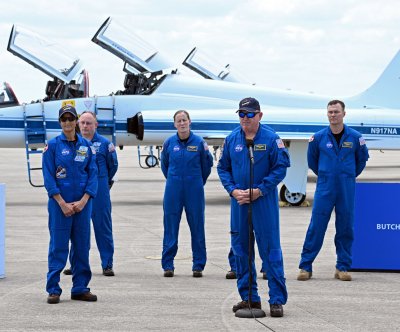
Crew of first Boeing Starliner mission arrives at Kennedy Build Heart
On a momentous day at NASA's Kennedy Space Center in Florida, astronauts Sunita “Suni” Williams and Barry “Butch” Wilmore touched down, ready to embark on the Boeing CST-100 Starliner's maiden crewed mission to the International Space Station (ISS). This flight, set for May 6, marks a pivotal moment in NASA’s Commercial Crew Program, aiming to restore and enhance America’s capability to launch astronauts from U.S. soil. The Starliner spacecraft, having undergone extensive testing and overcoming significant technical hurdles, stands poised to join SpaceX’s Crew Dragon in ferrying astronauts safely to low Earth orbit. As anticipation builds, the crew’s arrival signals the final countdown to a historic and highly anticipated test flight.
Arrival of the Starliner Crew at Kennedy Space Center
NASA astronauts Suni Williams and Butch Wilmore arrived at Kennedy Space Center on a Thursday, marking the beginning of final preparations for the Boeing Starliner's first crewed flight. Their arrival was met with media attention and excitement, underscoring the significance of this mission for NASA and the commercial spaceflight industry. The astronauts arrived by a two-seat T-38 jet, a familiar training aircraft for NASA pilots.
Their presence at Kennedy Space Center signals the transition from months of ground-based training and simulations to real-time mission operations. The astronauts will now undergo final spacecraft checks, briefings, and rehearsals to ensure mission readiness. This arrival also marks a milestone after years of delays and technical challenges that have tested the resilience of both the crew and the Boeing Starliner program.
The Kennedy Space Center, historically the site of numerous iconic space launches, once again plays a central role in America’s human spaceflight ambitions. Hosting the first crewed Starliner mission highlights its ongoing importance as a hub for pioneering space exploration and commercial partnerships.
Meet the Crew: Commander Butch Wilmore and Pilot Suni Williams
Commander Barry “Butch” Wilmore and Pilot Sunita “Suni” Williams bring extensive astronaut experience to the Starliner Crew Flight Test (CFT) mission. Wilmore, a veteran NASA astronaut, has previously flown multiple space shuttle missions and spent time aboard the ISS. His leadership and technical expertise are crucial for managing the complexities of a maiden crewed spacecraft flight.
Suni Williams, an accomplished astronaut with two long-duration ISS missions under her belt, is known for her operational skills and calm demeanor under pressure. Her role as pilot involves managing spacecraft systems, supporting docking procedures, and ensuring the safety of all crew members during this pioneering mission.
Together, Wilmore and Williams embody NASA’s commitment to operational excellence and innovation. Their combined experience provides confidence as the Starliner embarks on an 11-day mission that will test all facets of the spacecraft’s capabilities in real spaceflight conditions.
The Boeing Starliner: A New Chapter in Commercial Crew Spaceflight
The Boeing CST-100 Starliner is designed to transport astronauts to and from the ISS, forming a critical component of NASA’s Commercial Crew Program. This initiative aims to revitalize U.S.-based crewed spaceflight following the retirement of the Space Shuttle program in 2011. Starliner’s development reflects a collaboration between NASA and Boeing to foster innovation and reduce reliance on foreign spacecraft for ISS access.
Starliner is engineered with advanced safety features, including an abort system, modern avionics, and compatibility with multiple launch vehicles, notably the Atlas V rocket. Its design emphasizes reusability, quick turnaround times, and seamless integration with the ISS docking ports.
The spacecraft’s maiden crewed flight, the Crew Flight Test, will validate these systems in real-world conditions, verifying docking, life support, and landing operations. Success will pave the way for Starliner’s operational missions, further expanding NASA’s crew transportation capabilities.
Overcoming Delays and Technical Challenges
The Starliner program has faced numerous setbacks, including a failed uncrewed test flight in 2019 that did not reach the ISS due to software issues. This failure prompted a thorough review and redesign of key systems. Boeing implemented significant hardware and software upgrades, culminating in a successful uncrewed Orbital Flight Test-2 in 2022.
Additional challenges, such as parachute deployment concerns and wiring anomalies, have delayed the first crewed mission by nearly four years. These obstacles highlight the complexity of developing a new human-rated spacecraft and underscore the stringent safety standards NASA enforces for crewed missions.
Despite these hurdles, the Boeing and NASA teams have demonstrated resilience and commitment to excellence. The upcoming Crew Flight Test represents the culmination of rigorous problem-solving and testing to ensure the spacecraft and crew can safely complete their mission.
Mission Objectives and Timeline for the Crew Flight Test
Scheduled for May 6, the Crew Flight Test is an 11-day mission that will launch atop an Atlas V rocket from Cape Canaveral Space Launch Complex 41. The mission’s primary objectives include docking with the ISS, testing spacecraft systems in orbit, and validating backup docking procedures.
During their stay aboard the ISS, astronauts Wilmore and Williams will conduct operational checks and participate in routine station activities. This time will also allow ground teams to monitor spacecraft performance in a real environment, providing critical data for future missions.
Following the mission, Starliner will perform a controlled re-entry and landing on U.S. soil, utilizing parachutes and airbags to ensure a safe touchdown. The success of these landing operations is vital for the spacecraft’s reusability and cost-effectiveness.
Commercial Crew Program: Boeing and SpaceX Collaboration
NASA’s Commercial Crew Program has partnered with Boeing and SpaceX to ensure reliable crew transportation to the ISS. While SpaceX’s Crew Dragon has conducted multiple successful missions since 2020, Boeing’s Starliner is poised to complement these efforts, providing redundancy and increased flight cadence.
Boeing’s contract for Starliner is valued at $4.2 billion, reflecting the complexity and scale of the program. In contrast, SpaceX’s contract is approximately $2.6 billion, highlighting different development approaches and business models between the two companies.
The joint efforts of Boeing and SpaceX enhance NASA’s strategic goal of maintaining continuous human presence in low Earth orbit. Both spacecraft will share crew rotation missions until the ISS is decommissioned, currently projected for 2030.
Looking Ahead: The Future of Boeing Starliner Missions
If the Crew Flight Test proves successful, Boeing plans to launch Starliner-1, the spacecraft’s first operational mission, in early 2025. This mission will carry astronauts Scott Tingle, Mike Fincke, and Canadian Space Agency astronaut Joshua Kutryk for a six-month stay aboard the ISS.
Boeing envisions conducting six crew rotation missions through the end of the ISS’s operational life. These flights will bolster NASA’s ability to conduct scientific research and maintain the station’s infrastructure, fortifying America’s leadership in human space exploration.
Beyond the ISS, Starliner’s design could support future missions to lunar orbit and other destinations, aligning with NASA’s Artemis program and long-term exploration goals. The success of the upcoming missions will lay the groundwork for this expanded role.
Astronaut Confidence and Mission Readiness
Both Wilmore and Williams have expressed strong confidence in the Starliner spacecraft and the mission teams. Acknowledging that test flights inherently involve identifying and resolving issues, they emphasize the importance of this critical step toward operational readiness.
The crew’s extensive simulation training has prepared them for a variety of scenarios, ensuring they are equipped to handle unexpected challenges during the flight. Their positive outlook reflects the extensive preparation and support from NASA’s mission control and Boeing engineers.
This confidence is crucial not only for mission success but also for inspiring public trust in Boeing’s spacecraft as a safe and reliable transportation option for astronauts. The upcoming launch is a testament to years of dedication and collaboration in advancing human spaceflight.
Conclusion
The arrival of astronauts Suni Williams and Butch Wilmore at Kennedy Space Center marks a historic milestone in the Boeing Starliner program and NASA’s Commercial Crew efforts. After years of development, testing, and overcoming setbacks, the upcoming Crew Flight Test represents a critical step toward reestablishing U.S. crewed launch capabilities from American soil. Success will not only validate Boeing’s spacecraft but also strengthen NASA’s partnership with commercial industry, ensuring continued human presence in low Earth orbit. As the countdown to launch continues, the space community and the public alike watch with anticipation, hopeful for a new era of safe, reliable, and innovative spaceflight.
Originally reported by upi.com. Adapted for our readers.
Recent advances in machine perfusion technology are not only preserving donated livers but also making them biologically younger at a molecular level. This breakthrough…
What happens when human imagination, artificial intelligence, art and technology come together? From September 1 to 6, Samsung Electronics presented a special exhibition themed…