
News
RUSSIA versus NATO and BRICS vs. NATO Military SWOT
Recall that Poland’s Minister Sikorski’s core claim is partially supported by the numbers, but the framing “quite quickly” and “without the U.S.” does not…
TAMFIS NIG LTDRC 8067447CAC ACTIVEFinima, Bonny Island, Rivers State

Politics tamfitronics

By Zoe Man, a info author who covers film, TV, tune, and celebrities
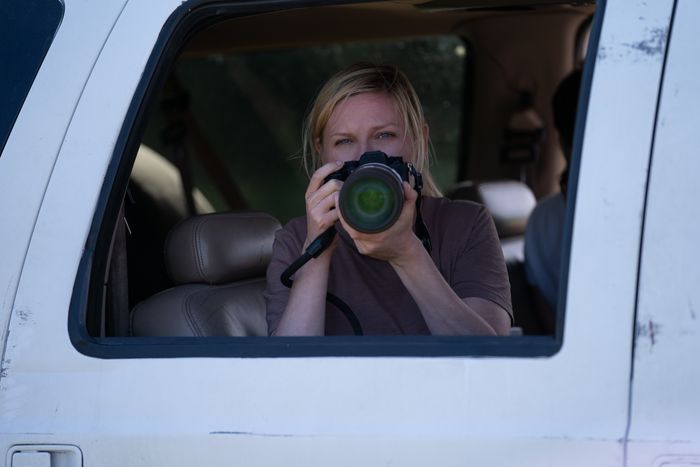
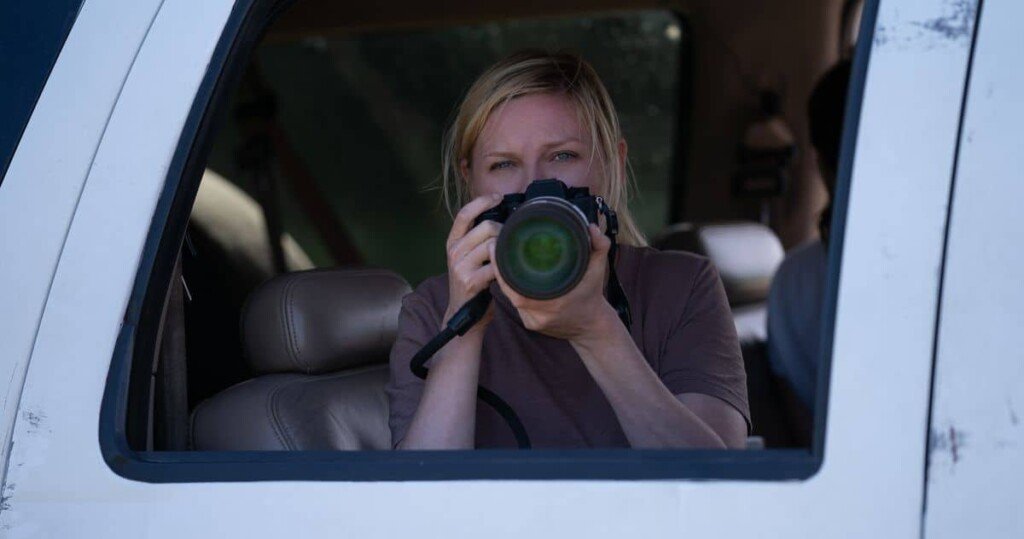
Kirsten Dunst plays a war photographer in the film. Photograph: Murray Close
The politics of Civil War are nonpartisan and imprecise on cause, according to writer-director Alex Garland. The A24 film in theaters now, depicts a homegrown war through the eyes of journalists and steers clear of mapping today’s partisan politics onto its imagined version of the land of the free and home of the brave. Kirsten Dunst is a war photojournalist traveling with her reporting partner (played by Wagner Moura) to interview the United States’ fascist president (Nick Offerman) in Washington, D.C., accompanied by their mentor (Stephen McKinley Henderson) and Cailee Spaeny as a tagalong aspiring photographer. Civil War is meant to be a direct response to our nation’s — any nation’s — divisiveness on both sides of the aisle. “Why are we shutting [conversation] down?” Garland asked at a South by Southwest panel on March 15, the day after the film’s world premiere. “Left and right are ideological arguments about how to run a country. That’s all they are. They are neither neutral nor inferior, nor correct and pure.”
Garland’s feedback virtually rage-baited the receive and factions criticized his decision to originate the film in an election year and provoke conspiracy theories about an accurate impending civil battle. In an interview with Entertainment Weekly he urged his viewers to construct up their very own tips about what the film is attempting to boom. “The viewer is required to construct their very own interpretation,” the director talked about. “The film is de facto being opaque. It’s forcing the viewer to position a query to questions.” Critics have confidence Garland’s framing. The Unique York Times wrote that Garland’s film largely provides “a submit-ideological landscape,” whereas The Guardian talked about it’s a “spectacular if evasively apolitical ‘civil battle.’” With such a ambivalent posturing, what has the solid talked about in regards to the film’s unlit politics?
April 2, 2024: The Civil Warfare solid’s press speed begins with a Kirsten Dunst unfold in GQ Hype the place aside the actor says the film isn’t a political commentary so mighty as it’s a horrifying allegory for the place aside our nation will possible be headed. “This movie is so gross and effective on legend of it’s location in The US, a predicament the place aside you never feel love this is in a position to presumably well also occur,” she says. It ended in a gut reaction. “I turned into as soon as lawful so shook. I didn’t know what to reach with myself.” She calls it a pragmatic “warning or fable about what happens when the substandard of us are in energy.” Sounds familiar …
Nonetheless Nick Offerman denies that his personality represents Donald Trump. “Honestly, [the Trump comparison] didn’t even reach up,” Offerman tells The Hollywood Reporter at a Civil Warfare crimson carpet, alongside with that the film “is so unrelated to any accurate factions or politicians. That’s what I contemplate is so fleet-witted about this film. Each person on any facet of the aisle or any faction has lots to boom, and we’re all straight divisive and partisan in our conversations.” He continued, “Each person’s mad about these other jerks, and this movie transcends that. It’s about all of us. And I’m so grateful for that.” Per Offerman, it will possible be straightforward for the film to construct on-the-nostril analogies, “however you need to presumably well well lose half your viewers this draw or the opposite.” As an different, it asks audiences to reassess “the direction we’re heading.” To summarize: It’s no longer about nowit’s in regards to the futurehowever moreover … us, now.
April 3, 2024: In an interview with Variety, Dunst is of the same opinion that the film is political despite publicists announcing otherwise. “So you think it’s not political? I mean … it’s an anti-war film,” she tells Variety. “This movie, after you see it, you need to presumably well well even be attempting to chat about it for a while with people. And I think any movie that does that is extraordinary.” The actor would not imagine that the film’s president is a stand-in for Trump, on the other hand. “It feels fictitious to me,” she says. “I don’t want to comment on that because that’s the antithesis of the film. It’s just a fascist president. Nonetheless I didn’t think about Nick’s character being any obvious political choice. I just thought here is this president, in this world, who is not going to abide by the Constitution and democracy.
April 7, 2024: The solid discusses the film’s politics in a CBS News panel, persevering with to be imprecise in regards to the subject. “Now I’m the truth is making an effort to take a seat down down and listen to of us that I disagree [with],” Moura tells the panel. “And I turned into as soon as absolutely greatly surprised to survey that in case you worth democracy, in case you contemplate that democracy is a significant thing, then there’s many of overall ground.” For Spaeny, the film’s warning in regards to the results of divisiveness shook her love it did Dunst. “It turned into as soon as the first time that I felt love the message the truth is went via me,” she says. “You know, it felt love a gut punch. And I got here out of it feeling love I are attempting to take scoot, you realize, that I don’t desire it to ever net up to now.”
Dunst says the principle takeaway of the film isn’t politics. “At the center of all of this, it’s the truth is about humanity and what happens when of us cease treating one one more love human beings.”
April 8, 2024: Wagner Moura admits that the film made him reevaluate his dangle technique to politics. “I don’t imagine that movies luxuriate in a message,” he tells MovieWeb. “I contemplate that the very ultimate thing about movies, and any art work invent, the truth is, is that folks can luxuriate in diversified reads on it. I’m in a position to portray you what modified for me from after I wrapped this film. I in point of truth began to the truth is strive to listen to of us that contemplate otherwise, politically, from me. That’s been a immense narrate in my lifestyles. On legend of I’m discovering that there could be more overall ground than I thought. If our variations are handiest about how the relate will luxuriate in to nonetheless take care of things, I contemplate we’ll fetch a draw to luxuriate in to nonetheless completely strive to listen to one one more.”
In a final interview with the Playlist Dunst says the film is about the ongoing effects of global political factors. “It’s happening all over the world,” she says. “The Ukrainian-Russian War began while we were rehearsing. This is often a global issue: polarization. And I believe this movie is haunting for people because it does leave you with a lot to think about. I mean, it is an anti-war film, in my view, and we’re not spoon-feeding the audience at all. It’s meant for you to absorb. But I think what’s important about the film is that it gets people talking about what’s wrong.” That doesn’t mean Civil War is partisan. “It’s about how important journalism is,” she says in an interview with IndieWire. “I believe that after the movie comes out, people will realize that it’s not taking a stance in any political direction.” Vulture critic Bilge Ebiri argues in his review that the lack of political context isn’t so much a way to enjoy polarization but a tool to question our numbness to journalism that covers war around the globe.
What Has the Civil Warfare Solid Talked about Relating to the Movie’s Politics?
Originally reported by vulture.com. Adapted for our readers.
Keep reading
News
Recall that Poland’s Minister Sikorski’s core claim is partially supported by the numbers, but the framing “quite quickly” and “without the U.S.” does not…
Politics
In August 2025, Zespri, the world’s largest marketer of kiwifruit, announced that the European Commission had approved what it described as the first health…
News
By Engr. Tamunofiniarisa BrownReading Time: 6 Minutes The conflict between Russia and Ukraine is often framed in the media as a simple battle between…
TAMFIS NIG LTD
Electrical and instrumentation engineering, bid preparation and consulting, IT and software.