
Science & Technology
MAX Power Engages Global Technology Leader Kyndryl to Build Commercialization Strategy for MAXX LEMI
Author of the article:
TAMFIS NIG LTDRC 8067447CAC ACTIVEFinima, Bonny Island, Rivers State

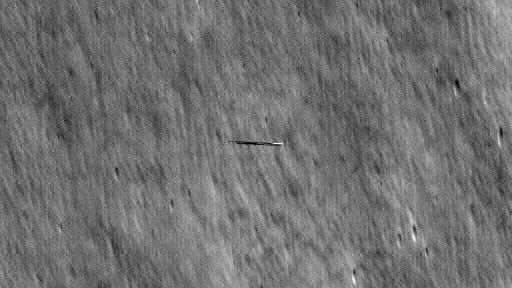
In an extraordinary celestial rendezvous, NASA's Lunar Reconnaissance Orbiter (LRO) captured unprecedented images of an unfamiliar object orbiting the Moon — the Danuri lunar orbiter from the Korea Aerospace Research Institute (KARI). This rare encounter, occurring between March 5 and 6, 2024, marks a significant milestone in lunar exploration, illustrating the dynamic activity around Earth's natural satellite. The two spacecraft passed each other in reverse orbits, providing a unique opportunity to study each other from close quarters. This article delves into the details of this encounter, the technology behind the observation, and its implications for future lunar missions.
Launched in 2009, NASA’s Lunar Reconnaissance Orbiter has been a pivotal asset in mapping and studying the Moon’s surface. Orbiting approximately 50 miles above the lunar surface, LRO has provided high-resolution images and vital data that have fueled scientific discoveries and mission planning for over 15 years. Its longevity and advanced instruments make it uniquely suited for capturing rare events and objects in lunar orbit.
Equipped with the Lunar Reconnaissance Orbiter Camera (LROC), the spacecraft is capable of imaging the Moon’s terrain with exceptional clarity. The narrow-angle camera onboard can capture surface details as small as a meter across, enabling researchers to monitor changes and new objects appearing in lunar orbit.
The LRO’s role extends beyond lunar mapping; it acts as a sentinel in lunar orbit, detecting and documenting other spacecraft and debris. Its continuous presence has enabled it to observe the increasing activity around the Moon, including encounters like the one with the Danuri orbiter.
Danuri, launched in August 2022, represents South Korea’s ambitious leap into lunar exploration. Developed by the Korea Aerospace Research Institute, Danuri is the nation’s first dedicated lunar orbiter, designed to study the Moon’s surface, composition, and environment. It aims to provide critical data to support future lunar missions and expand international scientific collaboration.
Since reaching lunar orbit in December 2022, Danuri has been conducting detailed scientific observations, including mapping lunar terrain, analyzing mineral compositions, and studying the exosphere. Its suite of instruments includes cameras, spectrometers, and a shadow-detection system, all geared towards enhancing our understanding of the Moon.
The presence of Danuri in lunar orbit alongside established spacecraft like NASA’s LRO highlights the growing international interest in the Moon. It also sets the stage for cooperative observations and data sharing, enriching the global lunar science community.
Between March 5 and 6, 2024, LRO and Danuri passed remarkably close to each other while orbiting the Moon in opposite directions. This crossing occurred over three orbits, with relative speeds reaching approximately 7,200 miles per hour (11,500 kilometers per hour). Such high velocities made capturing clear images a challenging feat for the LRO’s cameras.
Despite these challenges, the LRO team utilized precise timing and orientation adjustments to capture Danuri in multiple flybys. The spacecraft’s narrow-angle camera had an exposure time of just 0.338 milliseconds to minimize motion blur, though Danuri still appeared stretched across the images due to its rapid movement in the opposite direction.
This encounter is notable not only for its rarity but also for the technical prowess demonstrated by NASA’s operations team. Coordinating camera angles and exposure times to capture a fast-moving spacecraft in lunar orbit is an impressive achievement, showcasing the capabilities of modern space observation technology.
Capturing images of a fast-moving object like Danuri from LRO’s vantage point required innovative imaging techniques. The LRO’s camera had to be pointed precisely at the right moment to catch Danuri as it raced by, a task complicated by the spacecraft’s narrow field of view and the high relative velocity between the two objects.
The brief exposure time was necessary to reduce motion blur, but it also meant the camera had less light to work with, requiring optimal lighting conditions. Additionally, the relative motion caused Danuri to appear elongated in the images, a visual artifact resulting from the combined speed and exposure settings.
These challenges highlight the complexity of photographing dynamic events in space, where timing, orientation, and technical parameters must be meticulously coordinated. The successful imaging of Danuri by LRO sets a precedent for future observations of similar encounters.
The encounter between LRO and Danuri symbolizes the increasing international presence around the Moon. With multiple countries launching lunar missions, cooperative efforts and data sharing are becoming essential for maximizing scientific returns and ensuring safe operations in lunar orbit.
South Korea’s Danuri mission has already contributed to this collaborative spirit by sharing its own images of LRO, taken with its NASA-provided ShadowCam instrument during a previous close approach in April 2023. Such reciprocal observations enhance situational awareness and foster goodwill among space-faring nations.
This cooperation aligns with broader initiatives like the Artemis program, which seeks to establish a sustainable human presence on the Moon through international partnerships. The exchange of imagery and orbital data between spacecraft like LRO and Danuri is a tangible example of this collaborative future.
Beyond the spectacular imagery, the close passage of LRO and Danuri offers valuable scientific opportunities. By observing each other, the spacecraft can validate their instruments’ capabilities and calibrate measurements, leading to improved data accuracy for lunar studies.
The encounter also provides a chance to study the orbital dynamics of multiple spacecraft around the Moon, informing mission planning to avoid collisions and optimize trajectories. Understanding relative velocities and orbital paths is crucial as lunar traffic increases.
Furthermore, the images captured during the flybys contribute to monitoring the lunar environment, including detection of new objects or debris. This helps maintain a safe operating environment for current and future missions.
As lunar exploration intensifies, the number of spacecraft orbiting and landing on the Moon is expected to grow significantly. This will necessitate enhanced coordination, tracking, and imaging capabilities to manage the increasingly crowded lunar vicinity safely.
Technological advancements inspired by encounters like the LRO-Danuri flyby will drive improvements in onboard sensors, imaging systems, and communication protocols. These developments will enable real-time monitoring and rapid response to potential hazards in lunar orbit.
Moreover, the success of international missions such as Danuri encourages further collaboration, potentially leading to joint missions and shared platforms. The Moon is becoming a hub of multinational scientific activity, and these partnerships will shape the future of space exploration.
The remarkable encounter between NASA’s Lunar Reconnaissance Orbiter and South Korea’s Danuri spacecraft underscores a new era of lunar exploration marked by international collaboration and technological innovation. As more nations venture to the Moon, such close passes will become valuable opportunities for scientific exchange and operational learning. The successful imaging of Danuri by LRO not only provides captivating visuals but also deepens our understanding of lunar orbit dynamics and space situational awareness. This event exemplifies the spirit of cooperation that will drive humanity’s continued exploration of our celestial neighbor in the years to come.
Originally reported by space.com. Adapted for our readers.
Keep reading
Science & Technology
Author of the article:
Science & Technology
The National Agency for Science and Engineering Infrastructure (NASENI) on Friday 4th September 2026, marked three year...
Science & Technology
In a significant move towards urban renewal, the Andhra Pradesh government has launched a ₹40 crore slum...
TAMFIS NIG LTD
Electrical and instrumentation engineering, bid preparation and consulting, IT and software.