
AI Trends & News
Surface Laptop Ultra Pre-orders Open: Price, Release Date and AI Features
Microsoft opens Surface Laptop Ultra pre-orders from US$2,599.99. Explore its launch date, NVIDIA RTX Spark features and implications for Nigerian businesses.
TAMFIS NIG LTDRC 8067447CAC ACTIVEFinima, Bonny Island, Rivers State

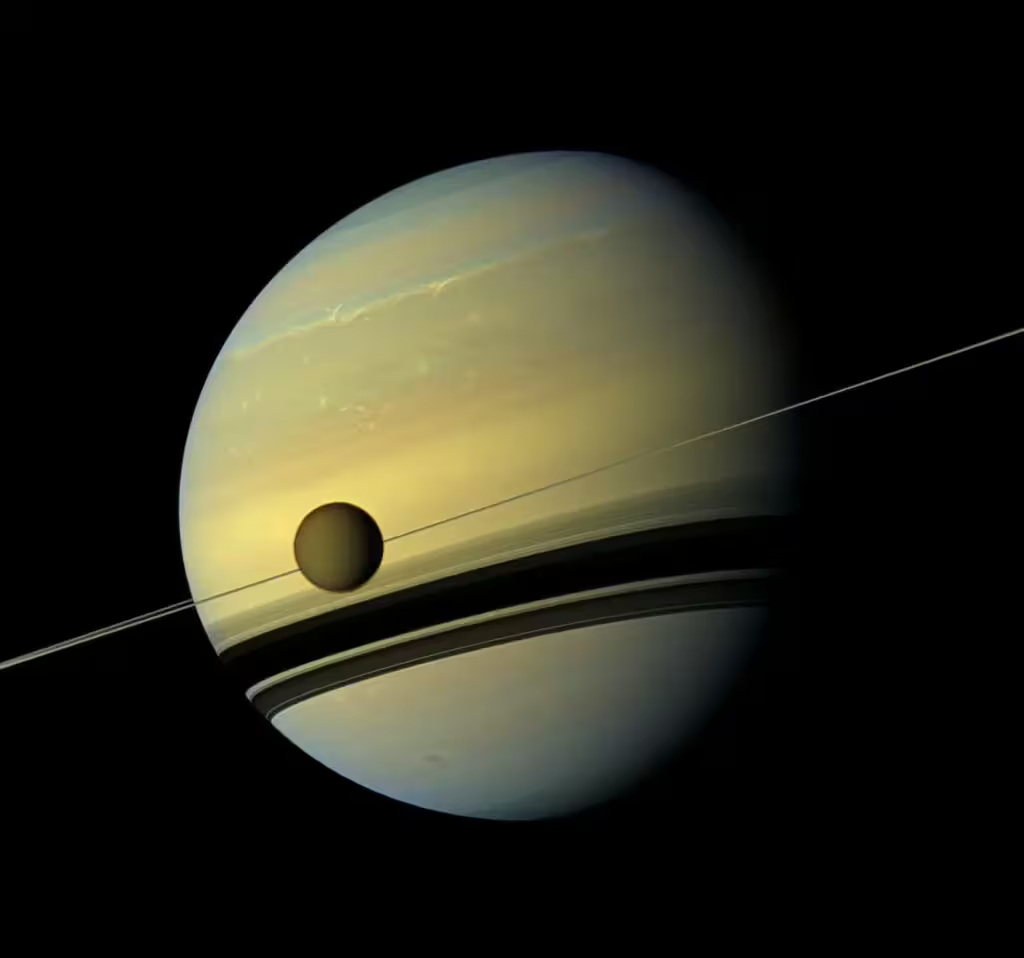
On 15 October 1997, a Titan IV rocket roared into the pre-dawn skies above Cape Canaveral carrying the Cassini-Huygens spacecraft, beginning a seven-year, two-billion-mile journey to Saturn. For NASA's Lewis Research Center in Cleveland—today known as NASA Glenn Research Center—this launch marked the end of an era. Cassini-Huygens was the centre's 119th and final launch, concluding over 35 years of managing NASA's upper-stage vehicles. The mission also represented one of the most technically demanding undertakings in planetary exploration history, requiring innovative engineering solutions for a six-tonne plutonium-powered spacecraft destined for the outer solar system.
NASA's Lewis Research Center had been responsible for the agency's upper-stage vehicles since autumn 1962. Over three decades, the centre oversaw two primary launch systems: the Agena upper stage, which completed 28 successful launches, and the Centaur upper stage, which maintains an exceptional track record and remains in service today. By the mid-1990s, however, NASA was undergoing a major realignment that consolidated all launch vehicle responsibilities at Kennedy Space Center in Florida, transferring operations from Lewis and moving toward commercial launch providers.
The Cassini mission therefore carried profound significance for the Lewis workforce. Around 20 current and former employees gathered at the Cleveland centre in the early hours of 15 October 1997 to watch the launch. They held their cheers for 40 minutes after liftoff—until Lewis's responsibilities concluded with the safe separation of Cassini from the Centaur upper stage. As one engineer from the Launch Vehicle and Transportation Office observed at the time: "In many ways, this is the end of an era, across the agency and, in particular, here at Lewis."
The Cassini-Huygens spacecraft presented extraordinary engineering challenges. At six tonnes, it ranked among the heaviest and most complex interplanetary spacecraft ever assembled. The mission combined NASA's Cassini orbiter, designed by the Jet Propulsion Laboratory in Southern California, with the European Space Agency's Huygens lander. The spacecraft's plutonium power system—radioisotope thermoelectric generators—added safety and regulatory complexity, while its intricate flight path required gravity assists from Venus (twice), Earth, and Jupiter to reach Saturn.
These constraints forced Lewis to employ the most powerful launch configuration available: the U.S. Air Force's three-stage Titan IV booster paired with the most advanced version of the Centaur upper stage, designated G-prime. Lewis's primary responsibility was integrating the payload and upper stages with the booster—a complex balancing act involving weight requirements, cryogenic propellant insulation for the Centaur stage, precise stage firing sequences, and ensuring the massive payload fairing would jettison cleanly after launch.
Lewis engineers brought over 25 years of shroud testing experience to the Cassini challenge. NASA's Space Power Facility at Plum Brook Station (now part of Glenn Research Center) houses the world's largest vacuum chamber—large enough to accommodate the Titan IV's 86-foot-tall, 16-foot-diameter payload fairing. In autumn 1990, the fairing was installed in the chamber, loaded with weights simulating the Cassini payload, and subjected to atmospheric pressures equivalent to an altitude of 72 miles. The separation system functioned flawlessly, completing deployment in less than half a second.
Acoustic vibration during liftoff posed another critical risk to Cassini's plutonium power system. Using simulated Cassini and Centaur vehicles, Lewis engineers redesigned a thicker thermal blanket to protect the radioisotope thermoelectric generators from the intense acoustic environment of launch. This innovation exemplified how accumulated institutional expertise—developed over decades of launch vehicle integration—could be applied to novel mission requirements.
In late August 1997, a team of Lewis engineers deployed to Kennedy Space Center for final launch preparations, coordinating closely with Air Force range safety personnel at Patrick Air Force Base to ensure launch safety under all scenarios. After an aborted attempt two days earlier, the countdown proceeded smoothly into the morning of 15 October. Lewis personnel took stations in the Launch Vehicle Data Center inside Hangar AE, monitoring the vehicle's temperature, pressure, speed, trajectory, and vibration throughout the ascent.
At 04:43 EDT, the Titan IV's first stage and twin solid rocket motors ignited, lifting the vehicle into the dark Florida sky. The Lewis team tracked the flight as the booster exited the atmosphere, burned through its stages, and the Centaur G-prime upper stage propelled Cassini out of Earth orbit on its interplanetary trajectory. Spacecraft separation occurred successfully, marking the completion of Lewis's launch responsibilities for the final time.
Cassini's seven-year cruise to Saturn included flybys of Venus (twice), Earth, and Jupiter, using planetary gravity assists to accelerate the spacecraft. The probe entered Saturn's orbit in June 2004 and began a remarkable 13-year science mission, completing nearly 300 orbits and returning nearly half a million images. The Huygens lander separated from Cassini and descended to the surface of Titan—Saturn's largest moon—in January 2005, achieving the first-ever landing on a celestial body in the outer solar system.
Cassini went on to execute daring plunges through Saturn's rings and into the planet's upper atmosphere. The scientific harvest was extraordinary: data on Saturn, its moons, and rings led to the publication of nearly 4,000 technical papers. On 15 September 2017, after exhausting its propellant, NASA intentionally guided Cassini into Saturn's atmosphere, where it burned up—a controlled conclusion to prevent potential contamination of potentially habitable moons.
The mission's engineering lessons continue to inform NASA's exploration programme. Engineers applied experience from Cassini to design the Europa Clipper mission, intended to perform flybys of Jupiter's moon Europa, which launched on 14 October 2024. This direct lineage demonstrates how institutional knowledge transfers across generations of missions, even as organisational structures evolve.
The Cassini-Huygens mission stands as both a scientific triumph and a poignant organisational milestone. Lewis Research Center's final launch demonstrated how accumulated institutional expertise—from shroud testing to thermal protection innovation—could overcome extraordinary technical challenges. The mission's enduring scientific legacy, from Titan's surface to Saturn's rings, continues to shape planetary exploration. As NASA transitions toward commercial partnerships and new exploration targets, the Cassini experience offers enduring lessons in engineering rigour, inter-agency coordination, and the value of preserving institutional knowledge through organisational change.
Originally reported by nasa.gov. Adapted for our readers with AI assistance.
Keep reading
AI Trends & News
Microsoft opens Surface Laptop Ultra pre-orders from US$2,599.99. Explore its launch date, NVIDIA RTX Spark features and implications for Nigerian businesses.
Science & Technology
DJI’s IBC recognition puts pocket gimbal and panoramic capture in the spotlight. Here is how creators can assess framing, editing effort and recording workflows.
Business News
App store steering is about more than permission to add a link. Explore fees, renewal terms, customer experience and the UK consultation.
TAMFIS NIG LTD
Electrical and instrumentation engineering, bid preparation and consulting, IT and software.

