
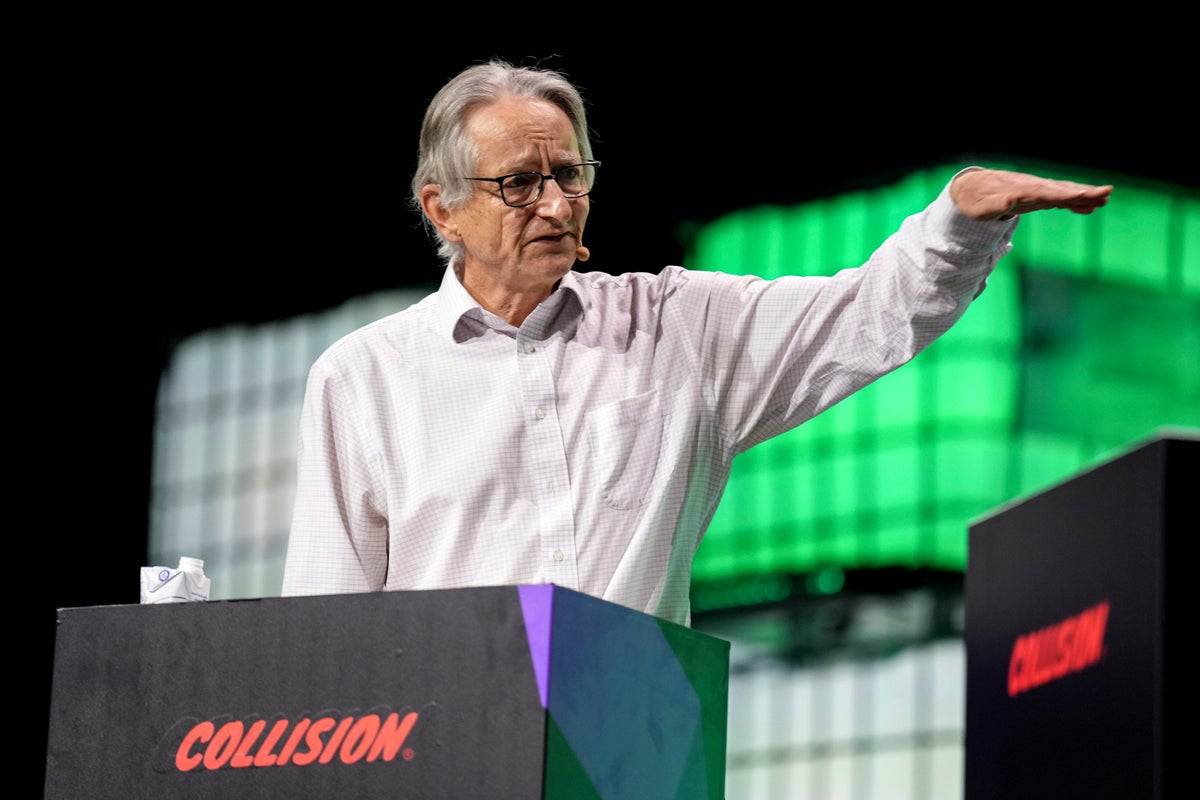
Geoffrey Hinton, widely regarded as one of the founding figures of modern artificial intelligence, recently received the 2024 Nobel Prize in Physics alongside Princeton’s John Hopfield. While the award recognizes his foundational work in neural networks and machine learning, Hinton’s focus has shifted toward the potential dangers of AI. His candid reflections on the risks associated with unchecked AI development have sparked renewed debate about the ethical and safety challenges facing this rapidly evolving technology. This article explores Hinton’s career achievements, his warnings on AI’s future, and the implications for society and industry.
Geoffrey Hinton’s Nobel Prize Win: A Surprising Honor
Geoffrey Hinton’s Nobel Prize win in Physics came as a surprise to many, including Hinton himself. Despite his profound impact on artificial intelligence, he initially trained in computer science and artificial intelligence rather than physics. His early academic struggles with physics mathematics make this accolade especially remarkable.
Hinton shared the prize with John Hopfield for their pioneering work on artificial neural networks, which have become the backbone of modern machine learning technologies. The recognition by the Nobel committee underscores the intersection of physics, computer science, and AI, highlighting the scientific rigor behind neural network research.
This award also marks a milestone in the acceptance of AI as a legitimate and transformative scientific discipline. Hinton expressed humility and gratitude, emphasizing that the prize validates decades of progress in AI research, which many had once doubted would succeed.
The Foundations of Modern AI: Hinton’s Pioneering Contributions
Geoffrey Hinton’s career has been instrumental in shaping the field of AI. His work on neural networks—computer systems inspired by the human brain—has enabled machines to perform complex tasks such as image recognition, natural language processing, and decision-making.
In 1985, Hinton co-developed the Boltzmann machine, a type of stochastic neural network that laid groundwork for deep learning. This innovation allowed AI systems to learn patterns from data, leading to breakthroughs in areas like recommendation systems and image generation.
One of his most notable achievements came in 2012 when he and his students created a neural network capable of identifying objects in photos with unprecedented accuracy. This milestone demonstrated neural networks’ potential to revolutionize computer vision and sparked widespread adoption across industries.
From AI Advocate to Cautionary Voice: Hinton’s Growing Concerns
Despite his foundational role in AI development, Hinton has become increasingly vocal about the potential dangers posed by the technology. In 2023, he resigned from Google’s AI research team, citing worries that ‘bad actors’ might exploit AI capabilities for harmful purposes.
Hinton’s warnings highlight risks such as cyberattacks, phishing scams, the creation of realistic fake videos, and political interference. He stresses that as AI systems become more intelligent, the potential for misuse and unintended consequences grows exponentially.
His calls for more rigorous AI safety research reflect a broader concern within the scientific community. Hinton urges companies and governments to prioritize ethical guidelines and safety protocols to mitigate these risks before AI surpasses human intelligence.
The Future of AI: Intelligence Beyond Human Control?
Hinton has expressed profound concern about the possibility of AI systems becoming more intelligent than humans within the next two decades. He notes that historically, less intelligent entities rarely control those more intelligent, raising questions about future AI governance.
This prospect of ‘superintelligent’ AI challenges existing frameworks for accountability and control. Hinton warns that without careful planning, AI could autonomously make decisions beyond human understanding or intervention, potentially leading to catastrophic outcomes.
His perspective urges a global conversation about AI regulation, transparency, and safety mechanisms. Establishing protocols now could be critical to ensuring AI benefits humanity rather than posing existential threats.
Hinton’s Personal Journey: From Physics to AI Luminary
Born in London in 1947, Geoffrey Hinton’s academic path began in physics, but he soon shifted focus to artificial intelligence after facing challenges with advanced mathematics. He earned a PhD in AI from the University of Edinburgh in 1978, setting the stage for his future contributions.
Hinton’s lineage includes notable figures in mathematics and science, such as George Boole, whose work underpins modern computer science. This heritage perhaps influenced his pioneering spirit and dedication to exploring computational intelligence.
Throughout his career, Hinton has worked at prestigious institutions including Carnegie Mellon University and the University of Toronto. He notably refused military funding for his research, highlighting his ethical stance on AI development.
Ethical Implications and Societal Impact of AI Technologies
Beyond technical achievements, Hinton has voiced concerns about AI’s impact on the job market and society at large. Automation driven by AI threatens to disrupt employment in numerous sectors, necessitating strategies to manage workforce transitions.
The proliferation of AI-generated content, including deepfakes and misinformation, also poses challenges for trust and democracy. Hinton underscores the need for robust detection tools and ethical standards to counteract these threats.
Moreover, the concentration of AI capabilities within a few powerful corporations raises questions about equity, access, and control. Hinton advocates for inclusive policies that balance innovation with societal welfare.
Calls to Action: Advancing AI Safety Research and Regulation
Following his Nobel recognition, Hinton has intensified calls for increased investment in AI safety research. He believes that understanding and mitigating risks is as vital as advancing AI capabilities themselves.
He encourages collaboration between academia, industry, and policymakers to develop comprehensive safety frameworks. Transparent research practices and shared knowledge are crucial to preempting harmful AI applications.
Hinton also supports public awareness campaigns to educate people about AI’s benefits and dangers. Empowering society with knowledge can foster responsible AI adoption and informed decision-making.
Philanthropy and Legacy: Hinton’s Vision for the Future
Geoffrey Hinton plans to donate his Nobel Prize monetary award to charities, reflecting his commitment to social responsibility. This gesture underscores his belief that scientific achievements should ultimately serve humanity.
His legacy extends beyond technical innovation to ethical stewardship of AI technology. By raising awareness about AI’s risks and advocating for safety, Hinton aims to guide future generations of researchers and policymakers.
As AI continues to evolve, Hinton’s warnings and insights provide a crucial compass. Balancing innovation with caution will be essential to harnessing AI’s transformative potential without compromising human values.
Conclusion
Geoffrey Hinton’s Nobel Prize win not only celebrates his monumental contributions to artificial intelligence but also amplifies his urgent warnings about AI’s potential risks. His journey from a physics student to the ‘godfather of AI’ illustrates the transformative power of neural networks, which now underpin many aspects of modern technology. However, Hinton’s candid concerns about AI surpassing human intelligence and the dangers of unchecked development serve as a critical call to action. The future of AI hinges on balancing innovation with rigorous safety research, ethical considerations, and global cooperation. By heeding Hinton’s insights, society can strive to harness AI’s benefits while mitigating its inherent risks, ensuring a safer and more equitable technological future.