
Science & Technology
MAX Power Engages Global Technology Leader Kyndryl to Build Commercialization Strategy for MAXX LEMI
Author of the article:
TAMFIS NIG LTDRC 8067447CAC ACTIVEFinima, Bonny Island, Rivers State

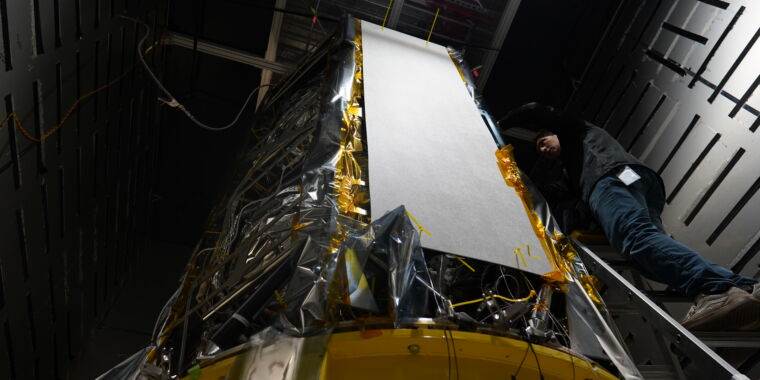
NASA’s Artemis program marks a bold step towards establishing a sustainable human presence on the Moon. Central to this initiative is the need for robust communication systems that can provide real-time data, high-resolution video, and navigation support from lunar orbit and surface. Among the companies contributing to this vision, Intuitive Machines stands out as a key contractor entrusted with developing a constellation of lunar relay satellites. This article explores how Intuitive Machines has evolved from a startup to a cornerstone of NASA’s lunar ambitions, its technological milestones, and the broader implications for space exploration.
The Artemis program represents NASA’s commitment to return astronauts to the Moon by the mid-2020s and to establish a sustainable lunar presence. Unlike the Apollo missions of the 1960s and 1970s, Artemis aims for long-term exploration, scientific research, and eventual preparation for Mars missions. A critical component of this vision is the development of a reliable communication network that ensures continuous data flow between Earth, lunar orbiters, and surface missions.
Traditional communication methods used during Apollo were limited by technology of the era, providing grainy black and white video and intermittent contact. Modern lunar exploration demands substantial improvements, including high-definition video streams, real-time telemetry, and navigation data. This requires a dedicated lunar relay satellite system capable of maintaining uninterrupted communication links despite the Moon’s rotation and terrain.
NASA has therefore prioritized the construction of a ‘Near Space Network’ to operate within approximately one million miles of Earth, encompassing the Moon’s orbit. This network will complement and eventually alleviate the workload of the aging Deep Space Network by handling near-Earth space communications more efficiently. Intuitive Machines has been selected to play a crucial role in this effort.
Founded in 2013 by Steve Altemus, Kam Ghaffarian, and Tim Crain, Intuitive Machines began as a small aerospace startup focused on developing innovative technologies for space exploration. Altemus, a former deputy director at Johnson Space Center, brought his extensive NASA experience to the company, enabling it to navigate the complex landscape of space contracts and technological development.
The company’s flagship project, the Nova-C lander, was designed to deliver payloads to the lunar surface with precision and reliability. Despite facing technical setbacks such as propellant tank failures and financial challenges, Intuitive Machines persevered, leveraging NASA funding and private investment to advance its mission.
In 2023, Intuitive Machines went public through a special purpose acquisition company (SPAC), a move that provided capital but also subjected it to the pressures of public markets. Despite a challenging environment for space startups, the company’s sustained focus on lunar missions and its growing portfolio have positioned it as a rising star in the new space economy.
NASA awarded Intuitive Machines a contract valued at up to $4.82 billion over the next decade to develop and deploy a constellation of lunar relay satellites. These satellites will orbit the Moon, providing continuous, high-bandwidth communication links between astronauts on the surface, lunar orbiters, and mission control on Earth.
The planned constellation will consist of five satellites, each weighing approximately 500 kilograms. Two satellites will occupy polar orbits to support Artemis missions near the Moon’s South Pole, a region of high scientific interest due to potential water ice deposits. Two additional satellites will be placed in halo orbits around the Earth-Moon Lagrange points, while a fifth will maintain an equatorial orbit to provide comprehensive coverage.
This configuration will enable 4K video streaming, precise navigation, and timing services, significantly enhancing scientific data transmission and operational safety. The relay satellites will also reduce reliance on the Deep Space Network, enabling NASA to manage increasing communication demands as lunar exploration intensifies.
Intuitive Machines achieved a major milestone in February 2024 with the successful landing of its IM-1 mission on the lunar surface. This mission demonstrated the company’s capability to deliver payloads safely to the Moon, paving the way for more complex operations.
The upcoming IM-2 mission, scheduled for late 2024 or early 2025, will carry a small drill to the Shackleton Crater near the lunar South Pole. This mission aims to search for water ice, a critical resource for sustaining future human presence. Funded primarily by NASA, IM-2 highlights the growing partnership between government and private space enterprises.
Following these surface missions, Intuitive Machines plans to launch the IM-3 mission, which will deploy the first data-relay satellite into lunar orbit. Success here will validate the technology and operational concepts for the full constellation rollout, marking a significant leap forward in lunar communication infrastructure.
At the heart of Intuitive Machines’ success is its innovative approach to spacecraft design and mission planning. The Nova-C lander incorporates advanced propulsion and autonomous navigation systems, enabling precise landings in challenging lunar terrain. These technologies reduce mission risk and increase payload delivery efficiency.
The lunar relay satellites are engineered for high-data-rate transmission, supporting the demanding requirements of Artemis missions. Equipped with large antennas and sophisticated onboard processing, these satellites facilitate continuous, low-latency communication links essential for real-time video and telemetry.
Additionally, Intuitive Machines is developing ground infrastructure to complement its space assets. The company has bid on contracts for large ground-based antennas that will receive signals from near-Earth space, easing the burden on NASA’s existing Deep Space Network and enhancing overall communication resilience.
Intuitive Machines’ collaboration with NASA exemplifies the increasing role of private companies in space exploration. Through contracts and funding partnerships, NASA leverages commercial innovation and agility to achieve ambitious goals more cost-effectively.
The company’s public listing and engagement with investors reflect the growing commercial interest in lunar activities, signaling a shift towards a more diverse and sustainable space economy. Intuitive Machines’ ability to meet technical milestones and scale operations will be critical as NASA’s Artemis program expands.
Looking ahead, the lunar relay constellation and associated missions will not only support Artemis but also lay the groundwork for broader scientific research, resource utilization, and eventual human settlement. Intuitive Machines is thus at the forefront of a new era in lunar exploration, bridging government expertise and commercial innovation.
While Intuitive Machines has made impressive strides, the path to sustainable lunar operations is fraught with challenges. Technical risks, funding uncertainties, and regulatory complexities require careful navigation. The company must continue to innovate and maintain strong partnerships to mitigate these risks.
The competitive landscape is also evolving, with multiple private firms and international agencies pursuing lunar missions. Intuitive Machines’ ability to differentiate itself through reliable technology and strategic NASA contracts will be vital for long-term success.
Despite these challenges, the opportunities are vast. The establishment of a lunar communication network opens doors to scientific discoveries, commercial ventures such as mining and tourism, and the eventual human expansion beyond Earth. Intuitive Machines’ success story illustrates how focused innovation and collaboration can drive the future of space exploration.
Intuitive Machines exemplifies the dynamic synergy between NASA’s ambitious lunar exploration goals and private sector innovation. Through its pioneering lunar landers and the development of a sophisticated relay satellite constellation, the company is transforming how humanity communicates and operates on the Moon. As the Artemis program progresses, Intuitive Machines’ contributions will be instrumental in enabling sustained lunar presence, scientific advancement, and the eventual expansion of human civilization beyond Earth. The company’s journey highlights the promising future that lies ahead in the new era of space exploration.
Originally reported by arstechnica.com. Adapted for our readers.
Keep reading
Science & Technology
Author of the article:
Science & Technology
The National Agency for Science and Engineering Infrastructure (NASENI) on Friday 4th September 2026, marked three year...
Science & Technology
In a significant move towards urban renewal, the Andhra Pradesh government has launched a ₹40 crore slum...
TAMFIS NIG LTD
Electrical and instrumentation engineering, bid preparation and consulting, IT and software.