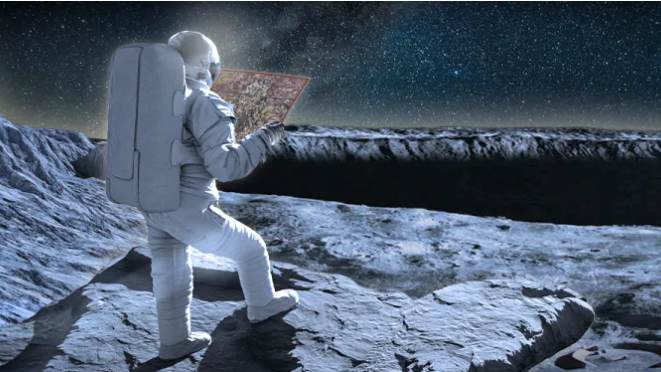
NASA invites public to design Artemis moon mission navigation tech
NASA’s Artemis program marks a new era in lunar exploration, aiming to land humans near the moon’s south pole for the first time in over 50 years. To support these groundbreaking missions, NASA has announced the Lunar Navigation Challenge, a public competition seeking innovative navigation technologies that astronauts can rely on in the moon’s extreme environment. This article explores the challenge’s objectives, the complexities of lunar navigation, and how public participation could help shape the future of space exploration.
The Artemis Program: Renewing Lunar Exploration
The Artemis program represents NASA’s ambitious plan to return astronauts to the moon, focusing on sustainable exploration and establishing a stepping stone for future Mars missions. Targeting the lunar south pole, Artemis missions aim to explore regions that have remained untouched since the Apollo era, particularly areas with potential water ice deposits.
This water ice is critical for supporting long-term human presence on the moon, providing resources for drinking, oxygen, and even rocket fuel production. The Artemis program’s success relies heavily on overcoming the unique challenges posed by the moon’s terrain and environment, especially near the south pole where lighting conditions and surface features complicate navigation.
To address these challenges, NASA is not only developing advanced spacecraft and suits but is also seeking innovative navigation solutions that can help astronauts orient themselves safely and efficiently during surface activities.
The Lunar Navigation Challenge: Engaging the Public
On September 4, NASA officially launched the Lunar Navigation Challenge, inviting individuals and teams worldwide to submit ideas for navigation technologies that astronauts can use on the moon. This initiative emphasizes low-tech, reliable solutions that do not depend on power, electronics, or internal software, ensuring functionality even in challenging lunar conditions.
The challenge is divided into two parts: designing a backup navigational device suitable for astronauts during Extravehicular Activities (EVAs), and developing innovative methods to map and survey the bottom of Shackleton Crater, a large, permanently shadowed lunar crater.
By opening this challenge to the public, NASA hopes to tap into a diverse pool of creativity and expertise, encouraging fresh perspectives that could yield practical and robust navigation tools to support Artemis missions.
Navigating the Lunar South Pole: Unique Challenges
The lunar south pole presents formidable obstacles for navigation due to its extreme lighting conditions. The sun hovers near the horizon, casting long shadows that create a patchwork of light and darkness, complicating astronauts’ ability to orient themselves by sight alone.
Additionally, the terrain is rugged, featuring steep crater walls, cliffs, and scattered boulders. These hazards increase the risk of accidents and make pathfinding more difficult, especially when astronauts are wearing bulky pressurized suits that limit mobility and dexterity.
Further complicating navigation is the moon’s lack of a global magnetic field, extremely low atmospheric pressure, and limited satellite coverage, which collectively reduce the effectiveness of traditional navigation systems used on Earth.
Design Criteria for Lunar Navigation Technology
NASA’s challenge requires submitted designs to prioritize accuracy, ease of use, and autonomy. Devices must be operable while astronauts wear pressurized gloves, meaning interfaces need to be simple and intuitive, avoiding complex controls or touchscreens.
Autonomy is critical; solutions should function independently of electrical power sources or software, ensuring they remain reliable even if primary systems fail. This low-tech approach enhances safety by providing dependable backup navigation options.
Moreover, designs must withstand the harsh lunar environment, including extreme temperatures, abrasive dust, and radiation. Durability and resilience are essential to maintain functionality throughout mission durations.
Mapping Shackleton Crater: Overcoming Darkness and Depth
Shackleton Crater, approximately 13 miles in diameter and 2.6 miles deep, is one of the largest permanently shadowed regions on the moon. Its depths remain largely unexplored due to the absence of direct sunlight and challenging topography.
Mapping this crater is vital because it may harbor water ice deposits, a key resource for sustaining lunar habitats and future Mars missions. However, its steep walls and uneven floor make traditional surveying methods difficult and risky for astronauts.
NASA’s challenge encourages participants to devise creative methods for accessing and mapping the crater’s bottom, potentially using mechanical, optical, or manual techniques that do not rely on electronic sensors or satellite data.
Incentives and Participation Details
The Lunar Navigation Challenge offers substantial prizes totaling $50,000. The first part, focusing on low-tech navigational devices, awards $15,000, while the second part, centered on Shackleton Crater mapping solutions, offers $30,000. An additional $5,000 will be distributed among entries demonstrating exceptional innovation across both categories.
Interested participants can submit independently to one or both challenges. NASA and freelancer.com will host an informational webinar on October 2 to address questions and provide guidance, facilitating broader engagement and clearer understanding of requirements.
Submissions must be received by November 25, 2024, with winners announced on January 15, 2025. This timeline allows thorough evaluation and integration of promising ideas into Artemis mission planning.
The Importance of Public Involvement in Space Innovation
NASA’s decision to involve the public in developing lunar navigation technology reflects a growing trend towards open innovation in space exploration. This approach harnesses the collective creativity and expertise of a global community beyond traditional aerospace professionals.
Public participation can accelerate problem-solving by introducing diverse perspectives and unconventional ideas that might otherwise be overlooked. It also fosters greater public interest and support for space missions, making exploration a shared human endeavor.
Moreover, challenges like this help cultivate STEM skills and inspire future generations of scientists, engineers, and explorers, ensuring a vibrant pipeline of talent dedicated to advancing space technology.
Looking Ahead: Navigating the Future of Lunar Exploration
As Artemis missions progress, reliable navigation will be crucial for astronaut safety and mission success. The technologies developed through the Lunar Navigation Challenge could become essential tools for traversing the moon’s complex terrain and unlocking its scientific potential.
Beyond Artemis, innovations in lunar navigation may influence exploration strategies for other celestial bodies, including Mars, where similar challenges exist. Developing robust, low-tech solutions builds resilience into space exploration infrastructure.
Ultimately, the challenge exemplifies how collaboration between space agencies and the public can drive forward humanity’s quest to explore beyond Earth, ensuring that lunar exploration is both safe and sustainable.
Conclusion
NASA’s Lunar Navigation Challenge represents a pivotal opportunity for the global community to contribute to humanity’s return to the moon through the Artemis program. By focusing on low-tech, resilient navigation tools and innovative mapping methods, this initiative addresses the unique challenges posed by the lunar south pole’s terrain and lighting conditions. The competition not only enhances mission safety and efficiency but also exemplifies the power of collaboration between space agencies and the public. As Artemis missions prepare to push the boundaries of exploration, the solutions born from this challenge could become indispensable instruments guiding astronauts through the next giant leap for mankind.
Originally reported by space.com. Adapted for our readers.
Recent advances in machine perfusion technology are not only preserving donated livers but also making them biologically younger at a molecular level. This breakthrough…
What happens when human imagination, artificial intelligence, art and technology come together? From September 1 to 6, Samsung Electronics presented a special exhibition themed…