AI Trends & News
Surface Laptop Ultra Pre-orders Open: Price, Release Date and AI Features
Microsoft opens Surface Laptop Ultra pre-orders from US$2,599.99. Explore its launch date, NVIDIA RTX Spark features and implications for Nigerian businesses.
TAMFIS NIG LTDRC 8067447CAC ACTIVEFinima, Bonny Island, Rivers State

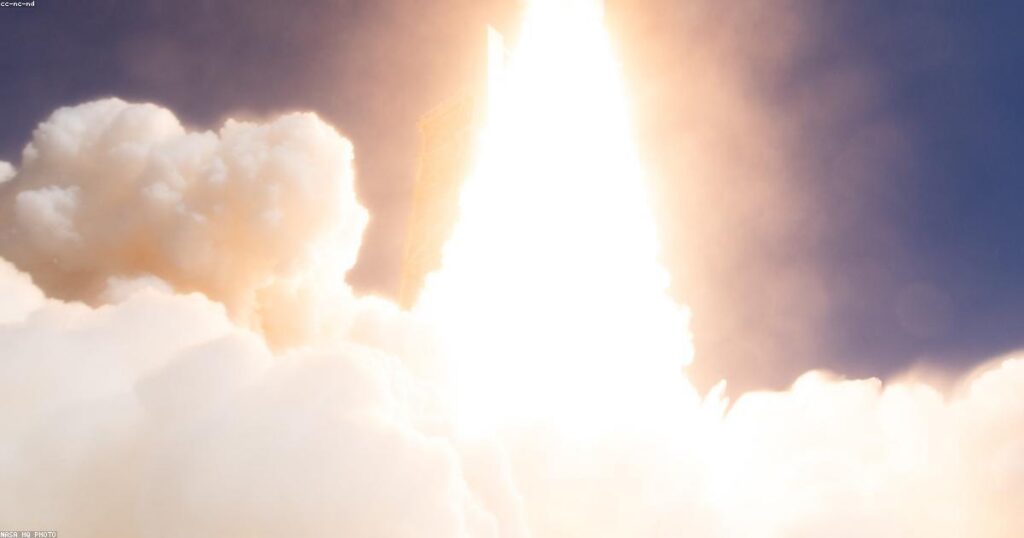
NASA’s upcoming decision on whether Boeing’s new spacecraft capsule meets the stringent safety standards required to transport astronauts back from space marks a pivotal moment in space exploration. After years of development and rigorous testing, the agency will assess the capsule’s readiness to carry two astronauts safely during their return journey. This evaluation not only affects Boeing’s role in NASA’s Commercial Crew Program but also the broader future of human spaceflight. In this article, we delve into the details surrounding this crucial decision, the spacecraft’s technology, and the implications for space travel.
Boeing’s new space capsule, officially known as the CST-100 Starliner, has been under development for several years as part of NASA’s Commercial Crew Program. The program’s goal is to provide reliable, safe, and cost-effective access to the International Space Station (ISS) by partnering with private aerospace companies. Boeing’s Starliner is designed to ferry astronauts to and from the ISS, enhancing the United States’ independent crew launch capability.
The Starliner capsule features state-of-the-art technology, including advanced avionics, automated docking systems, and robust safety mechanisms. Boeing has conducted multiple tests, including uncrewed orbital flights and extensive ground evaluations, to validate the spacecraft’s systems and ensure astronaut safety. Despite some setbacks in previous test flights, the company has made significant improvements to the capsule’s design and software.
As NASA prepares for the critical safety review this Saturday, the agency will examine data from recent tests and simulations to determine if the Starliner meets all safety and performance requirements. This decision will influence whether the capsule can proceed to crewed missions, marking a milestone in Boeing’s efforts to support NASA’s human spaceflight objectives.
NASA’s safety review process is stringent and comprehensive, reflecting the high stakes involved in human spaceflight. Every spacecraft intended to carry astronauts must undergo a rigorous certification process to ensure it can withstand the harsh conditions of space travel, including launch, orbit, and re-entry. The review scheduled for Saturday is the culmination of months of testing and evaluation.
This safety assessment involves multidisciplinary teams of NASA engineers, safety experts, and mission planners who analyze the spacecraft’s technical documentation, test results, and risk mitigation strategies. They evaluate the capsule’s life-support systems, structural integrity, emergency abort capabilities, and software reliability, among other critical factors. The goal is to confirm that the spacecraft can reliably protect its crew under all foreseeable scenarios.
The outcome of this review will determine if Boeing’s Starliner is ready for its next major milestone: flying two astronauts back from space. A positive decision will enable NASA to expand its commercial crew operations, reduce reliance on Russian Soyuz vehicles, and enhance the United States’ leadership in human space exploration.
Boeing’s Starliner incorporates several cutting-edge technologies designed to improve crew safety, mission flexibility, and operational efficiency. One notable feature is its autonomous docking capability, which allows the capsule to rendezvous and dock with the ISS without manual intervention. This reduces the workload on astronauts and minimizes risks during critical phases of the mission.
The capsule’s environmental control and life support system (ECLSS) maintains a safe and comfortable atmosphere for astronauts throughout their journey. It regulates oxygen levels, removes carbon dioxide, and controls temperature and humidity, ensuring the crew’s well-being during extended missions. Additionally, the Starliner’s seats and restraint systems are engineered to protect astronauts during launch and re-entry, absorbing shocks and vibrations effectively.
Another innovation is the spacecraft’s modular design, which allows for rapid refurbishment and turnaround between missions. This design philosophy aims to lower costs and increase flight cadence, supporting NASA’s vision of frequent and sustainable space travel. The Starliner’s heat shield, built with advanced materials, protects the capsule during the intense heat of atmospheric re-entry, a critical safety feature for crewed return missions.
Developing a new crewed spacecraft is inherently complex, and Boeing has encountered several challenges throughout the Starliner’s development. Early in the program, the capsule experienced software issues during an uncrewed test flight, which prevented it from docking with the ISS as planned. This setback prompted a thorough review and significant software updates to address the problems.
In addition to software challenges, Boeing has worked to refine the capsule’s hardware and systems integration. Coordinating the various components—from propulsion to avionics—requires meticulous engineering and testing to ensure seamless operation. The company has also navigated logistical challenges related to manufacturing and supply chain management, which are critical to meeting NASA’s timelines.
Despite these hurdles, Boeing has demonstrated resilience and commitment to overcoming obstacles. The company’s collaboration with NASA and other partners has been essential in identifying issues early and implementing corrective measures. The upcoming safety decision will reflect the progress made and the readiness of the spacecraft to safely transport astronauts.
NASA’s Commercial Crew Program seeks to diversify crew transportation options to the ISS by engaging private aerospace firms like Boeing and SpaceX. The approval of Boeing’s Starliner for crewed return missions would provide NASA with two independent crew vehicles, increasing mission reliability and operational flexibility. This dual capability is critical for maintaining continuous human presence in low Earth orbit.
With Boeing’s capsule certified, NASA can reduce its dependency on Russian Soyuz spacecraft, which have historically been the primary means of ferrying astronauts to and from the ISS. This shift not only strengthens U.S. spaceflight independence but also enhances geopolitical autonomy in space operations. Moreover, competition between Boeing and SpaceX encourages innovation and cost reduction in spacecraft development.
The success of Boeing’s Starliner could also pave the way for future commercial partnerships and missions beyond low Earth orbit. As NASA plans for lunar exploration and eventual Mars missions, having proven crewed spacecraft platforms is essential. The Starliner’s certification would represent a foundational step in expanding human exploration capabilities.
For astronauts selected to fly aboard Boeing’s Starliner, the mission promises a state-of-the-art experience with advanced safety and comfort features. The capsule’s interior is designed to maximize space utilization while providing ergonomic seating and controls for the crew. Automated systems assist astronauts, allowing them to focus on mission tasks rather than manual spacecraft operations.
The flight profile includes launch aboard a United Launch Alliance Atlas V rocket, orbital rendezvous and docking with the ISS, a stay aboard the station, and a safe return journey through Earth’s atmosphere. Throughout the mission, the Starliner’s systems monitor environmental conditions and spacecraft status, alerting astronauts and ground control to any anomalies.
Astronauts will benefit from extensive training on the capsule’s systems and emergency procedures. This preparation ensures they are equipped to handle both routine operations and unexpected situations. The successful certification of the Starliner will provide crew members with confidence in the vehicle’s ability to protect their lives during all mission phases.
Looking ahead, the collaboration between Boeing and NASA is poised to deepen as the Commercial Crew Program advances. The upcoming safety decision will influence Boeing’s flight schedule and the broader timeline for crewed missions to the ISS. A green light from NASA will enable Boeing to proceed with planned astronaut flights, contributing to a steady cadence of space missions.
Beyond the ISS, Boeing and NASA may explore opportunities to adapt the Starliner capsule for lunar missions under the Artemis program or other deep space endeavors. Innovations developed during the Commercial Crew Program could serve as a foundation for spacecraft designed to operate in more challenging environments, supporting NASA’s long-term exploration goals.
Continued partnership will also focus on refining spacecraft technology, increasing mission safety, and reducing costs. As the commercial space sector grows, Boeing’s experience with the Starliner positions the company as a key player in future space transportation services, benefiting NASA and the global space community.
The aerospace community and space enthusiasts are closely watching NASA’s impending decision on Boeing’s Starliner safety certification. Industry experts recognize the significance of this milestone for commercial human spaceflight and the potential to enhance U.S. space capabilities. Positive certification would be celebrated as a major achievement for Boeing and NASA alike.
Public interest in crewed space missions continues to grow, fueled by recent successes from private companies and renewed enthusiasm for space exploration. The Starliner’s certification process underscores the rigorous standards required to ensure astronaut safety, reinforcing public confidence in NASA’s oversight and the commercial partners it engages.
However, some stakeholders remain cautiously optimistic given Boeing’s previous technical challenges. The upcoming review will be scrutinized for thoroughness and transparency to assure all parties that the spacecraft is truly ready for crewed flight. Overall, the decision represents a critical juncture that could shape the future trajectory of American spaceflight.
NASA’s upcoming decision on the safety of Boeing’s new Starliner capsule is a crucial moment in the ongoing evolution of human spaceflight. This certification will not only validate years of development and testing but also determine the readiness of a key spacecraft to safely return astronauts from space. The outcome will influence NASA’s commercial crew operations, enhance U.S. spaceflight independence, and set the stage for future exploration missions. As the space community awaits this pivotal announcement, the promise of safer, more reliable crew transportation draws ever closer to reality.
Originally reported by chron.com. Adapted for our readers.
Keep reading
AI Trends & News
Microsoft opens Surface Laptop Ultra pre-orders from US$2,599.99. Explore its launch date, NVIDIA RTX Spark features and implications for Nigerian businesses.
Science & Technology
DJI’s IBC recognition puts pocket gimbal and panoramic capture in the spotlight. Here is how creators can assess framing, editing effort and recording workflows.
Business News
App store steering is about more than permission to add a link. Explore fees, renewal terms, customer experience and the UK consultation.
TAMFIS NIG LTD
Electrical and instrumentation engineering, bid preparation and consulting, IT and software.