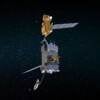
NASA evaluating plan to restructure OSAM-1 satellite servicing mission
The On-Orbit Servicing, Assembly and Manufacturing 1 (OSAM-1) mission represents a pioneering effort by NASA to demonstrate satellite servicing technologies in low Earth orbit. Initially canceled in early 2023 due to significant budget overruns, schedule delays, and uncertain customer demand, OSAM-1’s future has become a subject of congressional intervention and internal reassessment. This article explores the background, current status, and challenges surrounding OSAM-1, highlighting NASA’s ongoing evaluation of options to either restructure or conclude the mission.
Background: Ambitious Goals and Early Setbacks
OSAM-1 was designed to showcase advanced capabilities such as satellite refueling, assembly, and manufacturing in space, aiming to extend satellite lifespans and reduce space debris. The mission, led by NASA’s Goddard Space Flight Center, involved a workforce of approximately 450 personnel at its peak.
Despite its innovative goals, OSAM-1 encountered significant hurdles. By March 2023, NASA announced its cancellation citing extensive cost overruns and schedule delays. A critical factor was the absence of a committed partner to utilize the satellite servicing technology, which undermined the mission’s projected return on investment.
The cancellation decision initiated a wind-down phase, with NASA supporting the project workforce through the end of fiscal year 2024 while planning to close out the mission.
Congressional Intervention and Funding Directives
Shortly after NASA’s cancellation announcement, the final fiscal year 2024 appropriations bill fully funded OSAM-1 at $227 million. The bill instructed NASA to adjust the mission to achieve a 2026 launch within the agency’s existing budget profile, suggesting potential de-scoping of non-essential capabilities to meet cost and schedule targets.
This congressional directive reflects a desire to preserve the mission’s technological advancements while addressing fiscal realities. However, it also introduced uncertainty about the mission’s scope and feasibility, prompting NASA to develop two forward-looking plans: one to meet the 2026 launch and another to close out the project.
As of mid-2024, NASA has not publicly disclosed updates on these plans, leaving stakeholders awaiting clarity on the mission’s trajectory.
Industry Perspective: Intuitive Machines’ Role in Restructuring
Intuitive Machines, an engineering contractor for NASA Goddard, revealed in an August 2024 earnings call that it had collaborated with NASA to devise a plan to keep OSAM-1 on schedule and within budget constraints mandated by Congress.
Steve Altemus, CEO of Intuitive Machines, indicated that the company was initially tasked with exploring how to ramp down the project but also proposed solutions to salvage it. The restructured plan reportedly aligns with the 2026 launch target and budget limits, though specific technical or programmatic adjustments were not disclosed.
This development signals a positive step toward mission continuation, supported by proposed fiscal year 2025 Senate appropriations of up to $174.5 million for OSAM-1, a significant increase over NASA’s own $11 million closure request.
Independent Review Board Recommendations and Challenges
An independent review board commissioned by NASA in early 2024 provided a comprehensive assessment of OSAM-1’s viability. The board recommended substantial workforce reductions to around 200 personnel and acceptance of the Maxar-built spacecraft bus without further modifications to avoid delays.
Key mission elements such as a lidar instrument and the SPIDER space robotics experiment were advised to be removed from the critical path to streamline the schedule. The board emphasized the importance of setting a firm launch readiness date no later than February 2026.
Despite these recommendations, the board concluded that the mission faced high risks of further cost increases and schedule slips, estimating nearly $1 billion still required and a potential launch delay to 2028. The board ultimately favored mission cancellation unless NASA could implement stringent controls.
Congressional and Defense Department Perspectives
Congressional views on OSAM-1’s future remain divided. While the Senate has shown willingness to fund a restructured mission, the House appropriations committee withheld specific funding pending NASA’s feasibility report on a 2026 launch.
Both chambers have encouraged NASA to seek partnerships, particularly with the Department of Defense (DoD), to leverage satellite servicing capabilities for military applications. However, the DoD’s interest centers on geostationary orbit operations, whereas OSAM-1 is designed for low Earth orbit, limiting direct alignment.
DoD personnel expressed concern about the industrial base impact if OSAM-1 were terminated but acknowledged that the mission’s high cost, limited operational life, and lack of refueling capability reduce its strategic value from a defense perspective.
Technical and Strategic Considerations for OSAM-1’s Future
The technical complexity of OSAM-1, including advanced robotics and servicing technologies, presents both opportunities and risks. Successfully demonstrating these capabilities could pave the way for future satellite servicing missions, potentially transforming space operations.
However, the mission’s cost trajectory and schedule instability have raised questions about program management and risk mitigation. NASA faces the challenge of balancing innovation with fiscal discipline and stakeholder expectations.
Strategically, OSAM-1’s success depends on securing committed users of the technology post-demonstration. Without clear demand or partnerships, sustaining the program beyond demonstration risks further financial exposure.
What this means
The future of NASA’s OSAM-1 mission remains uncertain as the agency carefully evaluates options to restructure or close out the project. While congressional funding and contractor efforts offer a pathway to continuation, significant challenges persist in cost control, schedule adherence, and securing operational partners. OSAM-1 represents a critical testbed for satellite servicing technologies that could revolutionize space operations, but realizing this potential requires clear strategic direction and disciplined program management. Stakeholders will closely monitor NASA’s forthcoming decisions, which will shape the trajectory of on-orbit servicing capabilities for years to come.
Recent advances in machine perfusion technology are not only preserving donated livers but also making them biologically younger at a molecular level. This breakthrough…
What happens when human imagination, artificial intelligence, art and technology come together? From September 1 to 6, Samsung Electronics presented a special exhibition themed…