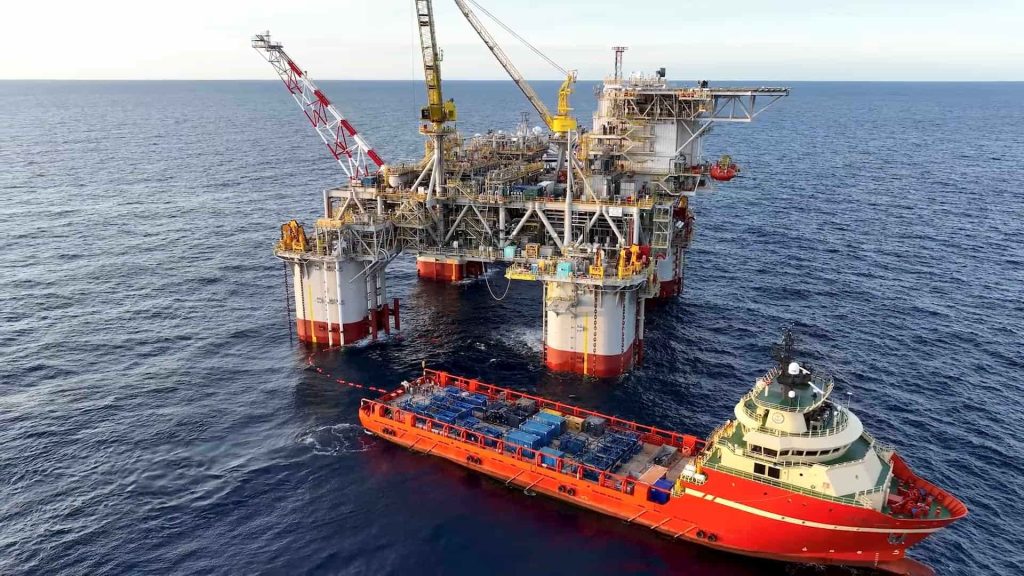
WATCH: All-electric FPU drops Anchor in Gulf of Mexico as ‘industry’s first’ deepwater 20K tech enables oil & gas flows from game-changing project
The energy sector is witnessing a significant technological breakthrough with the commencement of production from the Anchor project, a deepwater oil and gas development in the U.S. Gulf of Mexico. This project, a collaboration between American energy giant Chevron and French multinational TotalEnergies, employs cutting-edge 20,000 psi (20K) high-pressure technology to access hydrocarbon reserves at unprecedented depths. Positioned as the industry's first ultra-high pressure deepwater project to reach a final investment decision and enter production, Anchor represents a critical step forward in unlocking challenging reservoirs while addressing environmental concerns through innovative design.
Pioneering Ultra-High Pressure Technology in Deepwater Exploration
The Anchor project is distinguished as the first deepwater development to operate safely at pressures up to 20,000 psi, enabling access to reservoirs located approximately 34,000 feet below sea level. Situated roughly 225 kilometers off the coast of Louisiana in the Green Canyon Protraction Area, Block 807, the project navigates water depths exceeding 1,500 meters. This ultra-high pressure technology marks a departure from conventional deepwater operations, opening new frontiers for oil and gas extraction in challenging environments.
The deployment of this technology reflects a concerted effort by Chevron and TotalEnergies to tap into previously inaccessible hydrocarbon resources, potentially unlocking up to 440 million barrels of oil equivalent. Nigel Hearne, Executive Vice President at Chevron Oil, Products & Gas, emphasized that the project’s innovative approach is a breakthrough that will enable similar developments globally, expanding the industry's capability to explore ultra-deep reservoirs.
Anchor Floating Production Unit: Design and Capacity
Central to the Anchor project is the semi-submersible Floating Production Unit (FPU), a 25-story high facility designed to process hydrocarbons extracted from seven subsea wells. The FPU boasts a production capacity of 75,000 barrels of oil per day alongside 28 million cubic feet of natural gas daily, positioning it as a significant contributor to Gulf of Mexico output.
The FPU integrates an all-electric configuration featuring electric motors and electronic controls, a design choice aimed at minimizing greenhouse gas emissions. Additionally, waste heat and vapor recovery systems enhance operational efficiency and environmental performance. This approach aligns with Chevron’s commitment to reducing the carbon intensity of its operations, recognizing the Gulf of Mexico as a source of some of the world’s lowest carbon intensity oil and gas.
Economic and Environmental Implications
The Anchor project not only advances technological frontiers but also promises substantial economic benefits. With an estimated operational lifespan of up to 30 years, the project has involved significant capital investments, including $700 million in Texas and Louisiana for facility construction, $500 million allocated for offshore maintenance and modifications, and $135 million dedicated to marine support vessels in Louisiana.
Bruce Niemeyer, President at Chevron Americas Exploration & Production, highlighted the project’s role in delivering affordable, reliable energy while supporting economic activity in Gulf Coast communities. The utilization of existing pipeline infrastructure to transport oil and gas directly to U.S. markets further underscores the project's integration into the regional energy framework.
From an environmental perspective, the all-electric FPU design and the focus on lower carbon intensity production demonstrate a balanced approach to meeting energy demand while managing emissions. This strategy reflects broader industry trends toward sustainability without compromising the reliability and affordability of energy supplies.
Strategic Partnerships and Industry Impact
Chevron operates the Anchor project through its subsidiary Chevron U.S.A., holding a 62.86% working interest, while TotalEnergies owns the remaining 37.14%. TotalEnergies’ President of Exploration & Production, Nicolas Terraz, described the project as a milestone in their integrated energy model, combining oil development with low emissions intensity and growth in related sectors such as LNG and integrated power.
The success of Anchor is expected to influence future ultra-high pressure, high-temperature developments worldwide, setting a precedent for safe, efficient, and environmentally conscious deepwater production. Chevron’s broader Gulf of Mexico portfolio includes other deepwater platforms such as Jack/St. Malo, Big Foot, Tahiti, Blind Faith, and Petronius, with Anchor contributing to the company’s goal of achieving 300,000 barrels per day output in the region by 2026.
Additionally, Chevron’s ongoing expansion efforts, including recent acquisitions in Namibia and Uruguay, signify a strategic push to diversify and grow its oil and gas portfolio. However, challenges remain, as evidenced by the stalled merger with Hess Corporation due to arbitration issues related to assets in Guyana, which are anticipated to resolve by September 2025.
What this means
The commencement of production at the Anchor project marks a transformative moment for the oil and gas industry, showcasing how advanced technology can unlock challenging deepwater resources while addressing environmental and economic priorities. By successfully deploying 20,000 psi high-pressure technology in the Gulf of Mexico, Chevron and TotalEnergies have set a new benchmark for ultra-deepwater exploration and production. This achievement not only enhances energy security and supports regional economies but also aligns with evolving sustainability goals. As the industry moves forward, the lessons and innovations from Anchor will likely influence future projects worldwide, reinforcing the balance between energy development and environmental stewardship.
Originally reported by offshore-energy.biz. Adapted for our readers with AI assistance.
Recent advances in machine perfusion technology are not only preserving donated livers but also making them biologically younger at a molecular level. This breakthrough…
What happens when human imagination, artificial intelligence, art and technology come together? From September 1 to 6, Samsung Electronics presented a special exhibition themed…