AI Trends & News
Surface Laptop Ultra Pre-orders Open: Price, Release Date and AI Features
Microsoft opens Surface Laptop Ultra pre-orders from US$2,599.99. Explore its launch date, NVIDIA RTX Spark features and implications for Nigerian businesses.
TAMFIS NIG LTDRC 8067447CAC ACTIVEFinima, Bonny Island, Rivers State

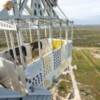
As NASA prepares to embark on the Artemis missions, which aim to return humans to the Moon and beyond, astronaut safety remains paramount. One critical aspect of ground operations is the emergency egress system that allows crew and personnel to swiftly and safely evacuate the launch pad if necessary. Recently, NASA’s Exploration Ground Systems (EGS) program implemented a new magnetic braking system for the emergency egress baskets at Launch Pad 39B. This technology, inspired by roller coaster braking systems, represents a significant advancement in ground infrastructure safety. This article explores the development, implementation, and benefits of this innovative braking system, highlighting how NASA’s collaboration with amusement park engineers is ensuring the Artemis crew’s safety.
Emergency egress systems are vital safety mechanisms designed to provide astronauts and ground personnel with rapid evacuation routes from the launch pad in case of an unexpected incident during countdown or launch. For Artemis missions, which involve complex and high-risk operations, having a reliable and efficient escape system is non-negotiable.
The Artemis program, NASA’s ambitious effort to land the first woman and next man on the Moon, involves new spacecraft, launch vehicles, and ground support infrastructure. This complexity demands updated safety solutions that can handle unique environmental and operational challenges encountered during launches.
NASA’s Exploration Ground Systems team has prioritized enhancing the emergency egress infrastructure to protect the crew and support teams. The new magnetic braking system is a key component of this effort, ensuring that evacuation baskets descend safely and controllably from the launch pad to a secure area.
NASA’s innovation journey for the new braking system began with a surprising source of expertise: a central Florida amusement park located just 50 miles from Kennedy Space Center. Recognized globally for their mastery of magnetic braking technology on roller coasters, the park’s engineers provided invaluable knowledge.
The collaboration involved in-depth meetings between NASA’s EGS engineers and the amusement park’s maintenance teams. These sessions allowed NASA to understand proven practices for maintaining and operating magnetic braking systems in dynamic, real-world conditions, which differ from typical aerospace applications.
Learning from the amusement park’s rigorous inspection schedules—nightly, monthly, and yearly—NASA’s teams gained insights into ensuring long-term reliability and safety. This partnership exemplifies NASA’s commitment to exploring cross-industry innovations to enhance mission safety.
The magnetic braking system employed by NASA uses eddy current principles, where magnets interact with conductive materials to create resistance and slow motion without physical contact. This non-contact braking reduces wear and tear, enhancing durability and reliability.
In the Artemis emergency egress system, the braking mechanism controls the descent speed of four baskets that slide down a track cable from the mobile launcher to the terminus site near Launch Pad 39B. This ensures that personnel inside the baskets experience a controlled, safe evacuation.
Unlike roller coasters, which operate continuously during the day, the Artemis system is designed for emergency use and periodic testing only. This distinction requires specialized maintenance and monitoring protocols to confirm readiness without the benefit of constant operation.
One notable innovation is the integration of acceleration sensors within the emergency egress baskets. These sensors monitor the speed and acceleration of the baskets during tests, providing real-time data to validate the braking system’s performance under various conditions.
The system is engineered to accommodate multiple weight scenarios and environmental factors such as temperature and humidity, ensuring consistent braking effectiveness regardless of operational variables. This robustness is critical for unpredictable emergency situations.
Additionally, armored emergency response vehicles are strategically stationed at the pad terminus site to quickly transport personnel to designated safe zones after evacuation. This layered safety approach combines mechanical innovation with logistical readiness.
Historically, during the Space Shuttle Program, NASA utilized mechanical braking systems for emergency egress baskets. These systems relied on catch nets and drag chains to slow and stop baskets sliding down wires, which, while effective, involved more mechanical complexity and maintenance.
For the Commercial Crew Program, SpaceX and Boeing employ similar slidewire systems with catch nets and deployable chutes to evacuate crews. These systems have proven reliable but differ in braking technology and operational protocols compared to the new Artemis approach.
The switch to magnetic braking for Artemis represents a modernization of ground safety infrastructure, reducing mechanical wear and improving reliability. This evolution reflects NASA’s continuous commitment to leveraging technological advances to enhance astronaut safety.
Though the Artemis emergency egress system is intended for emergency use only, NASA has developed comprehensive maintenance and testing protocols to ensure its readiness at all times. Regular tests simulate emergency scenarios to validate system performance and identify potential issues.
Drawing lessons from amusement park maintenance practices, NASA’s operations teams have established inspection routines that cover mechanical components, magnetic elements, sensors, and structural integrity. These procedures help prevent failures and extend the system’s operational lifespan.
The maintenance philosophy emphasizes proactive care, ensuring that even in periods of inactivity, all components remain in optimal condition. This strategy is crucial given the high stakes involved in crewed spaceflight launches.
The successful implementation of the magnetic braking system sets a new standard for emergency egress safety in NASA’s crewed launch infrastructure. As Artemis missions progress, this system will continue to be a vital safeguard for astronauts and ground teams.
Beyond Artemis II and subsequent lunar missions, the technology and operational insights gained may influence safety designs for future deep space exploration programs, including Artemis III and potential Mars missions.
NASA’s willingness to integrate cross-industry innovations underscores a broader strategy of collaboration and adaptation, ensuring that space exploration advances not only in capability but also in crew protection.
NASA’s adoption of a magnetic braking system for the Artemis emergency egress represents a groundbreaking step in launch pad safety technology. By leveraging expertise from the amusement park industry and integrating advanced sensors and maintenance protocols, NASA has developed a robust, reliable system designed to protect astronauts and ground personnel during critical moments. This innovation not only enhances safety for Artemis missions but also paves the way for future exploration efforts. As NASA continues to push the boundaries of human spaceflight, ensuring crew safety through such technological advancements remains a top priority.
Originally reported by nasa.gov. Adapted for our readers.
Keep reading
AI Trends & News
Microsoft opens Surface Laptop Ultra pre-orders from US$2,599.99. Explore its launch date, NVIDIA RTX Spark features and implications for Nigerian businesses.
Science & Technology
DJI’s IBC recognition puts pocket gimbal and panoramic capture in the spotlight. Here is how creators can assess framing, editing effort and recording workflows.
Business News
App store steering is about more than permission to add a link. Explore fees, renewal terms, customer experience and the UK consultation.
TAMFIS NIG LTD
Electrical and instrumentation engineering, bid preparation and consulting, IT and software.