
Millennium Space secures $386 million contract for missile-defense satellites
Top Stories

Millennium Space secures $386 million contract for missile-defense satellites

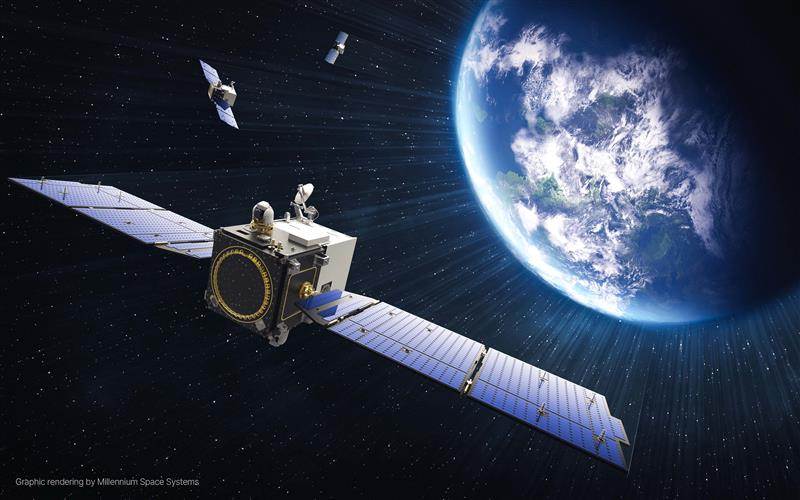
Top Stories Tamfitronics Missile tracking satellite illustration. Credit: Millennium Space SystemsWASHINGTON The U.S. Space Force awarded a $386 million contract to Millennium Space Systems, a Boeing subsidiary, to build six satellites designed to detect and track missiles that could threaten the United States and allies.The contract, announced Oct. 23, marks the second major deal for Millennium Space in this program, following a $509 million agreement in December for an identical set of six satellites.The California-based company will produce a total of 12 satellites to operate in medium Earth orbit (MEO) an altitude range between low Earth orbit, where most commercial satellites operate, and the much higher geosynchronous orbit used by many weather and communications satellites.These satellites will carry specialized infrared sensors, developed by Boeing, capable of detecting and tracking both traditional ballistic missiles...
Continue reading
Is SpaceX poised to shake up optical terminal sales?
Top Stories

Is SpaceX poised to shake up optical terminal sales?

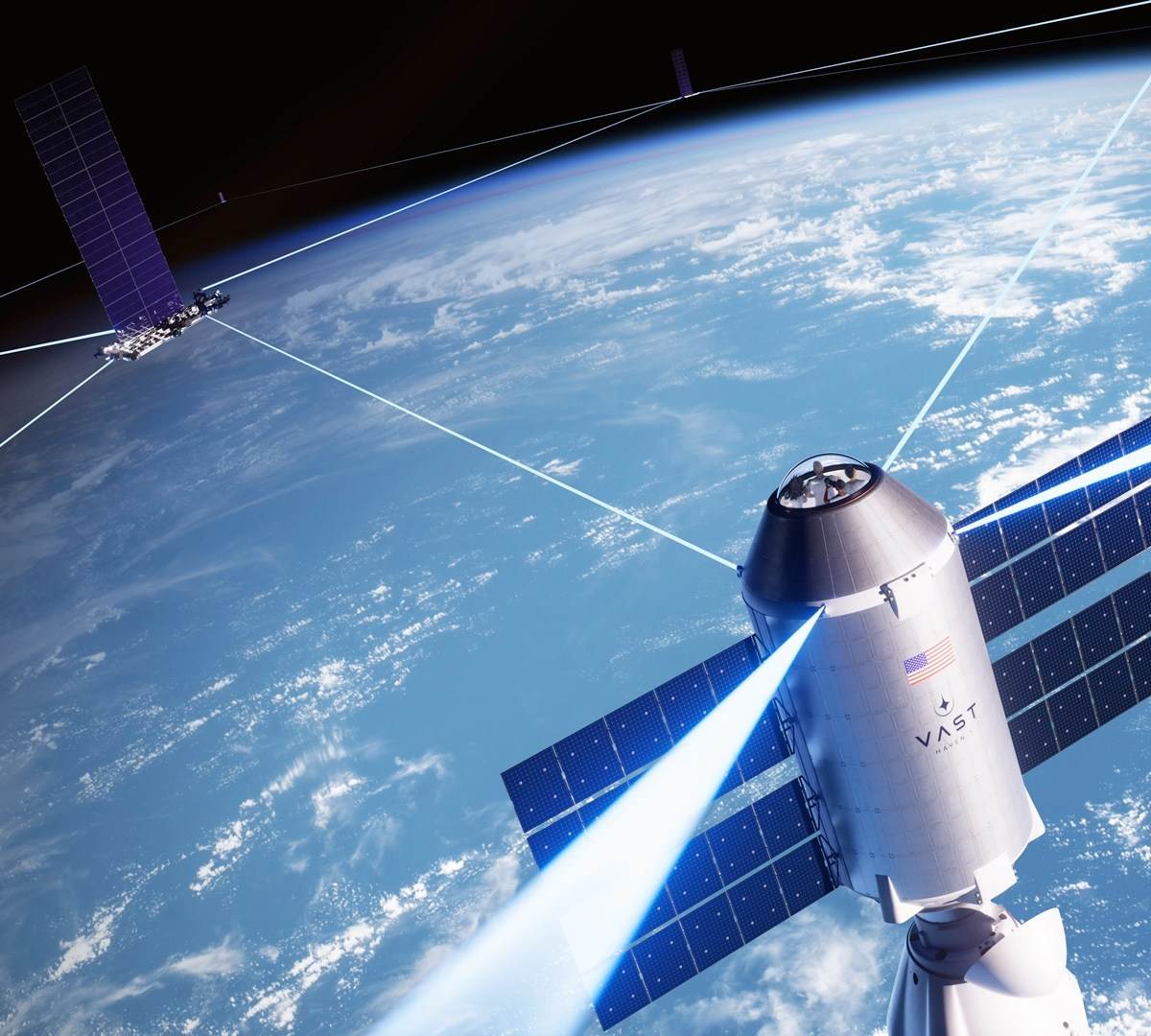
Top Stories Tamfitronics Vast’s Haven-1 space station will use Starlink for broadband connectivity. Credit: VastMOUNTAIN VIEW, Calif. – Given its dominance in the launch market and Starlink’s explosive growth in satellite communications, what impact will SpaceX have on the optical terminal business?At the Satellite Innovation conference here, panelists discussed SpaceX’s plans, announced in March, to sell its optical or laser communications terminals to satellite manufacturers.Optical terminal suppliers focused on government sales said they weren’t concerned because the SpaceX terminals do not comply with the standards published by the Space Development Agency.“We don’t see the Starlink laser as a competitor,” said Gregg Burgess, General Atomics Electromagnetic Systems vice president for space systems. “If a customer wants us to interoperate with the Starlink or Starshield constellations, we’ll go buy a Starlink and put it on one...
Continue reading
India to target moon’s south pole with sample return mission
Top Stories

India to target moon’s south pole with sample return mission

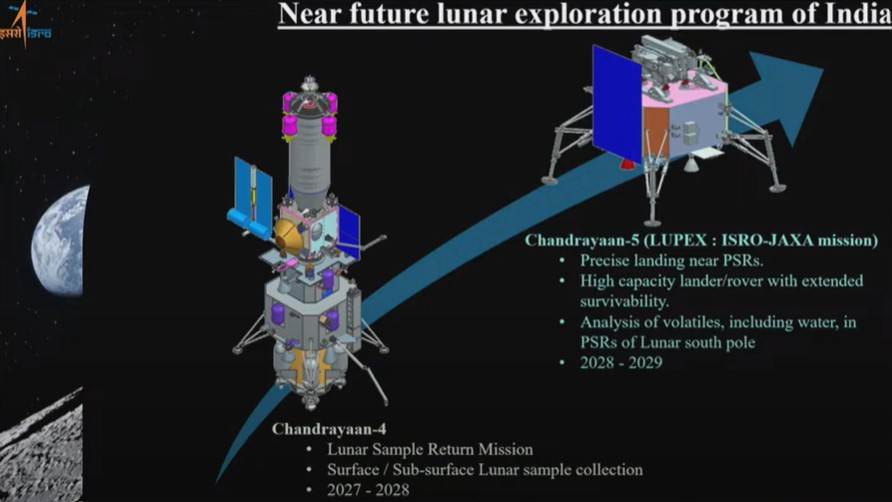
Top Stories Tamfitronics Spacecraft renders for the Chandrayaan-4 and Chandrayaan-5/LUPEX moon missions. Credit: P. Veeramuthuvel/ISROHELSINKI — India’s Chandrayaan-4 lunar sample return mission will target a landing between 85 and 90 degrees latitude in the southern hemisphere of the moon, and follow up with a joint lander and rover mission with Japan.The Chandrayaan-4 mission will consist of two stacks launched on two separate rockets and will target the vicinity of the lunar south pole, according to P. Veeramuthuvel of the Indian Space Research Organization (ISRO), speaking at the International Astronautical Congress (IAC) in Milan, Oct. 17.The mission will aim to collect around three kilograms of samples from near the south pole, around which water-ice is thought to be available. ISRO will require several new technologies, including the ability to scoop from the surface and drill to...
Continue reading
U.S. eases export rules for space tech, but high-resolution radar satellites remain under tight control
Top Stories

U.S. eases export rules for space tech, but high-resolution radar satellites remain under tight control

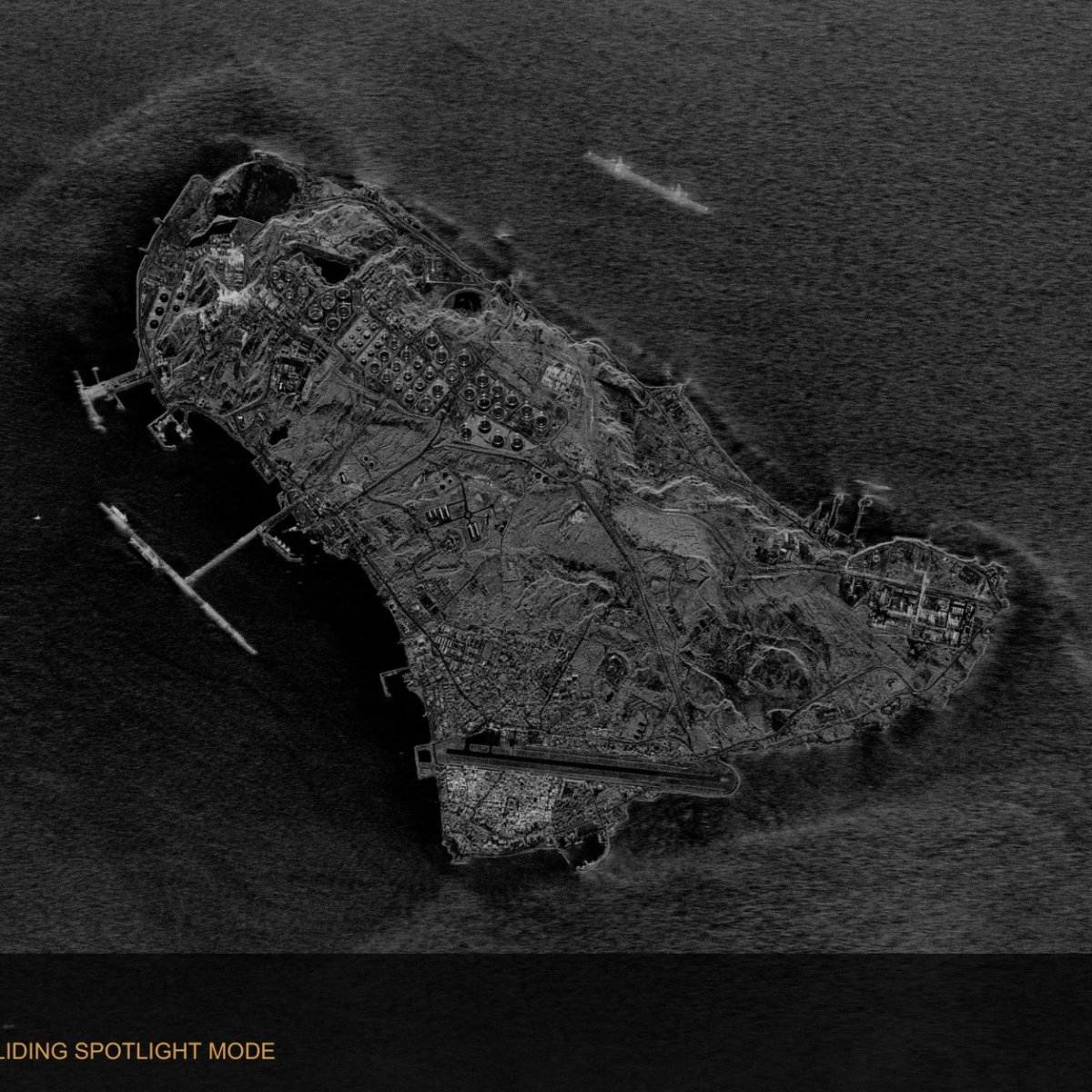
Top Stories Tamfitronics Credit: Capella SpaceWASHINGTON The U.S. government last week announced a series of reforms to export control regulations for space technology exporters. However, the changes exclude space products that are in growing demand around the world such as high-resolution synthetic aperture radar (SAR) satellites.At the heart of the issue is a technical specification that determines whether satellite technology falls under less restrictive Commerce Department oversight or much more stringent State Department weapons controls. Only SAR systems operating at 500MHz or less bandwidth will benefit from the relaxed rules a threshold that industry executives say is already obsolete.Frank Backes, CEO of Capella Space,  a California-based manufacturer and operator of SAR satellites, said the new regulations will benefit companies selling standard satellites and components. High-resolution SAR payloads still require licenses under the International...
Continue reading