
NASA Celebrates 20 Years of Earth-Observing Aura Satellite
Science & Technology

NASA Celebrates 20 Years of Earth-Observing Aura Satellite

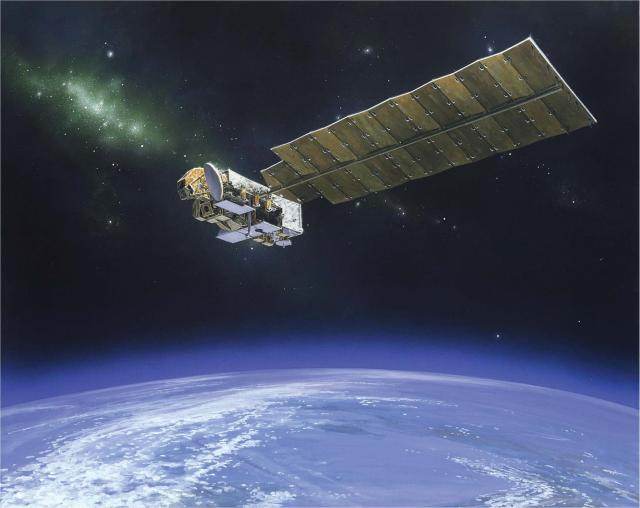
NASA Space Technology The Aura spacecraft, shown in this artist’s concept, is a NASA atmospheric chemistry mission that monitors Earth’s protective atmosphere. From monitoring the hole in the ozone above the Antarctic to studying air quality around the entire planet, NASA’s Aura satellite has provided scientists with essential measurements during its two decades in orbit.“The Aura mission has been nothing short of transformative for scientific research and applied sciences,” said Bryan Duncan, project scientist for NASA’s Aura satellite mission. “The mission’s data have given scientists and applied scientists an unparalleled view of air pollution around the world.”Aura has revealed the effects of industrialization, environmental regulations, wildfires, the COVID-19 pandemic, and many other aspects of the air we breathe. The satellite paved the way for recent missions to study the atmosphere and its inner workings, including...
Continue reading
Apollo 11 Lifts Off
Science & Technology

Apollo 11 Lifts Off

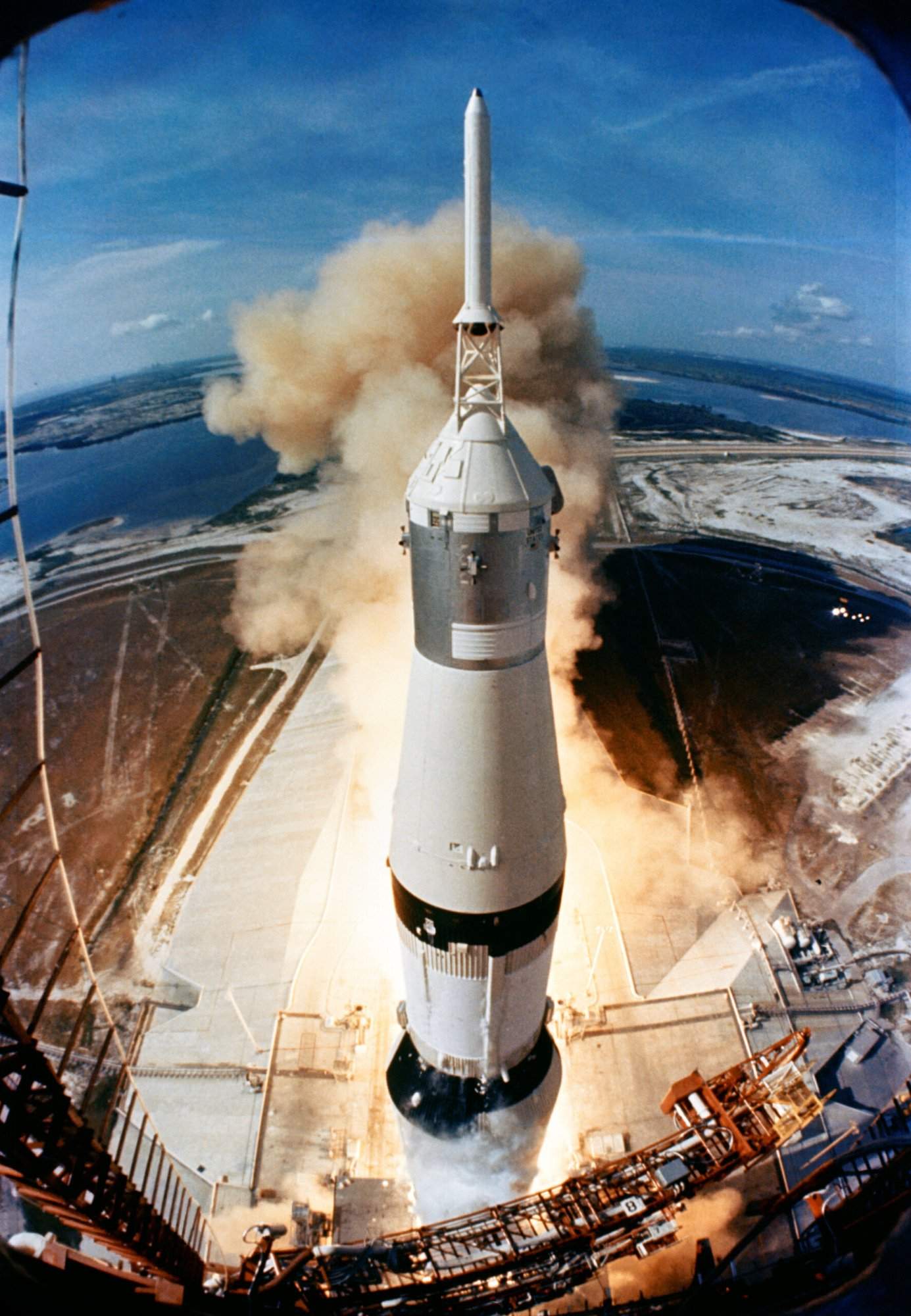
NASA Space Technology Monika LuabeyaJul 16, 202455 years ago on July 16, 1969, NASA’s Apollo 11 spacecraft launched from the agency’s Kennedy Space Center in Florida, as seen in this photo. Astronauts Neil Armstrong, Michael Collins, and Buzz Aldrin were aboard.Apollo 11’s primary mission objective was to fulfill a national goal set by President John F. Kennedy on May 25, 1961: perform a crewed lunar landing and return safely to Earth before the decade ended. Additional flight objectives included scientific exploration by the lunar module (LM) crew, deployment of a television camera to transmit signals to Earth, and deployment of a solar wind composition experiment, seismic experiment package, and a Laser Ranging Retroreflector. During the exploration, Armstrong and Aldrin were to gather samples of lunar-surface materials for return to Earth. They also were to extensively...
Continue reading
Webb Confirms Temperature Difference between Eternal Morning and Evening on WASP-39b
Science & Technology

Webb Confirms Temperature Difference between Eternal Morning and Evening on WASP-39b

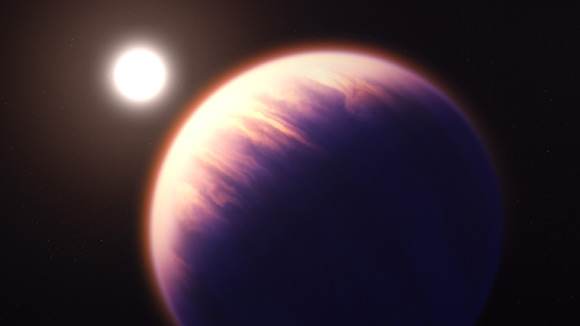
NASA Space Technology Astronomers using the NASA/ESA/CSA James Webb Space Telescope have obtained and analyzed morning and evening transmission spectra of WASP-39b, a hot-Saturn exoplanet orbiting a star some 700 light-years away in the constellation of Virgo. The spectra are best explained by models in which the evening terminator is hotter than the morning terminator by 177 K.This illustration shows what WASP-39b could look like, based on the current understanding of the planet. Image credit: NASA / ESA / CSA / Webb / J. Olmsted, STScI.WASP-39b is a hot gas giant that orbits the G7-type star WASP-39 with a period of 4.1 days.First discovered in 2011, the alien world has approximately the same mass as Saturn but is 50% larger.The planet’s extreme puffiness is related in part to its high temperature (about 900 degrees Celsius,...
Continue reading
This workhorse ISS spacecraft has never looked so beautiful
Science & Technology

This workhorse ISS spacecraft has never looked so beautiful

NASA Space Technology NASANorthrop Grumman’s Cygnus spacecraftdeparted the International Space Station (ISS) on July 12 after arriving there in February with 8,200 pounds of supplies, scientific investigations, commercial products, hardware, and other essential cargo.NASA has just shared some stunning images of the Cygnus ahead of its release from the orbital outpost, after which it descended to burn up in Earth’s atmosphere.The images show the spacecraft from various angles and in extraordinary detail while still attached to the station via the Canadarm2 robotic arm.????: @northropgrumman's Cygnus space freighter is pictured attached to the Canadarm2 robotic arm ahead of its release from the space station. Cygnus was released on July 12 at 7:01am ET, ending its five-and-a-half month stay at the orbiting lab. More pix: https://t.co/2k1R6AqEMs pic.twitter.com/EU8FoXPtQE— International Space Station (@Space_Station) July 17, 2024Cygnus began its journey...
Continue reading