

Tag Archives: Long-term

Maintaining Long-Term Media Contacts That Last

Maintaining long term media contacts is tough. Most people in PR know it. Journalists are flooded with deadlines, constant pitches, breaking news that changes by the hour. Their attention is pulled in every direction, which means holding it takes patience.
Quick wins? They rarely last. One-off emails vanish in the flood. What actually works is slower. Consistent effort. Real respect for their work. Trust takes time, but once it’s there, doors open. Coverage feels easier. Collaboration doesn’t feel forced.Key TakeawayKnow a journalist’s work before you reach out.Stay consistent and respectful, without pushing too hard.Be personal, be honest. Trust will come.Understand Journalists and Their WorkJournalists move fast. Their focus is sharp, and if you don’t take the time to understand them, you won’t get far. Reading their work is the starting point. Not just headlines. Not...
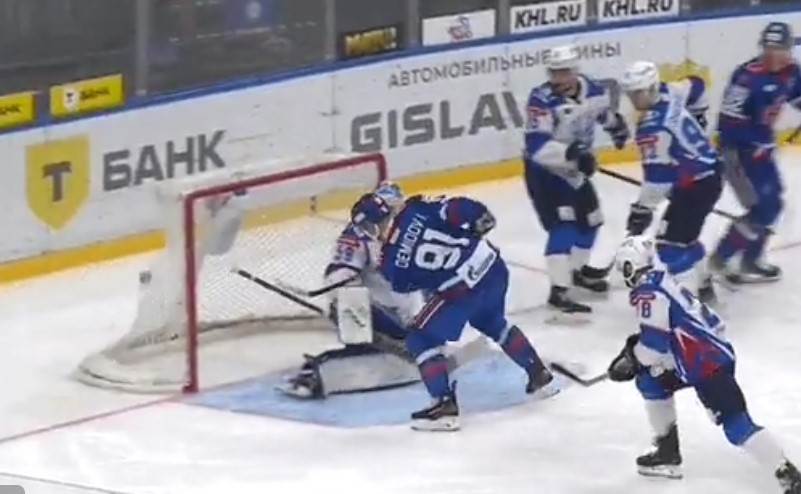
Bad news for Ivan Demidov and SKA: long-term injury to Evgeny Kuznetsov

Top Stories Tamfitronics Since the start of his KHL season with SKA St. Petersburg, the Habs’ top forward prospect, Ivan Demidov, has generally been getting his ice time on the third line.So, despite a short stint on the fourth line, Demidov has always played with former National Hockey League standout Evgeny Kuznetsov.In fact, the two players seemed to have developed a fine chemistry to date, with Kuznetsov even assisting Demidov’s first career goal.In short, even if Kuznetsov isn’t known as the best influence, he seems to be supporting the Habs’ prospects.The bad news, however, is that Kuznetsov was injured in SKA’s last game, and the news isn’t very good.The team announced that the center forward is expected to miss at least two months.Bad news for SKA. pic.twitter.com/RU8zkWND3F– KHL (@khl_eng) September 28, 2024Details to come.Top Stories...

Long-term moon mission safety depends on sturdy infrastructure
Top Stories Tamfitronics GOLDEN, Colorado — A future where the moon serves as a long-term haven for human explorers is within reach but significant challenges like constructing launch and landing facilities, addressing moonquakes, and developing sustainable infrastructure must be overcome.The Lunar Surface Innovation Consortium held a launch and landing facilities workshop on July 23, staged by the Johns Hopkins Applied Physics Laboratory (APL) in Laurel, Maryland. Specialists from NASA, industry and academia took part, all with an eye toward orchestrating an enduring human presence on the lunar landscape.“Landings and launches are incredibly complex endeavors, and an inflection point in any lunar surface exploration activity,” APL’s Sarah Hasnain, the consortium’s co-lead on lunar excavation and construction, told SpaceNews. “Our sustainable future on the moon starts with the ability to revisit sites and reuse infrastructure and assets...
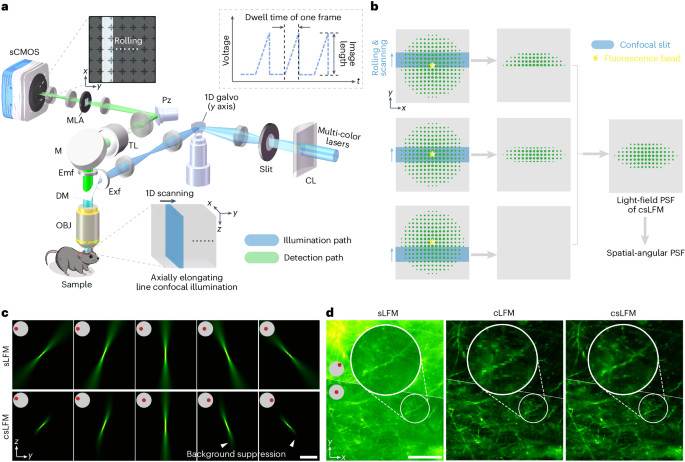
Long-term intravital subcellular imaging with confocal scanning light-field microscopy
Technology tamfitronics MainIntravital imaging1,2,3,4,5,6,7 is vital for studying diverse physiopathological processes, such as brain functions and immune responses, which necessitates high spatiotemporal resolution, high fidelity and low phototoxicity to capture fine structures and transient three-dimensional (3D) dynamics non-invasively8,9,10,11,12,13. An essential difference between in vitro and in vivo imaging is the presence of intense background fluorescence originating from out-of-focus signals and autofluorescence in scattered tissue or densely labeled samples, which poses a fundamental constraint on the imaging fidelity14,15,16. Confocal microscopy17,18,19 is the most widely used technique to address this problem with optical sectioning. By rejecting the out-of-focus fluorescence with a pinhole, slit or pinhole array, only the in-focus photons within a very shallow depth...