workers at electrical transformer substation
Educational Resources, Instrumentation

The Critical Role of Instrumentation in Industrial Safety: A Comprehensive Guide

Modern industrial landscapes, from vast petrochemical complexes and power generation plants to intricate manufacturing facilities, are inherently complex environments where even minor malfunctions can escalate into catastrophic events. The safety of personnel, the integrity of equipment, the protection of the environment, and the continuity of operations hinge on robust safety measures. At the forefront of these defenses are advanced instrumentation systems, meticulously designed not just to monitor processes but to actively prevent and mitigate hazardous situations. This comprehensive guide delves deep into the foundational concepts and cutting-edge technologies that underpin safety instrumentation, providing an educational and training-oriented perspective. We will explore the architecture and lifecycle of Safety Instrumented Systems (SIS), understand how Safety Integrity Levels (SIL) are determined to quantify risk reduction, and navigate the complexities of Hazardous Area Classification alongside the critical principles of Intrinsic...
Continue reading
Types of Control Valves
Educational Resources, Instrumentation

Control Valves: Comprehensive Guide to Industrial Flow Control Systems

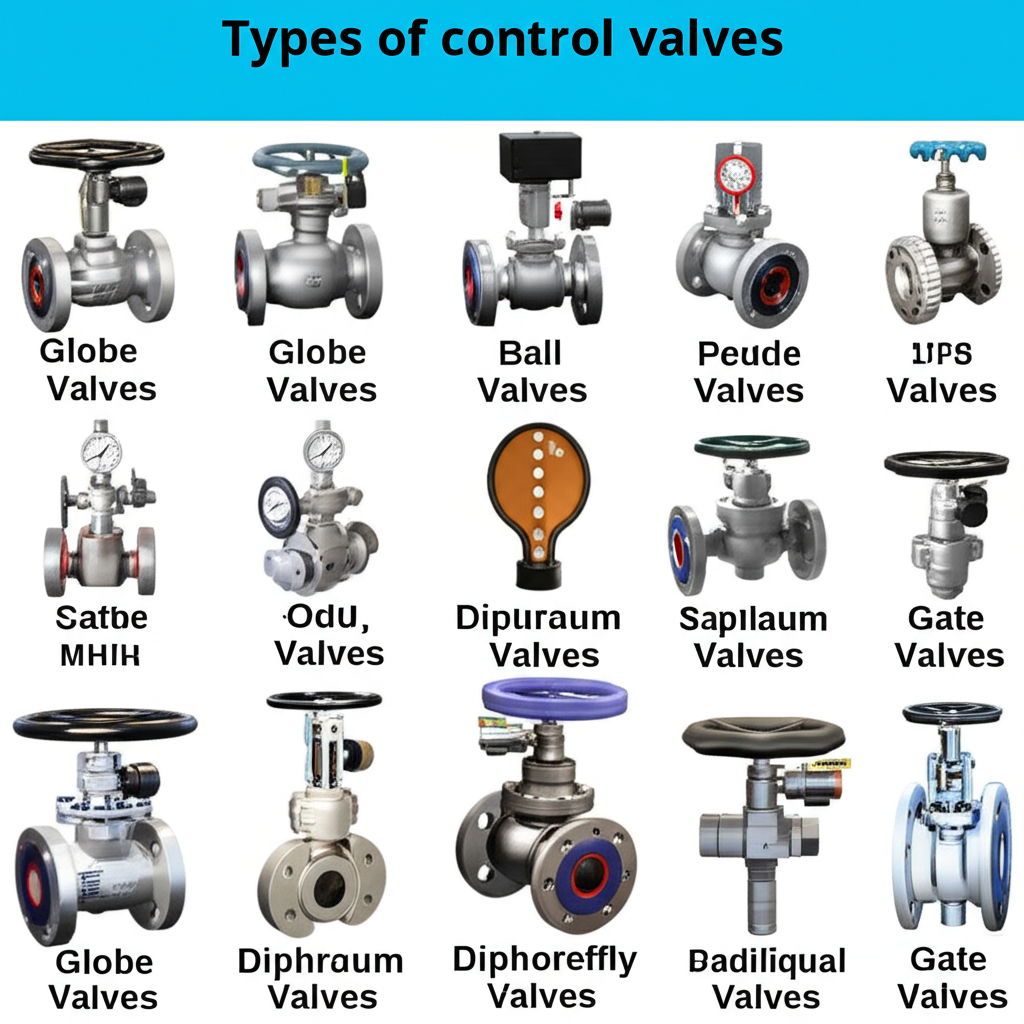
Control Valves: Comprehensive Guide to Industrial Flow Control Systems Control valves are fundamental components in industrial process control systems, serving as the final control elements that regulate the flow of fluids (liquids, gases, or steam) through piping systems. These devices respond to control signals from process controllers to maintain desired process variables such as flow rate, pressure, temperature, or level. The importance of control valves cannot be overstated, as they directly influence process efficiency, safety, and product quality across industries ranging from oil and gas to pharmaceuticals and water treatment. This comprehensive guide explores the essential aspects of control valves, including their types, characteristics, sizing methodologies, and actuation systems. Understanding these components is crucial for engineers, technicians, and operators involved in process control and instrumentation. Types of Control Valves Control valves come in various designs, each optimised for specific...
Continue reading
gasoline counters in a machine
Educational Resources, Instrumentation

Sensors and Transducers

Sensors and Transducers Sensors and transducers are critical components in modern measurement and control systems, converting physical phenomena into readable signals or vice versa. Understanding the types, working principles, and signal processing involved is essential for engineers and professionals handling measurement and automation technologies. This article provides a comprehensive overview of various sensors and transducers, their operating mechanisms, and signal conditioning techniques. Sensors and Transducers Types of Sensors Sensors are devices that detect changes in the environment or within systems and respond by generating signals that can be interpreted by observers or instruments. Sensors are usually categorised based on the physical property they measure. Common categories include temperature, pressure, flow, and level sensors. Types of Sensors Sensors are devices that detect changes in the environment or within systems and respond by generating signals that can be interpreted by observers or instruments....
Continue reading
Liquid Level Measurement
Educational Resources, Instrumentation

MODULE 5: Level Measurement (Liquids, Solids, Interfaces)

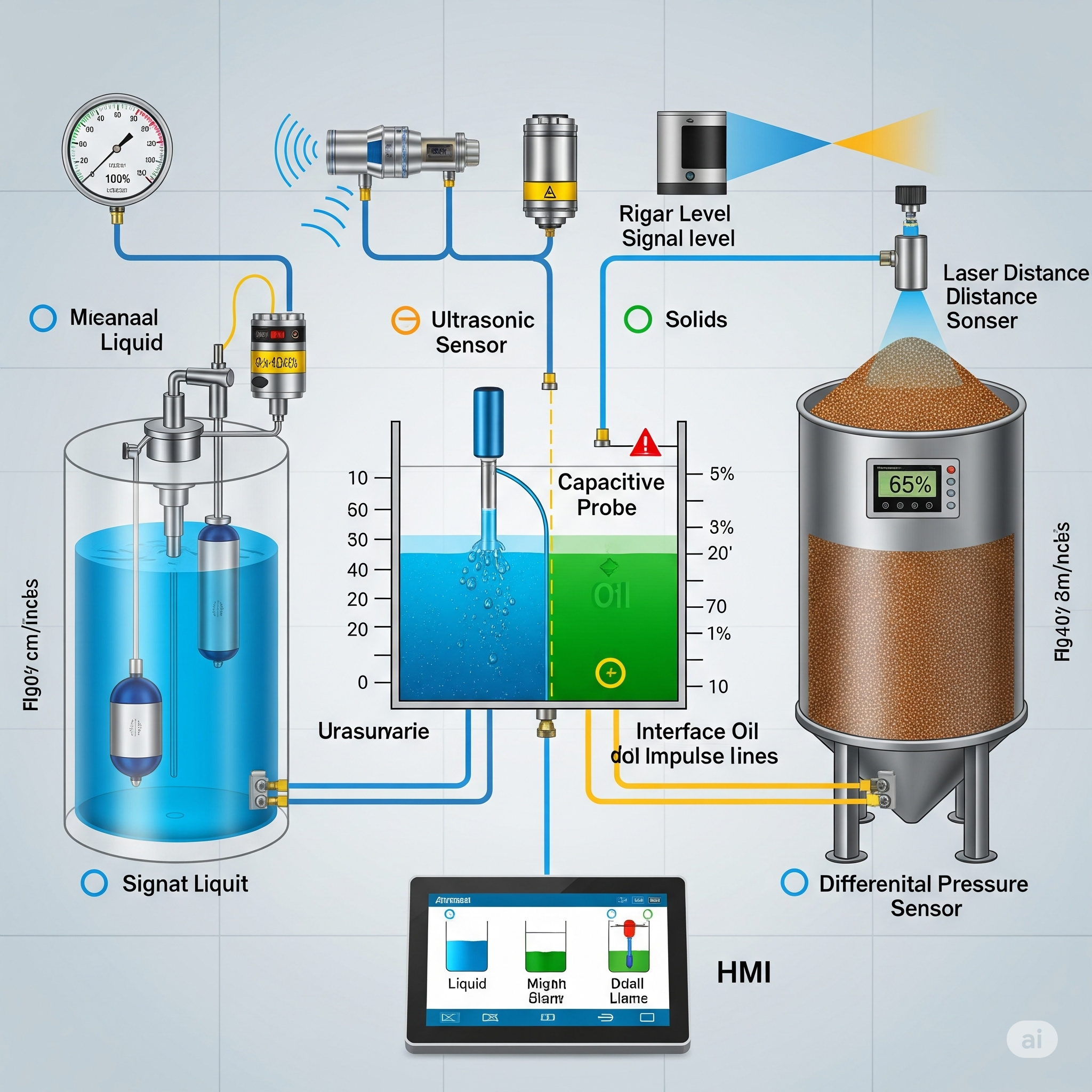
Introduction Level measurement plays a crucial role in ensuring the safe and efficient operation of industrial processes. From storage tanks in oil depots to chemical reactors and nuclear containment vessels, accurate and reliable level detection ensures effective inventory management, process control, and safety compliance. This module provides a comprehensive overview of the technologies used for level measurement, including contact and non-contact methods, challenges faced in real-world applications, and the criteria for choosing the right instrument. Focus areas include tank farms, silos, separators, and reactor vessels across industries like oil & gas, manufacturing, energy, and nuclear power. Section 1: Principles of Level Measurement 1.1 Differential Pressure (DP) Measurement Operating Principle: Level is inferred from the hydrostatic pressure exerted by the height of the liquid. A DP transmitter with one port at the bottom and one at the reference point measures the...
Continue reading