Leadership to Discuss NASA’s Boeing Crew Flight Test
Science & Technology

Leadership to Discuss NASA’s Boeing Crew Flight Test

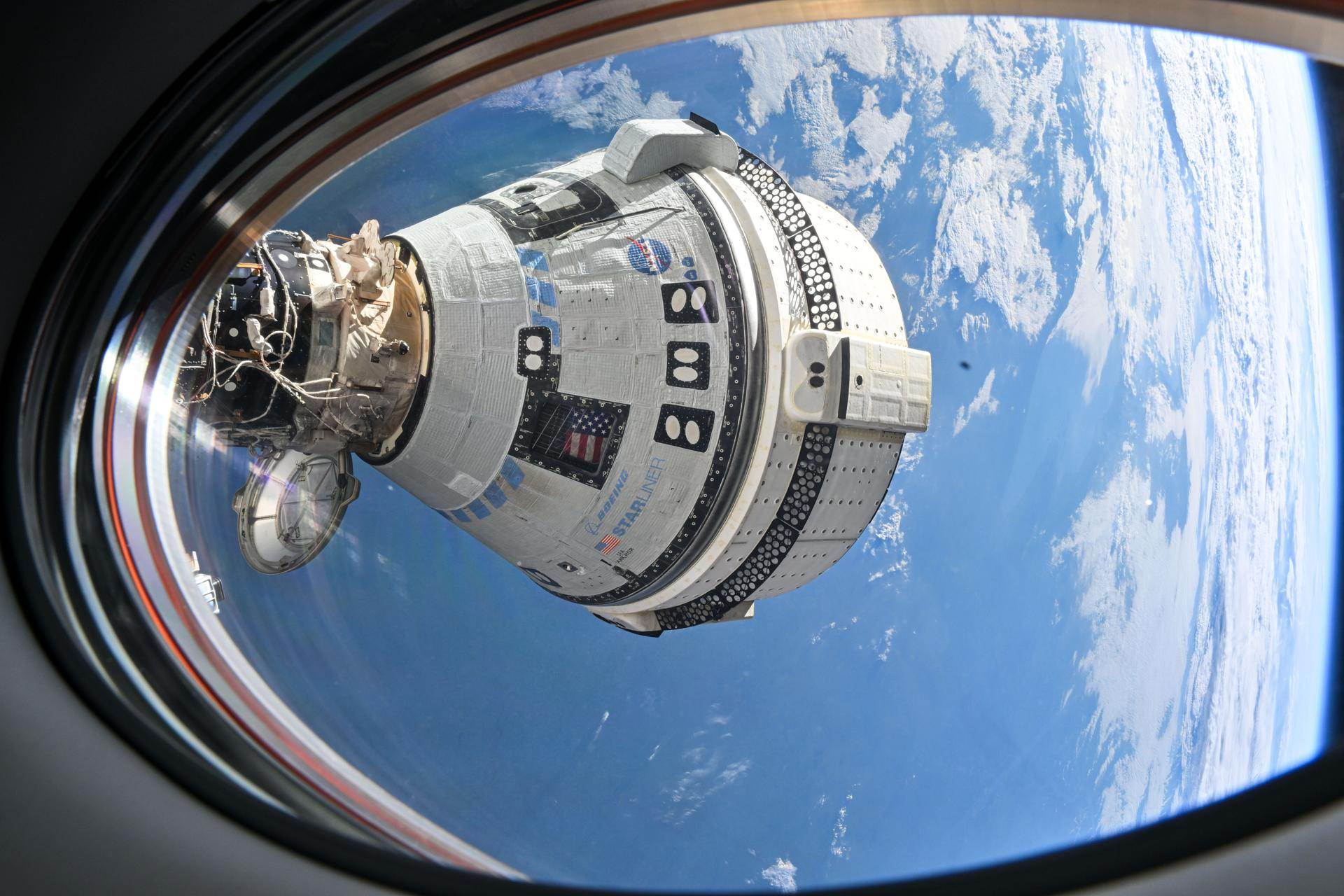
NASA Space Technology NASA Administrator Bill Nelson and leadership will hold an internal Agency Test Flight Readiness Review on Saturday, Aug. 24, for NASA’s Boeing Crew Flight Test. About an hour later, NASA will host a live news conference at 1 p.m. EDT from the agency’s Johnson Space Center in Houston.Watch the media event on NASA+, NASA Television, the NASA app, YouTube, and the agency’s website. Learn how to stream NASA content through a variety of platforms, including social media.Media interested in attending the news conference must contact the newsroom at NASA Johnson no later than 1 p.m., Friday, Aug. 23, at 281-483-5111 or jsccommu@mail.nasa.gov. Media participating by phone must RSVP no later than one hour prior to the start of the event. A copy of NASA’s media accreditation policy is online.NASA and Boeing have...

Continue reading
Autonomous Driving Software Market Size worth $7.0 billion in 2035
Science & Technology

Autonomous Driving Software Market Size worth $7.0 billion in 2035

Technology tamfitronics The global autonomous driving software market is projected to grow from USD 1.8 billion in 2024 to USD 7.0 billion in 2035, at a CAGR of 13.3%.As automakers and technology companies plan to launch self-driving cars, demand for driving software solutions is likely to rise due to increasing investment in ADAS/AD technologies by OEMs and technology providers. The demand for L2+ vehicles is also growing. Rapid advancements in AI and sensor technologies, along with rising consumer interest in ADAS for improved safety, are expected to drive the demand for autonomous driving software in L2+ vehicles. Further, the shift to software-first architecture and technology sharing between leading OEMs and Tech Companies is also speeding up the shift to higher levels of Autonomy. For such developments, automotive software is being developed for applications such as...
Continue reading
Systematic identification of minor histocompatibility antigens predicts outcomes of allogeneic hematopoietic cell transplantation
Science & Technology

Systematic identification of minor histocompatibility antigens predicts outcomes of allogeneic hematopoietic cell transplantation

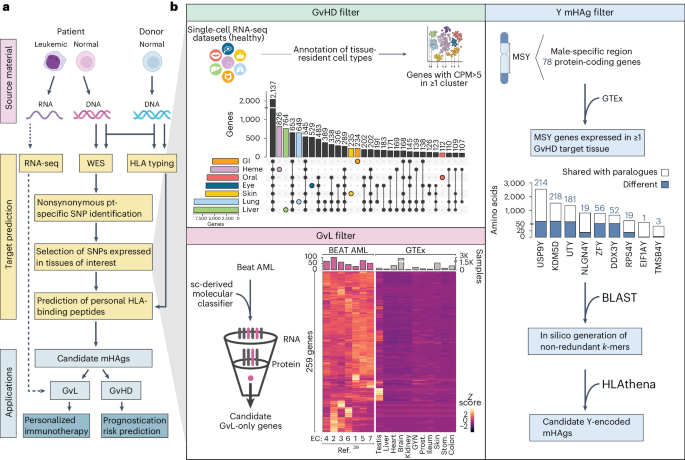
Technology tamfitronics Data availability WES and RNA-seq data from the training HCT, DFCI-MRD and HP-MRD cohorts is available through the dbGaP portal (accession phs003394.v1.p1). The original mass spectra, PSMs and protein sequence databases used for searches have been deposited in the public proteomics repository MassIVE (https://massive.ucsd.edu) and are accessible at ftp://massive.ucsd.edu/v08/MSV000095025/. Original mass spectrometry data for the previously published B721.221 monoallelic immunopeptidomes are accessible at ftp://massive.ucsd.edu/MSV000080527. The GI GvHD scRNA-seq dataset is available from the corresponding author upon reasonable request. All external datasets used in this study (identified by reference number) are summarized in Supplementary Fig....
Continue reading
Self-stacked small molecules for ultrasensitive, substrate-free Raman imaging in vivo
Science & Technology

Self-stacked small molecules for ultrasensitive, substrate-free Raman imaging in vivo

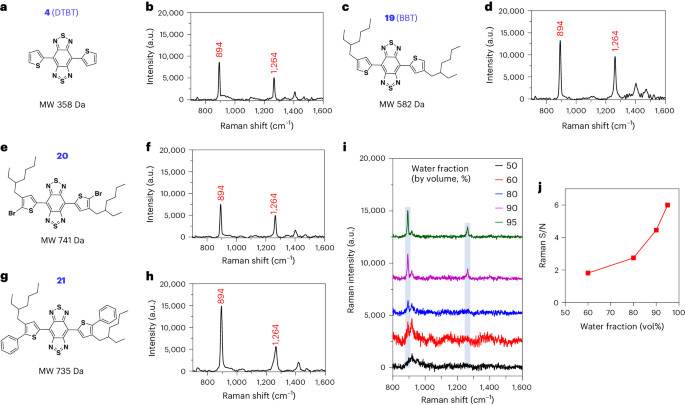
Technology tamfitronics MainRaman spectroscopy has been widely applied in chemical, material and biomedical sciences by detecting the inelastic light scattering of small molecules1. Complementary to fluorescence or other imaging modalities, Raman spectroscopy for bioimaging measures chemical-bond-specific vibrational transitions that unravels chemical information of molecules such as nucleic acids, proteins and lipids, related to the genotype, phenotype and physiological state of the cell2. The ultranarrow spectral peak width of Raman signal offers the opportunity to detect multiple tags simultaneously using a single laser excitation, capable of multiplexed imaging3. Moreover, owing to the extremely short lifetimes of Raman scattering, Raman signals are stable against photobleaching or quenching, which is ideal for imaging studies of prolonged duration4.Despite these...
Continue reading