
Meet Hector Chavez: Leading Johnson’s Giant Leap into Low Earth Orbit
Science & Technology

Meet Hector Chavez: Leading Johnson’s Giant Leap into Low Earth Orbit

NASA Space Technology As systems integration team lead for NASA’s Commercial Low Earth Orbit Development Program (CLDP), Hector Chavez helps build a future where NASA and private industry work together to push the boundaries of space exploration.With the rise of commercial providers in the space sector, Chavez’s team works to ensure that these companies can develop end-to-end systems to support NASA’s low Earth orbit operations—from transporting crew and cargo to operating mission centers. His team’s role is to assess how commercial providers are using their systems engineering processes to achieve program goals and objectives.With a background that spans both the National Nuclear Security Administration and NASA, Chavez brings knowledge and insight into working with interdisciplinary teams to create complex, reliable systems. He has collaborated across organizations, contracts, and government to ensure design and operational improvements...
Continue reading
NASA Michoud Continues Work on Evolved Stage of SLS Rocket for Future Artemis Missions
Science & Technology

NASA Michoud Continues Work on Evolved Stage of SLS Rocket for Future Artemis Missions

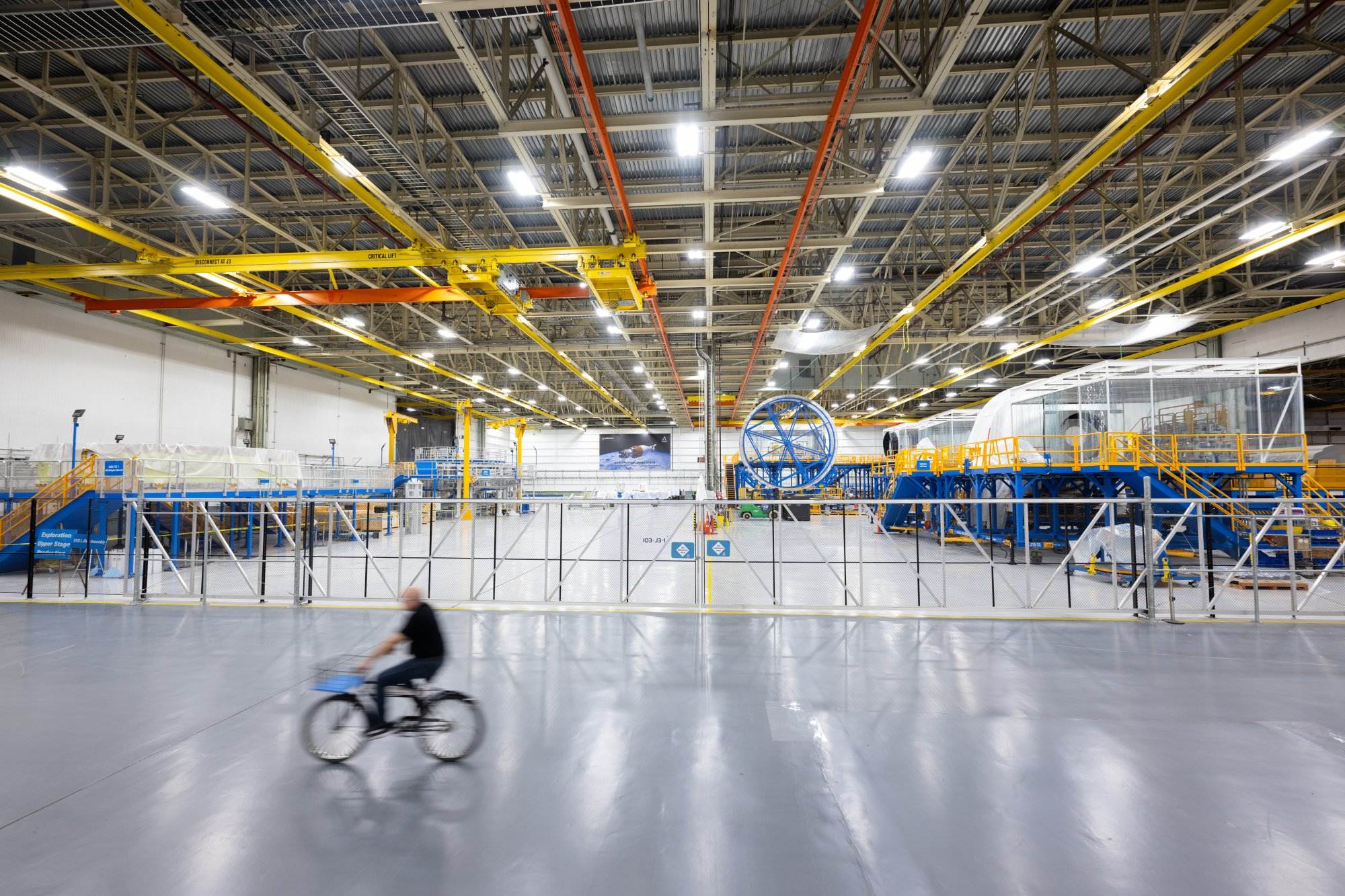
NASA Space Technology Manufacturing equipment that will be used to build components for NASA’s SLS (Space Launch System) rocket for future Artemis missions is being installed at the agency’s Michoud Assembly Facility in New Orleans, Louisiana.The novel tooling will be used to produce the SLS rocket’s advanced exploration upper stage, or EUS, in the factory’s new manufacturing area. The EUS will serve as the upper, or in-space, stage for all Block 1B and Block 2 SLS flights in both crew and cargo configurations.In tandem, NASA and Boeing, the SLS lead contractor for the core stage and exploration upper stage, are producing structural test articles and flight hardware structures for the upper stage at Michoud and the agency’s Marshall Space Flight Center in Huntsville, Alabama. Early manufacturing is already underway at Michoud while preparations for an...
Continue reading
NASA’s Record-Breaking Laser Demo Completes Mission
Science & Technology

NASA’s Record-Breaking Laser Demo Completes Mission

NASA Space Technology NASA’s TBIRD (TeraByte InfraRed Delivery) demonstration and its host spacecraft — the PTD-3 (Pathfinder Technology Demonstrator-3) — have completed their technology demonstration. The TBIRD payload spent the past two years breaking world records for the fastest satellite downlink from space using laser communications.NASA’s PTD series leverages a common commercial spacecraft to provide a robust platform for effective testing of technologies with minimal redesign in between launches. After launch in May 2022 on the SpaceX Transporter 5 mission, the PTD-3 spacecraft entered low-Earth orbit and shortly after TBIRD began sending laser communications signals to an optical ground station in Table Mountain, California.TBIRD’s two-year demonstration showcased the viability of laser communications. Most NASA missions rely on radio frequency communication systems, however, laser communications use infrared light and can pack significantly more data in a...
Continue reading
NASA found a ‘zebra rock’ that is unlike anything else we’ve seen on Mars
Science & Technology

NASA found a ‘zebra rock’ that is unlike anything else we’ve seen on Mars

NASA Space Technology Published Sep 24th, 2024 8:56PM EDTImage: NASA/JPL-Caltech/ASUNASA has captured evidence of yet another striking object on the Martian surface. This time, the object is a somewhat funky “zebra rock,” which appears to be unlike anything else we’ve found on the Red Planet thus far.What’s especially interesting about this rock, which NASA says was spotted by the Perseverance rover earlier this year, is the fact that it has a never-before-seen texture. Additionally, NASA scientists say that it appears to be igneous and/or created from a metamorphic process, which is likely responsible for the strips along the rock.NASA has dubbed the zebra rock “Freya Castle,” thanks to its unique appearance. It measures around eight inches (20 centimeters) across and is loose from the bedrock around it. This suggests that the rock originated somewhere else...
Continue reading