

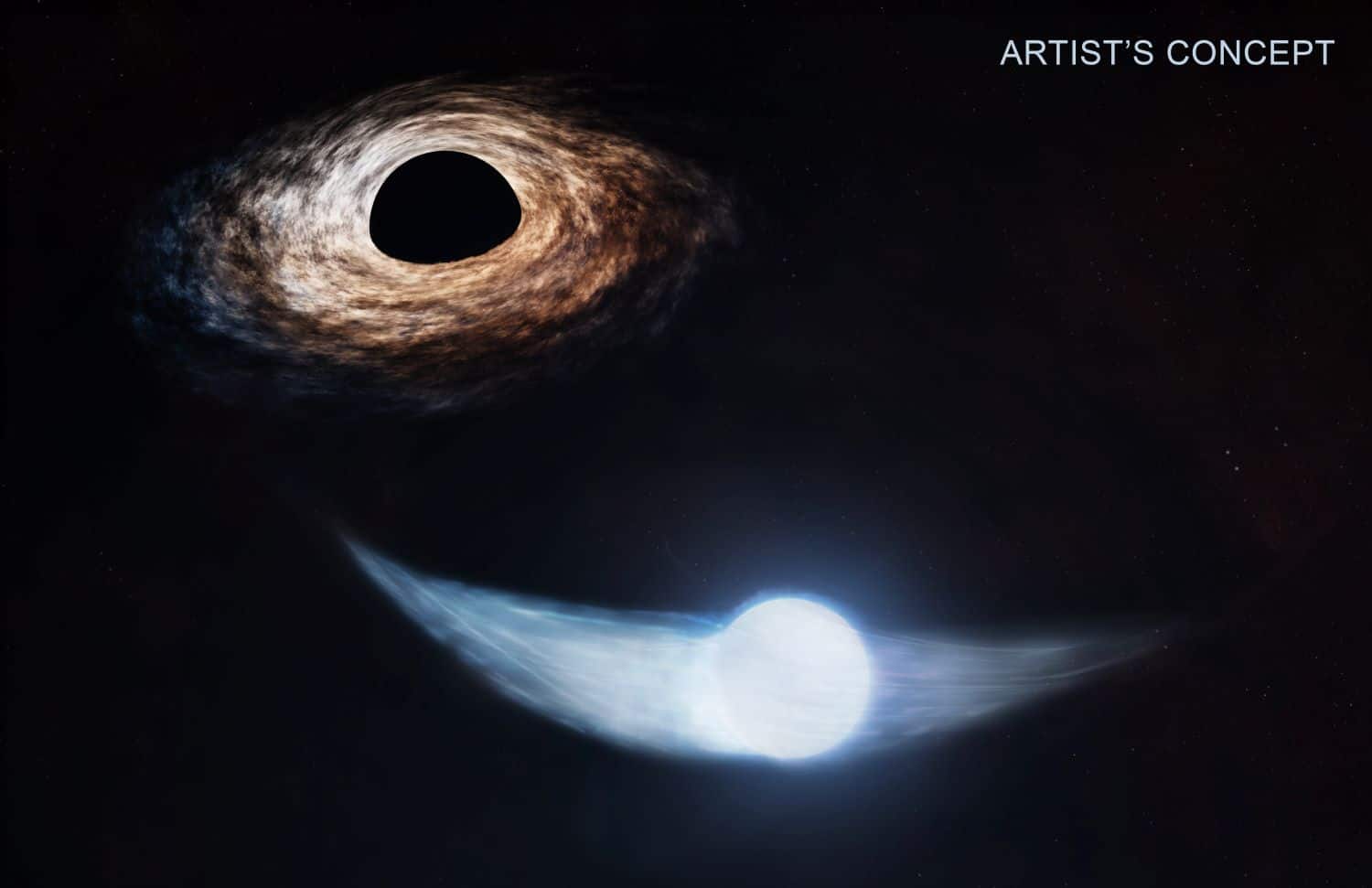
How and when a supermassive black hole consumes material?

NASA Space Technology A team of researchers used data from NASA’s Chandra X-ray Observatory, Neil Gehrels Swift Observatory, and ESA’s XMM-Newton to offer a new understanding of how and when a supermassive black hole consumes material.In 2018, the optical All Sky Automated Survey for SuperNovae noticed a system called AT2018fyk, in which a black hole partially disrupted a star.ASAS-SN noticed this system had become much brighter. When scientists observed it with NASA’s NICER (Neutron Star Interior Composition Explorer) and Chandra and XMM-Newton, they found that the brightness came from TDE, which signifies that a black hole partially ingested a star after flying too close to a black hole.The material from the star got hotter and produced X-ray and ultraviolet (UV) light as it approached close to the black hole. These signals then faded, suggesting nothing...