NASA spacecraft finds solar ‘cannonballs’ may have stripped Mars of its water — proving decades-old theory
Science & Technology

NASA spacecraft finds solar ‘cannonballs’ may have stripped Mars of its water — proving decades-old theory

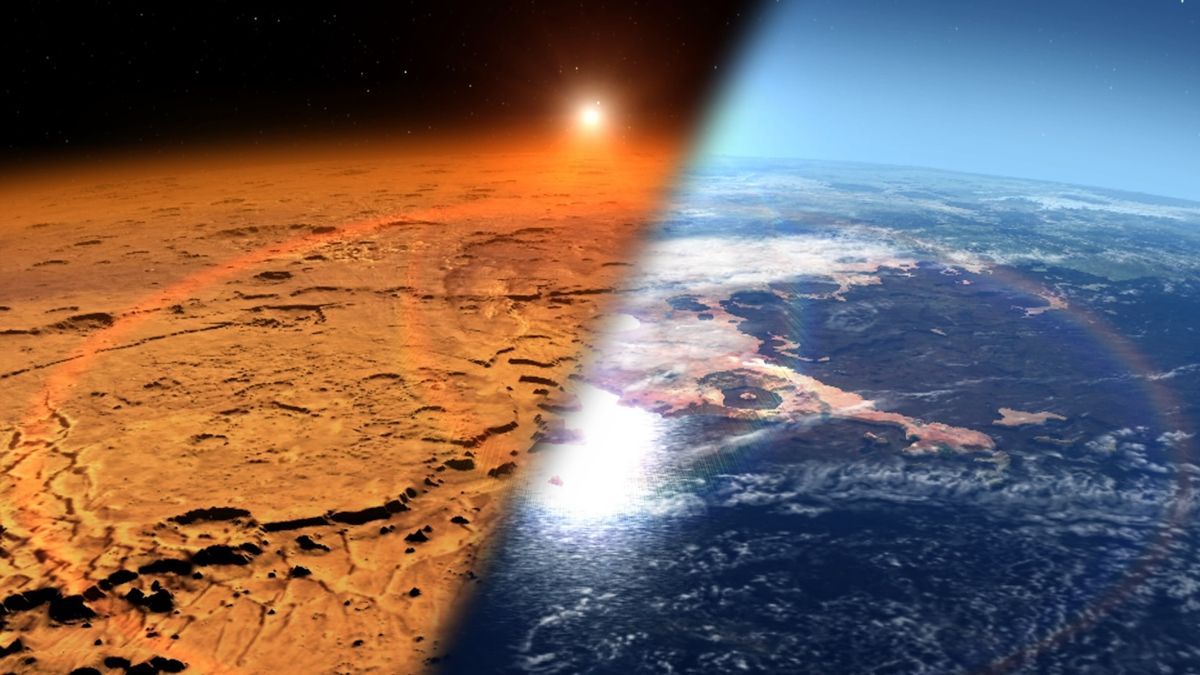
This artist's concept depicts the early Martian environment (right) with liquid water and a thicker atmosphere versus the cold, dry environment seen today (left).(Image credit: NASA’s Goddard Space Flight Center)After nearly a decade in orbit, NASA's MAVEN spacecraft has, for the first time, directly observed the process that scientists had long suspected was responsible for stripping Mars of its atmosphere. The findings, published May 28 in the journal Science Advancescould help answer a longstanding question about how Mars transformed from a potentially habitable world with rivers and lakes into the mostly-frozen desert we see today. Although Mars today is dry, cold and virtually airless, its surface is carved with unmistakable evidence of a wetter past. Features resembling ancient river valleys, lake beds, and minerals that only form in the presence of water point to long-lived lakes,...
Continue reading
Parker Solar Probe
Science & Technology

A NASA spacecraft will make another close pass of the sun

Access to this page has been denied NASA's Parker Solar Probe is set for another close pass of the sun. This pass is its second of three planned encounters. The probe aims to study the sun's corona and solar wind. It will reach speeds of 430,000 mph (ca. 692,017 km/h) during its closest approach. Here's a more detailed look: Mission: The Parker Solar Probe, launched in 2018, is designed to get closer to the sun than any earlier spacecraft. It aims to understand the sun's corona and solar wind. It also seeks to discover why the corona is significantly hotter than the sun's surface. Previous Record: The probe made...
Continue reading