News

Even Short Trips to Space can Change an Astronaut’s Biology

NASA Space Technology Only about 600 people have ever traveled to space. The vast majority of astronauts over the past six decades have been middle-aged men on short-duration missions of fewer than 20 days.Today, with private, commercial and multinational spaceflight providers and flyers entering the market, we are witnessing a new era of human spaceflight. Missions have ranged from minutes, hours and days to months.As humanity looks ahead to returning to the Moon over the coming decade, space exploration missions will be much longer, with many more space travelers and even space tourists. This also means that a wider diversity of people will experience the extreme environment of space – more women and people of different ethnicities, ages and health status.Since people respond differently to the unique stressors and exposures of space, researchers...
Continue reading
Blue Origin, Stoke Space selected by U.S. Space Force to compete for small satellite missions
Top Stories

Blue Origin, Stoke Space selected by U.S. Space Force to compete for small satellite missions

Top Stories Tamfitronics Stoke Space test-fired its new booster engine in June 2024. Credit: Stoke SpaceWASHINGTON The U.S. Space Force has added Blue Origin and Stoke Space Technologies to its roster of launch providers eligible to compete for short-turnaround small-satellite missions under the Orbital Services Program-4 (OSP-4) contract.OSP-4, an Indefinite Delivery/Indefinite Quantity (IDIQ) contract, was established by the Air Force in 2019 to leverage emerging commercial launch capabilities. IDIQ contracts allow for an indefinite quantity of supplies or services during a fixed period, with the government placing orders as needs arise.The Space Force’s small launch division at Kirtland Air Force Base in Albuquerque, New Mexico, has awarded seven missions to date using the OSP-4 contract, totaling over $190 million. The program focuses on missions with payloads of 400 pounds or greater, requiring providers to...
Continue reading
China launches communications satellite on 30th mission of the year (video)
Science & Technology

China launches communications satellite on 30th mission of the year (video)

NASA Space Technology China just boosted its geostationary communications satellite fleet.A Long March 7A rocket lifted off from the coastal Wenchang Satellite Launch Center on Hainan island at 7:57 a.m. EDT (1157 GMT, or 7:57 p.m. Beijing time) on June 29. The China Aerospace Science and Technology Corporation (CASC), the country's main space contractor, declared the mission a complete success.The payload, called ChinaSat-3A (Zhongxing-3A), is destined for geostationary orbit22,236 miles (35,785 kilometers) above Earth. It is described briefly as a communication and broadcasting satellite, which will provide voice, data, radio and television transmission services, according to Chinese state media.A Long March 7A rocket launches the ChinaSat-3A satellite on June 29, 2024. (Image credit: CCTV)The satellite was designed by the China Academy of Space Technology (CAST), while the rocket was provided by the...
Continue reading
Boeing’s Starliner can stay in space beyond 45-day limit, NASA says
Science & Technology

Boeing’s Starliner can stay in space beyond 45-day limit, NASA says

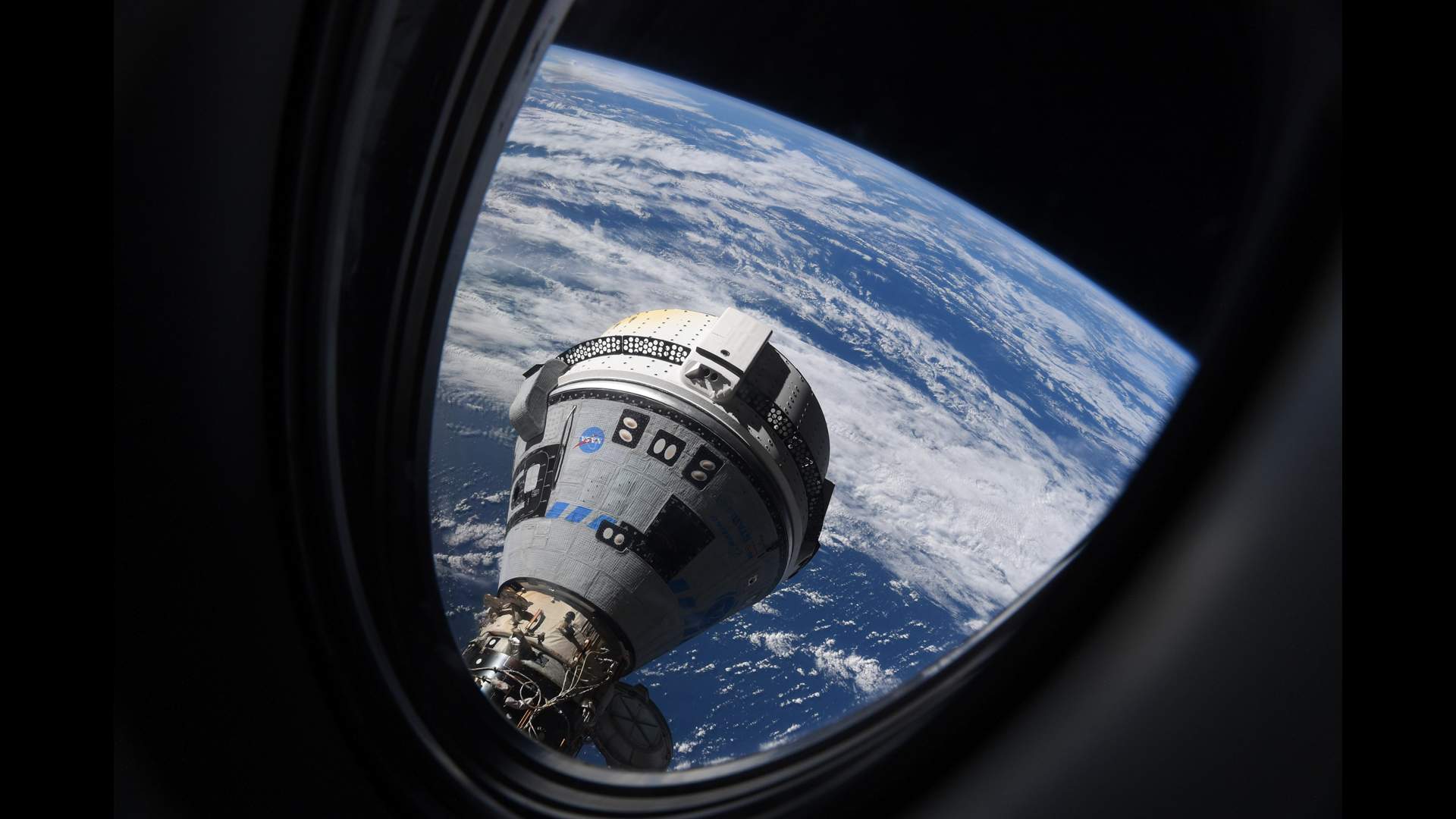
NASA Space Technology Boeing's Starliner space capsule docked at the International Space Station.(Image credit: ESA)Boeing's Starliner capsule is performing well enough on its first-ever astronaut mission that it will likely be able to stay in orbit beyond the initially envisioned 45-day limit, NASA says.Starlinerwhich launched on June 5, is docked at the International Space Station (ISS) on an indefinite mission extension. The spacecraft is in good shape and rated to leave the ISS in case of emergency. But both NASA and Boeing are trying to understand why some of Starliner's reaction control system (RCS) thrusters experienced issues in the leadup to docking with the ISS on June 6, and why several helium leaks have sprung up in the capsule. As such, Starliner will stay in space until at least later in the summer as testing...
Continue reading