
NASA Selects Three New Venture-Class Launch Service Providers
Science & Technology

NASA Selects Three New Venture-Class Launch Service Providers

NASA Space Technology NASA has selected three additional companies to provide launch services for future agency missions through its VADR (Venture-Class Acquisition of Dedicated and Rideshare) contract.The companies awarded are:Arrow Science and Technology LLC of Webster, TexasImpulse Space Inc. of Redondo Beach, CaliforniaMomentus Space LLC of San Jose, CaliforniaThe VADR contract is a firm-fixed-price, indefinite-delivery/indefinite-quantity instrument with an ordering period through Feb. 3, 2027 and a maximum total value of $300 million across all VADR contracts. NASA selected the new launch providers in accordance with VADR’s on-ramp provision, allowing the agency to add new capabilities not available or identified at the time of the initial award. NASA will issue firm-fixed-price task orders for launch services as needed for future agency and agency-sponsored missions.The VADR contract builds on NASA’s previous procurement efforts, such as the VCLS...
Continue reading
Leadership to Discuss NASA’s Boeing Crew Flight Test
Science & Technology

Leadership to Discuss NASA’s Boeing Crew Flight Test

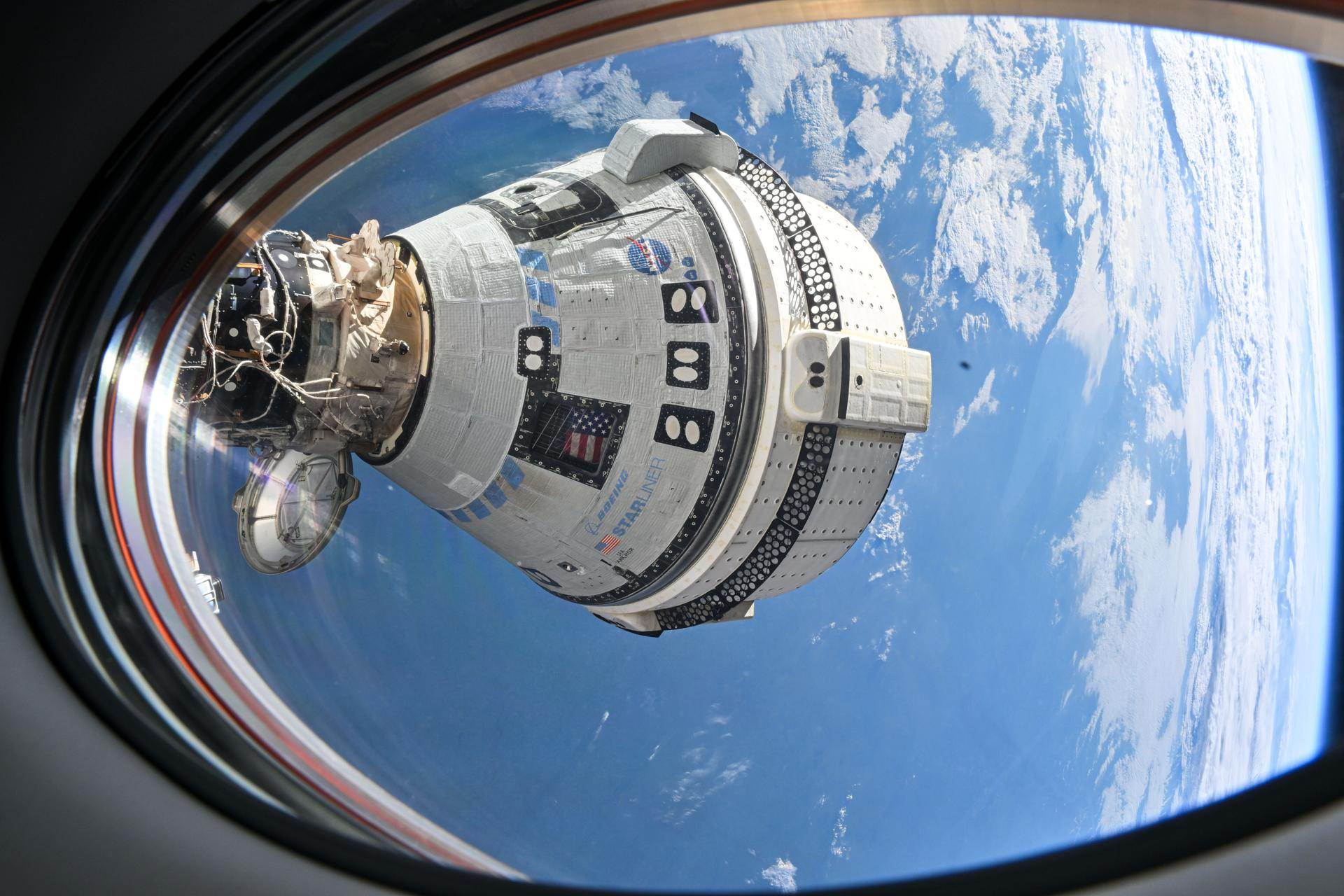
NASA Space Technology NASA Administrator Bill Nelson and leadership will hold an internal Agency Test Flight Readiness Review on Saturday, Aug. 24, for NASA’s Boeing Crew Flight Test. About an hour later, NASA will host a live news conference at 1 p.m. EDT from the agency’s Johnson Space Center in Houston.Watch the media event on NASA+, NASA Television, the NASA app, YouTube, and the agency’s website. Learn how to stream NASA content through a variety of platforms, including social media.Media interested in attending the news conference must contact the newsroom at NASA Johnson no later than 1 p.m., Friday, Aug. 23, at 281-483-5111 or jsccommu@mail.nasa.gov. Media participating by phone must RSVP no later than one hour prior to the start of the event. A copy of NASA’s media accreditation policy is online.NASA and Boeing have...
Continue reading
SpaceX Polaris Dawn crew lands at launch site ahead of 1st-ever private spacewalk mission (photos, video)
Science & Technology

SpaceX Polaris Dawn crew lands at launch site ahead of 1st-ever private spacewalk mission (photos, video)

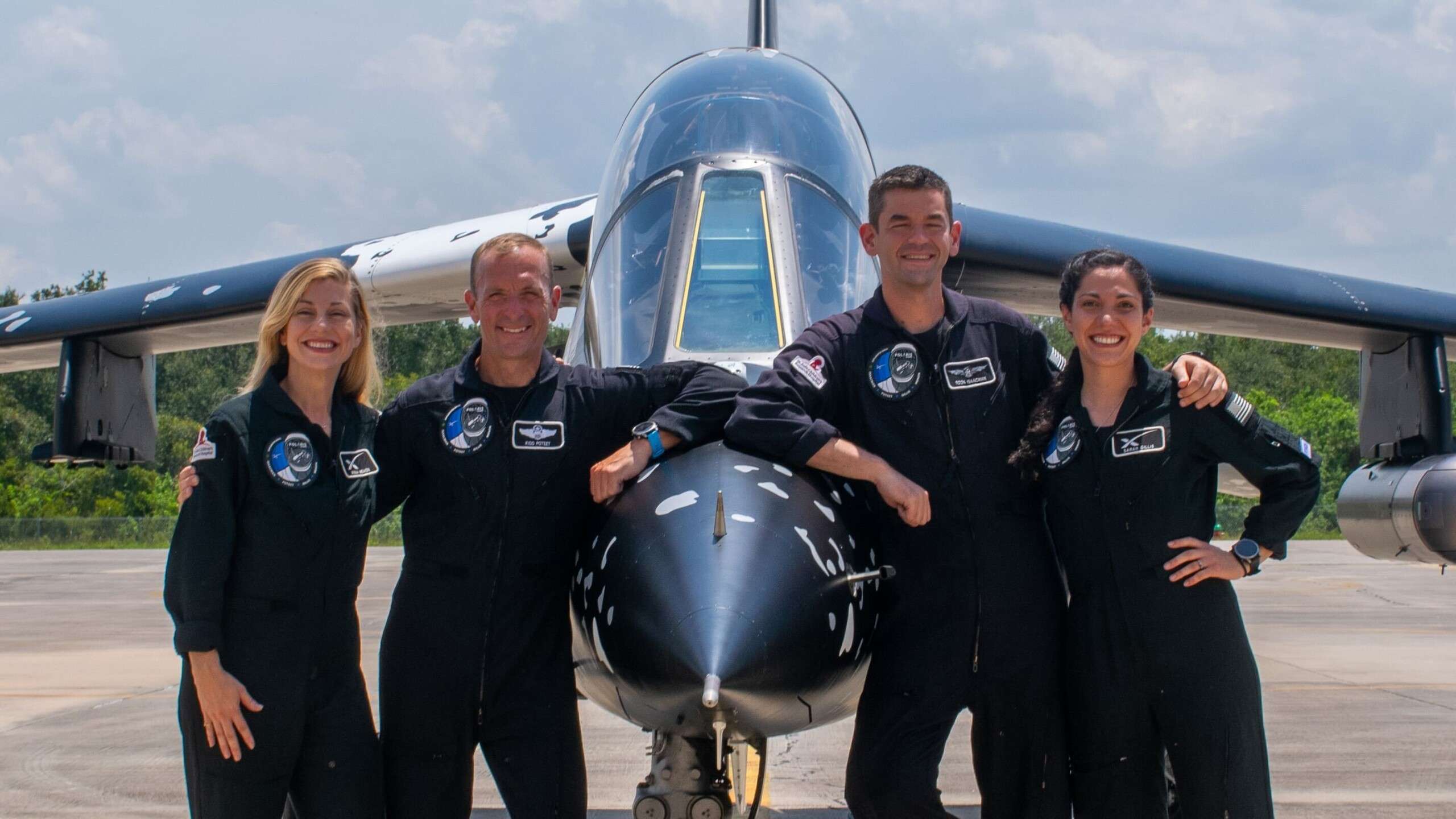
NASA Space Technology The Polaris Dawn crew, Anna Menon, Scott "Kidd" Poteet, Jared Isaacman, and Sarah Gillis after their arrival at KSC, Aug. 19, 2024.(Image credit: Space.com / Josh Dinner)CAPE CANAVERAL, Florida — Members of the Polaris Dawn mission landed at NASA's Kennedy Space Center (KSC) today (Aug. 19), with as little as a week until their launch to space.Polaris Dawn is the second privately crewed SpaceX mission funded by philanthropist billionaire Jared Isaacman, and the first of at least three launches he hopes to fly under the "Polaris" program. The launch stands as a follow-up to Isaacman's 2021 Inspiration4 mission, in which he and three other private citizens launched on the first-ever civilian-only spaceflight. Inspiration4 helped raise $250 million for St. Jude Children's Research Hospital in Memphis, Tennessee, and Isaacman hopes to build on that momentum...
Continue reading
How and when a supermassive black hole consumes material?
Science & Technology

How and when a supermassive black hole consumes material?

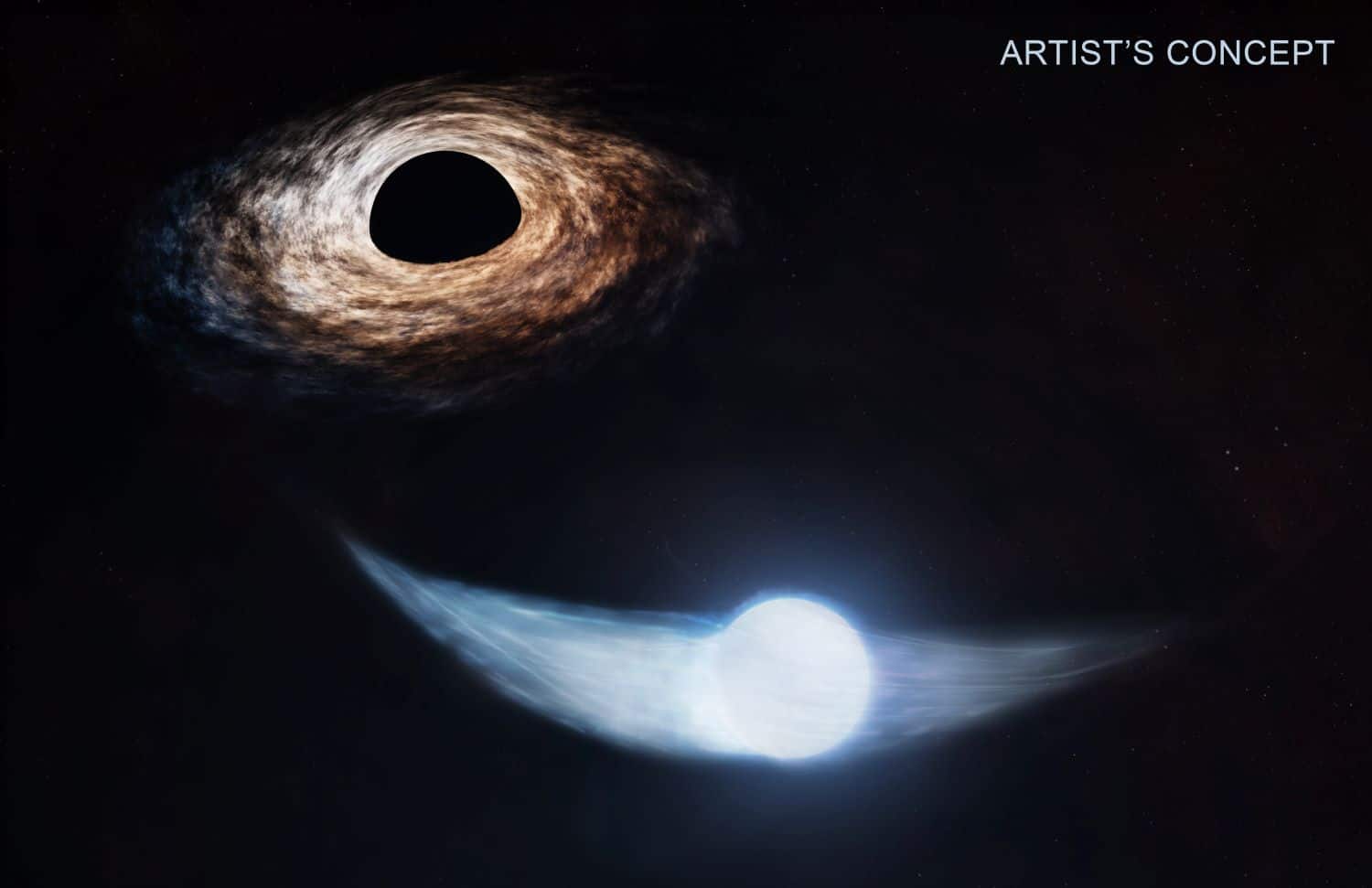
NASA Space Technology A team of researchers used data from NASA’s Chandra X-ray Observatory, Neil Gehrels Swift Observatory, and ESA’s XMM-Newton to offer a new understanding of how and when a supermassive black hole consumes material.In 2018, the optical All Sky Automated Survey for SuperNovae noticed a system called AT2018fyk, in which a black hole partially disrupted a star.ASAS-SN noticed this system had become much brighter. When scientists observed it with NASA’s NICER (Neutron Star Interior Composition Explorer) and Chandra and XMM-Newton, they found that the brightness came from TDE, which signifies that a black hole partially ingested a star after flying too close to a black hole.The material from the star got hotter and produced X-ray and ultraviolet (UV) light as it approached close to the black hole. These signals then faded, suggesting nothing...
Continue reading